
10 Tips for Choosing Paper Packaging Boxes
Choosing the right Paper Packaging Boxes affects protection, presentation, cost, and customer trust. A box may look attractive on a screen, yet fail when stacked in a warehouse or exposed to light rain. My experience with packaging projects shows that small details often create expensive problems. Weak corners, inaccurate dimensions, and unsuitable paper grades can damage products before delivery.
This guide presents ten practical tips for selecting boxes with greater confidence. It considers product weight, size, paper strength, printing quality, closure style, storage conditions, and shipping distance. It also examines sustainability claims, because recycled content and recyclability are not always the same thing. Ask suppliers for material specifications, test samples, and clear production details. Reliable manufacturers should explain compression strength, coating options, minimum order quantities, and quality-control procedures. They should not hide behind attractive photographs.
Measure the product carefully. Leave enough room for protective inserts, but avoid excessive empty space. A snug fit usually reduces movement. Not always, though. Fragile items may need cushioning and extra clearance. Color matching deserves attention, too. Printed ink can appear different under warehouse lighting than on a designer’s monitor. Testing helps reveal these surprises.
There is no universal best box. The right choice depends on function, budget, branding, and distribution risks. Even experienced buyers can overlook one factor. That is why a simple sample review remains valuable. Hands-on checking often reveals what specifications cannot. With informed comparisons and honest supplier communication, Paper Packaging Boxes can support safer shipping, stronger branding, and more responsible packaging decisions.
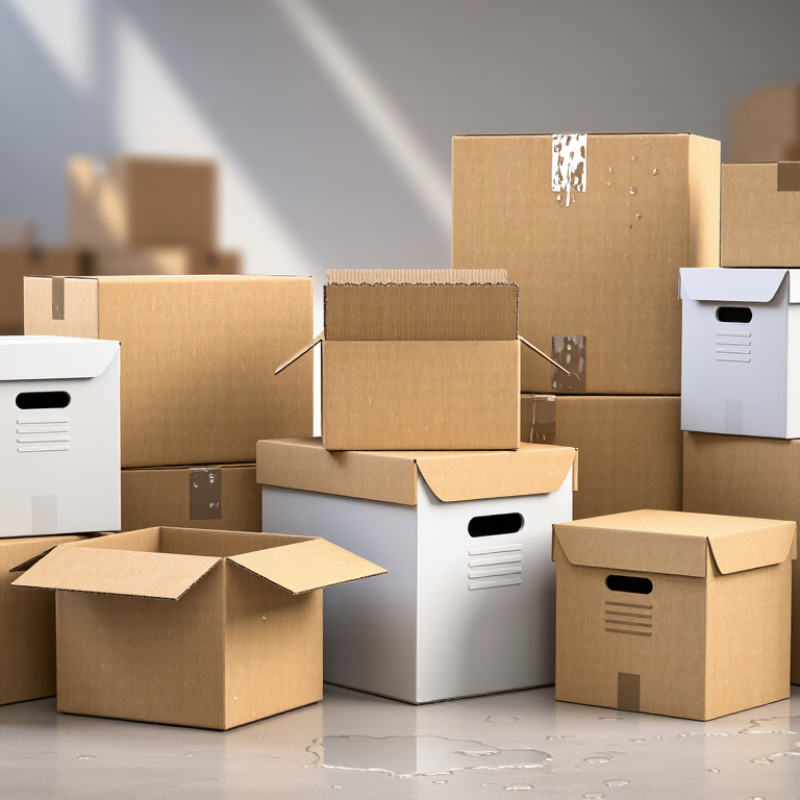
Understanding Paper Packaging Box Types and Uses
10 Tips for Choosing Paper Packaging Boxes
Understanding Paper Packaging Box Types and Uses
Paper packaging is not one universal material. Corrugated boxes protect heavier goods during shipping. Folding cartons suit cosmetics, food, and small retail items. Rigid paperboard boxes provide a premium feel. Molded fiber trays cushion products with less plastic. The choice should follow the product’s weight, moisture exposure, stacking pressure, and sales channel. Eurostat reported that paper and cardboard represented about 40.3% of EU packaging waste in 2022. That volume makes responsible design important.
Tip 1: Match box strength to product weight.
Tip 2: Check internal dimensions carefully.
Tip 3: Use corrugated board for shipping.
Tip 4: Choose folding cartons for shelves.
Tip 5: Add molded inserts for fragile items.
Tip 6: Avoid oversized boxes and excess filler.
Tip 7: Test compression before bulk production.
Tip 8: Consider moisture and temperature changes.
Tip 9: Ask whether coatings affect recycling.
Tip 10: Verify local collection requirements.
In practical packaging tests, weak corners often fail before the box panels. A simple drop test can reveal this problem early. Paper grades, flute profiles, and recycled content also affect performance. The OECD’s Global Plastics Outlook notes that only 9% of plastic waste was ultimately recycled in 2019. This does not make every paper box automatically sustainable. Fibers may be recyclable, yet barriers, adhesives, ink coverage, and food residue can complicate recovery. I would also question attractive “eco” claims without measurable sourcing or recyclability evidence. Packaging decisions need data, not just a natural-looking surface.
10 Tips for Choosing Paper Packaging Boxes - Understanding Paper Packaging Box Types and Uses
| No. | Selection Tip | What to Check | Suitable Paper Box Type | Common Uses | Practical Recommendation |
|---|---|---|---|---|---|
| 1 | Match the box to the product weight | Consider the product weight, dimensions, stacking conditions, and the amount of handling during transport. | Folding carton for light products; corrugated box for heavier or shipped products. | Food productsCosmeticsRetail goodsE-commerce | Use stronger corrugated board when the package must protect the contents during parcel delivery or stacking. |
| 2 | Choose the correct paperboard structure | Paperboard may be solid or made with fluted layers. The structure affects stiffness, cushioning, and compression strength. | Solid bleached board, solid unbleached board, coated recycled board, or corrugated board. | Retail packagingTakeaway packagingShipping cartons | Select single-wall corrugated board for many general shipping applications; use heavier construction when additional protection is required. |
| 3 | Measure the product and allow safe clearance | Record product length, width, and height. Include space for protective inserts, tissue, or cushioning materials. | Mailer box, tuck-end carton, rigid setup box, or die-cut corrugated box. | BooksApparelGiftsSmall electronics | Avoid excessive empty space because it can increase material use and movement inside the package; avoid a tight fit that creates product pressure. |
| 4 | Select the appropriate box style | Evaluate assembly time, opening experience, closure security, and whether the box will be packed manually or automatically. | Tuck-end carton, auto-lock bottom box, mailer box, two-piece rigid box, or sleeve. | Fast packing linesSubscription boxesPremium gifts | Auto-lock or crash-lock styles can reduce taping and assembly steps, while mailer boxes provide integrated closing flaps for shipping. |
| 5 | Consider moisture and product exposure | Check whether the contents may encounter condensation, oil, grease, refrigeration, or humid storage conditions. | Coated paperboard, grease-resistant paperboard, or corrugated board with a suitable functional coating. | Frozen foodsBakery itemsPrepared mealsChilled goods | Paper packaging is naturally absorbent, so moisture-sensitive applications may require a tested barrier treatment and performance validation. |
| 6 | Check food-contact suitability when necessary | For direct food contact, verify that the paperboard, inks, coatings, adhesives, and manufacturing process meet applicable food-contact requirements. | Food-grade folding carton, paperboard tray, or coated food-service box. | Dry foodsBakery productsTakeaway meals | Use a suitable inner liner or barrier when the product is oily, wet, acidic, or in direct contact with the packaging surface. |
| 7 | Balance print quality with material performance | Review surface smoothness, whiteness, color requirements, barcode readability, and resistance to scuffing during handling. | Coated folding carton for detailed graphics; uncoated board for a natural texture and writing surface. | Retail displayBrand-neutral labelsInstructional packaging | Use coated stock for sharper image reproduction and uncoated stock when a tactile, writable, or more natural appearance is preferred. |
| 8 | Design for efficient storage and transport | Compare flat-packed volume, assembled dimensions, pallet utilization, stacking strength, and shipping weight. | Folding carton, flat-pack mailer, or corrugated regular-slotted carton. | Warehouse goodsOnline ordersDistribution packaging | Flat-packed cartons generally require less storage space before use; optimize outer dimensions to reduce unused transport volume. |
| 9 | Review end-of-life and recyclability | Identify plastic films, foil laminates, coatings, adhesives, and other components that may affect recycling in the target market. | Unlaminated paperboard or corrugated packaging designed for established paper-recycling streams. | General retailDry goodsShipping packaging | Prefer simple paper-based structures where product protection allows, and confirm local recycling guidance because accepted materials vary by region. |
| 10 | Test the finished package before ordering in volume | Evaluate compression, drop resistance, vibration, closure strength, print durability, and product fit under realistic conditions. | Any paper box type, including folding cartons, mailers, rigid boxes, and corrugated shipping cases. | Fragile productsLong-distance shippingNew packaging formats | Prototype and test the complete packed package rather than the empty box alone; revise the structure if damage, deformation, or opening problems occur. |


