2026 Top Trends in PCB Electronics What to Expect?
The world of PCB electronics is evolving rapidly. In 2026, we can expect significant changes in design, materials, and applications. Industry experts predict a shift towards more sustainable practices. This trend is not just beneficial for the environment but also crucial for manufacturers.
Innovations in flexible electronics are on the horizon. The integration of advanced technologies will enhance functionality and reliability. Additionally, the expansion of the Internet of Things (IoT) will drive demand for compact and efficient PCB designs. However, challenges remain. Balancing quality with cost-effectiveness is a constant struggle. Companies must navigate these complexities to stay competitive.
The future of PCB electronics holds great promise, yet it is not without difficulties. Experts must reconsider traditional methods to embrace new approaches. Adapting to these changes will require creativity and resilience. As we look ahead, the PCB industry must focus on sustainable innovation and strategic collaboration.

Emerging Materials in PCB Design: A Shift Towards Sustainable Solutions
The PCB industry is witnessing a transformative shift in materials. Designers are increasingly adopting sustainable solutions. This trend not only shows responsibility toward the environment but also enhances product performance. Emerging materials such as biodegradable polymers and recycled substrates are gaining traction. These innovations reduce waste and energy consumption during production.
When considering sustainable materials for PCB design, keep these tips in mind. First, understand the properties of alternative materials. Not all materials will meet specific performance criteria. Evaluate thermal stability, conductivity, and ease of fabrication. Also, consider local regulations on material use. Compliance can impact manufacturing costs and timelines.
Experiment with new materials on a small scale before full-scale implementation. This helps identify potential challenges early. Collaboration with material scientists can also provide valuable insights. They can guide you on the latest advancements and potential pitfalls. Sustainable design is not just a trend; it’s a necessity that can redefine the future of PCB electronics.
Advancements in Miniaturization Technologies for Next-Gen PCBs
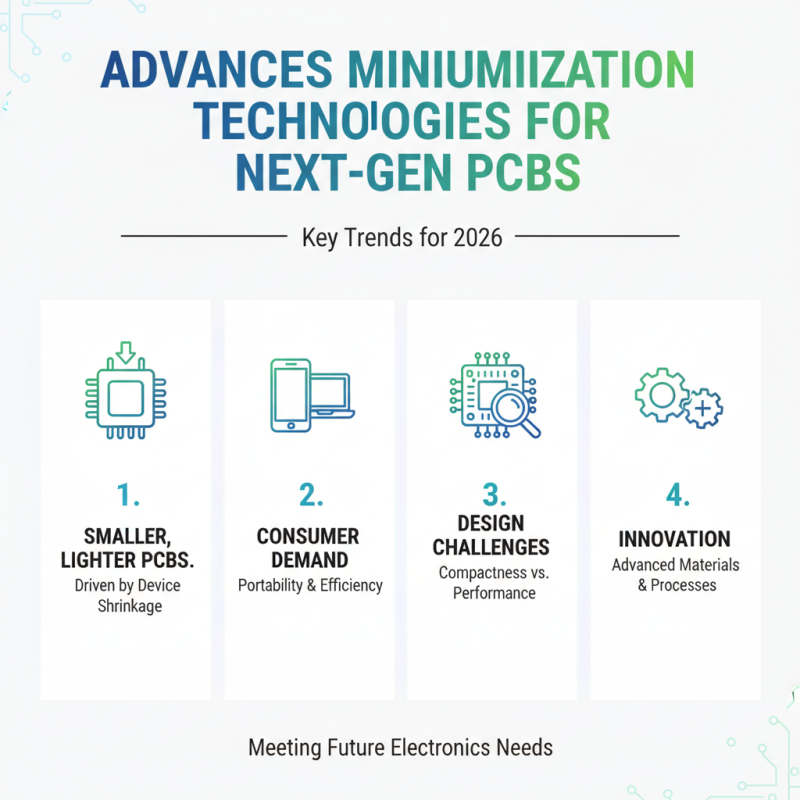
Miniaturization in PCB electronics is a key trend for 2026. As devices shrink, the demand for smaller, lighter PCBs grows. This miniaturization meets consumer needs for portability and efficiency. However, achieving compact designs without compromising performance presents challenges.
Advanced materials play a crucial role in this transformation. Flexible and high-density interconnect materials enable innovative designs. They allow manufacturers to create multilayer PCBs that fit in tighter spaces. These advancements enhance durability and thermal management, essential for modern electronics.
Tips: When designing PCBs, consider thermal and mechanical stress. Miniaturized components can lead to increased heat in limited spaces. Ensure proper heat dissipation to maintain reliability. Also, be cautious of signal integrity. Shorter connections can sometimes lead to interference. Testing and refining your design is vital. Regular feedback is necessary to improve compact designs.
Impact of IoT on PCB Fabrication Trends: Statistics and Projections
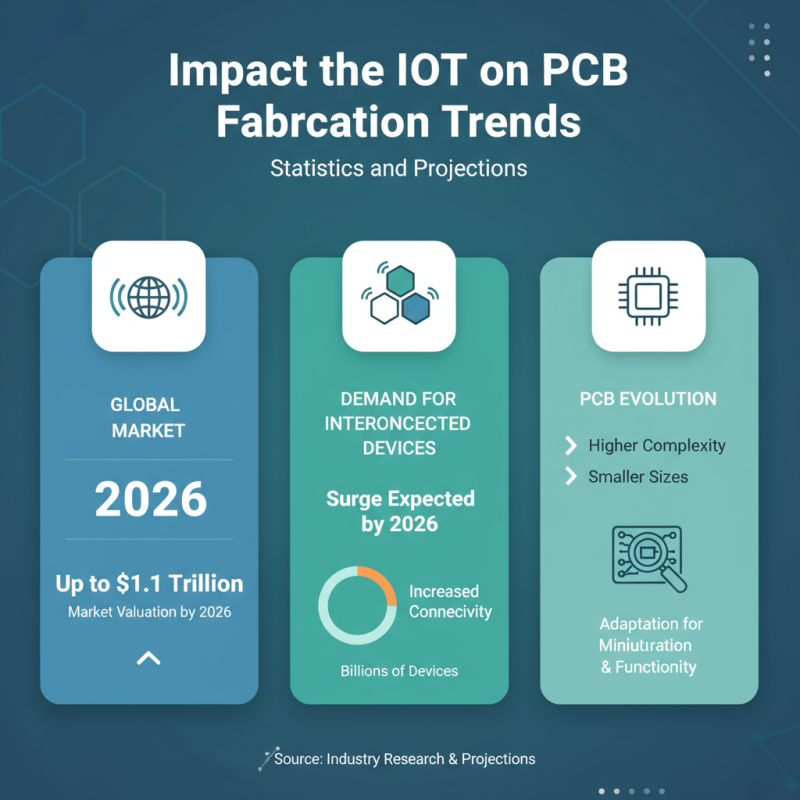
The Internet of Things (IoT) is reshaping the landscape of PCB fabrication. In 2026, the demand for interconnected devices is expected to surge. Research indicates that the global IoT market could reach $1.1 trillion by then, pushing PCBs to evolve rapidly. Manufacturers must adapt to higher complexity and smaller sizes in their designs.
Statistics show a 25% increase in PCB complexity due to IoT integration. This includes multi-layer boards and advanced materials. Companies are now focused on sustainable practices. A report found that 30% of firms are investing in eco-friendly materials for PCBs. This reflects a growing awareness of environmental concerns, though not all companies can meet these standards.
Challenges remain in balancing speed and precision. Many manufacturers still struggle with high defect rates, which can reach 15% in standard processes. Enhanced automation and AI can alleviate some issues, yet implementation costs can be high. Therefore, while the future of PCB fabrication looks promising, it also demands careful consideration and adaptation from the industry.
Integration of AI in PCB Manufacturing: Efficiency Gains and Data Insights
The integration of AI in PCB manufacturing is transforming the industry. AI technology enhances efficiency by streamlining processes. Automated inspections detect defects quicker than human eyes. This leads to fewer errors and reduced waste in production lines.
Using AI also provides valuable data insights. Manufacturers can analyze production trends and identify areas for improvement. It helps in making better decisions, optimizing costs, and increasing throughput. However, relying solely on AI can lead to blind spots. Understanding the underlying data is crucial.
Tips: Embrace AI technologies to improve your PCB manufacturing process. Regularly review the data generated by AI tools. This practice will ensure you remain aware of potential anomalies. Avoid overconfidence in automation; human oversight is still vital for maintaining quality.
2026 Top Trends in PCB Electronics
| Trend | Description | Expected Impact | Data Insights Utilization |
|---|---|---|---|
| AI Integration | Implementation of AI algorithms to enhance design and production efficiency. | Increased production speed and reduced time-to-market. | Utilization of predictive analytics for process optimization. |
| Smart Manufacturing | Application of IoT in monitoring and managing PCB manufacturing processes. | Improved operational transparency and real-time adjustments. | Data collected from IoT devices to enhance efficiency. |
| Sustainable Manufacturing | Adoption of eco-friendly materials and waste reduction techniques. | Lower environmental impact and compliance with regulations. | Analytics on material usage to minimize waste. |
| Advanced Connectivity | Designs focused on enhancing connectivity between devices. | Greater interoperability in electronic products. | Insights from user connectivity patterns to inform design. |
| Miniaturization | Focus on smaller and more efficient PCB designs. | Increased demand for compact electronic devices. | Data analysis for space optimization in design. |
The Future of Flexible PCBs: Market Growth and Application Expansions
The flexible PCB market is undergoing significant growth, driven by advancements in technology and increased demand across various sectors. According to a recent market analysis, the flexible PCB market is projected to reach $35 billion by 2026. This represents a compound annual growth rate (CAGR) of over 12%. Notably, consumer electronics and automotive applications are generating substantial opportunities for flexible circuit designs. The ability to conform to tight spaces and unique shapes has led to their adoption in innovative products.
Emerging applications also showcase the versatility of flexible PCBs. Innovations in wearable technology highlight how these circuits are now integral to health monitoring devices. A report from an industry research firm indicates that the wearables market will surge by nearly 15% over the next five years, further fueling demand for flexible solutions. However, this growth presents challenges. Manufacturers often face issues regarding durability and performance under varying conditions. These factors require ongoing research and development to enhance reliability while maintaining flexibility.
Moreover, the push for lightweight and compact designs continues to influence the flexible PCB sector. Industries are increasingly prioritizing energy efficiency. Recent studies suggest that consumers prefer devices that offer longer battery life without compromising performance. This demand for energy-efficient designs often conflicts with the need for high-speed performance. Balancing these aspects presents an ongoing challenge for engineers and manufacturers alike.
2026 Top Trends in PCB Electronics
This chart illustrates the projected market growth and application expansions in flexible PCBs from 2023 to 2026. As demand increases across various sectors, especially in consumer electronics and automotive applications, we can expect substantial growth.
Related Posts
-
Top 10 PCB Electronics Trends You Need to Know About?
-
Revolutionizing PCB Printing: Insights from the 138th China Import and Export Fair 2025
-
How to Optimize Printed Circuit Board Assembly for Better Performance?
-

Top PCB Printing Techniques That Improve Quality and Efficiency Guess Why
-
Unlocking Success: The Advantages of Advanced PCB Fabrication Techniques for Global Buyers
-
2025 Top PCB Printing Trends: What You Need to Know for Success