China Top Auto Sensors Benefits and Applications for Global Buyers?
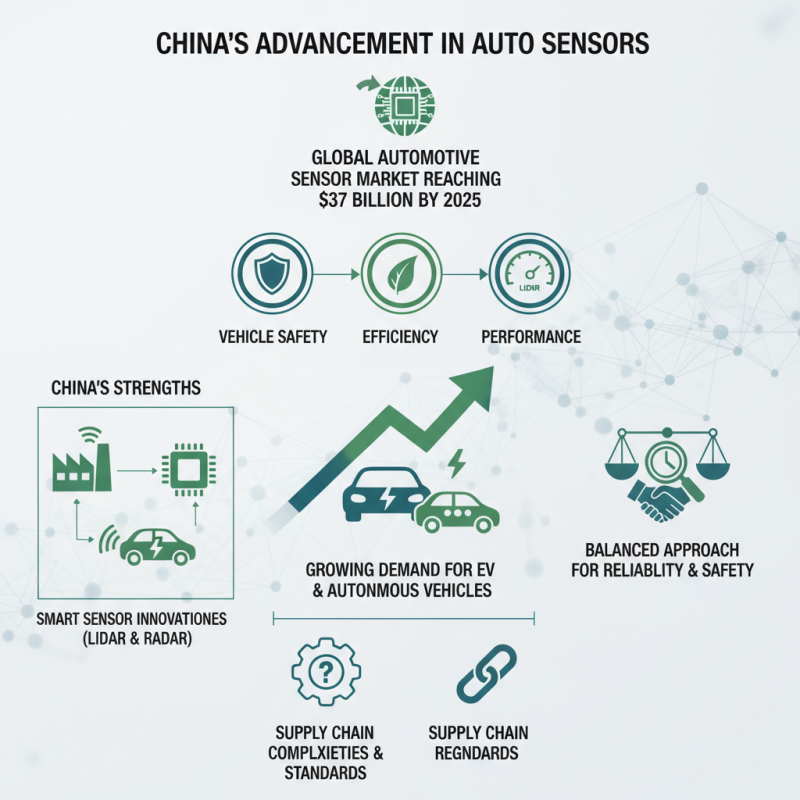
As China ascends as a leader in the automotive industry, its advancements in Auto Sensors are crucial for global buyers. The global automotive sensor market is expected to reach $37 billion by 2025, according to a recent report from MarketsandMarkets. These sensors play a pivotal role in enhancing vehicle safety, efficiency, and performance. Industry expert Dr. Li Wei emphasizes, “Auto Sensors are the backbone of modern vehicles, driving innovation and sustainability.”
China's unique strengths in manufacturing and technology position it as a vital supplier for international clients. The country's investments in smart sensor technology have resulted in significant improvements in automotive applications. For instance, LIDAR and radar sensors are now essential for advanced driver-assistance systems. However, reliance on these sensors raises concerns. Some manufacturers face challenges in maintaining quality amid rapid production scales.
Moreover, with the push for electric and autonomous vehicles, the demand for sophisticated Auto Sensors is expected to grow exponentially. While the benefits are clear, the complexities of supply chains and regulatory standards remain daunting. A balanced approach is essential for leveraging China's capabilities in the Auto Sensors sector while ensuring reliability and safety for global markets.
Overview of China's Automotive Sensor Industry
China's automotive sensor industry has witnessed significant growth over the past few years. The market was valued at approximately $5 billion in 2022, with expectations to reach over $8 billion by 2026. This growth is fueled by the increasing demand for advanced driver-assistance systems (ADAS) and electric vehicles (EVs).
A key element in this growth is the rising adoption of innovative technologies. For instance, data from Frost & Sullivan indicates that the use of LiDAR and radar sensors in vehicles will grow by over 20% annually. However, challenges persist. The supply chain for high-quality materials is not fully developed. This can lead to delays and inconsistencies in product availability.
Furthermore, while China's automotive sensor manufacturers are enhancing their production capabilities, they face stiff competition from global players. Many domestic companies are still lagging in R&D and innovation. As the market evolves, the need for cutting-edge sensors will continue to rise. This makes it crucial for buyers to stay informed about industry trends and quality standards.
Key Benefits of Chinese Auto Sensors for Global Markets
Chinese auto sensors offer significant advantages for global buyers, enabling enhanced vehicle performance and safety. These sensors are designed for precision, ensuring accurate data collection and processing. Their reliability is crucial for essential functions like collision avoidance and fuel efficiency. Many manufacturers focus on innovation, producing sensors that adapt to diverse automotive needs.
The affordability of Chinese auto sensors also attracts global markets. With lower production costs, these sensors provide quality solutions without high price tags. This enables manufacturers worldwide to integrate advanced technology into their vehicles, improving competitiveness. However, buyers must carefully assess supplier capabilities to avoid subpar products. Not all sensors meet the same standards, which can lead to performance issues in critical systems.
Moreover, the rapid evolution of automotive technology raises questions about the longevity of some sensors. As vehicles move towards electric and autonomous systems, existing sensors may become outdated. Continuous improvement and adaptation are necessary. Global buyers need to remain vigilant. The competitiveness of Chinese auto sensors lies not just in price but also in their ability to innovate.
Common Applications of Auto Sensors in Various Vehicle Types
Auto sensors play a pivotal role across various vehicle types, enhancing safety and efficiency. In passenger cars, sensors like parking assist and lane departure systems are common. These technologies improve driver awareness and reduce accidents. According to a report by Grand View Research, the global automotive sensor market is projected to reach $51.3 billion by 2025. This signifies a growing reliance on sensors in the auto industry.
Commercial vehicles also benefit significantly from auto sensors. Fleet management relies on GPS and telematics sensors to monitor engine health and optimize routes. This can lead to lower fuel consumption and reduced emissions. A McKinsey report highlights that effective use of telematics can reduce operating costs by up to 15%. However, challenges remain, such as sensor integration and data management complexities.
Electric vehicles (EVs) utilize innovative sensor technologies for battery management and energy efficiency. Sensors monitor battery temperature and performance, ensuring optimal operation. However, the rapid pace of technological advancement raises concerns about sensor compatibility and reliability. As the industry evolves, buyers must stay informed about the latest trends and potential pitfalls in sensor technology applications.
Technological Innovations in China's Auto Sensor Manufacturing
China's auto sensor manufacturing has witnessed substantial technological innovations in recent years. These advancements play a pivotal role in enhancing vehicle safety and efficiency. For instance, the use of advanced radar and lidar technology allows vehicles to detect obstacles with precision. These features are critical for implementing autonomous driving systems. Moreover, sensors that monitor tire pressure and engine performance are now more compact and reliable. This evolution helps improve fuel efficiency and reduces maintenance costs.
The integration of Internet of Things (IoT) into auto sensors is another notable innovation. This connectivity allows real-time data collection and analysis. It enables manufacturers to optimize their production processes and enhance the overall performance of vehicles. Despite these advancements, challenges remain. For example, the compatibility of sensors with existing vehicle designs can be an issue. Additionally, some manufacturers struggle with the high costs associated with the latest technologies. Nonetheless, these ongoing innovations reflect China's commitment to becoming a leader in the global automotive market.
Future Trends and Developments in Auto Sensor Technology
The future of auto sensor technology in China is bright and dynamic. Innovations are emerging rapidly. These advancements enable smarter vehicles that enhance safety and efficiency. For instance, LiDAR systems are becoming more prevalent. They assist in real-time obstacle detection and navigation. Moreover, sensor fusion technologies combine data from multiple sources. This improves overall vehicle perception and decision-making.
As sensors become more sophisticated, integration with AI is essential. AI algorithms process data more effectively. They offer insights that enhance driver assistance systems. Additionally, environmental sensors track road conditions and weather changes. This provides valuable information to both drivers and autonomous systems. The shift toward electric and autonomous vehicles drives this development further.
Challenges do remain. Not all manufacturers can keep pace with rapid tech evolution. Some might struggle to implement new technologies effectively. This inconsistency could affect safety and performance. Regular updates and continuous learning are crucial to overcome these barriers. As auto sensor technology evolves, ongoing collaboration between industry leaders is vital to achieve success.