
How to Choose the Right Robotic Gear for Your Business
Choosing the right Robotic Gear is not about buying the most advanced arm on the showroom floor. It is about matching equipment to a real task, a real workspace, and a realistic budget. The International Federation of Robotics reported 4.28 million industrial robots operating worldwide in 2023, with 541,302 new installations that year. Those figures show how widely automation is used; they do not prove that every business needs a robot.
John J. Craig’s robotics textbook cites the Robot Institute of America’s definition of a robot as “a reprogrammable, multifunctional manipulator designed to move material, parts, tools, or specialized devices.” That definition points to the practical questions behind a purchase: What must the robot move? How far must it reach? Can it meet the required cycle time without exceeding its payload? Consider a palletizing cell: a gripper, safety equipment, floor space, and integration work all affect the final cost. Small details matter.
Look beyond the arm. Compare programming demands, maintenance access, supplier support, and compatibility with existing systems. Ask for a task-specific demonstration, not just a polished video. A spreadsheet helps, but it can miss the awkward cable route or the tool change that slows a shift. Even a careful estimate has limits; production conditions change. A sound choice balances measurable performance with honest attention to those uncertainties.
Define the Business Task and Operating Requirements
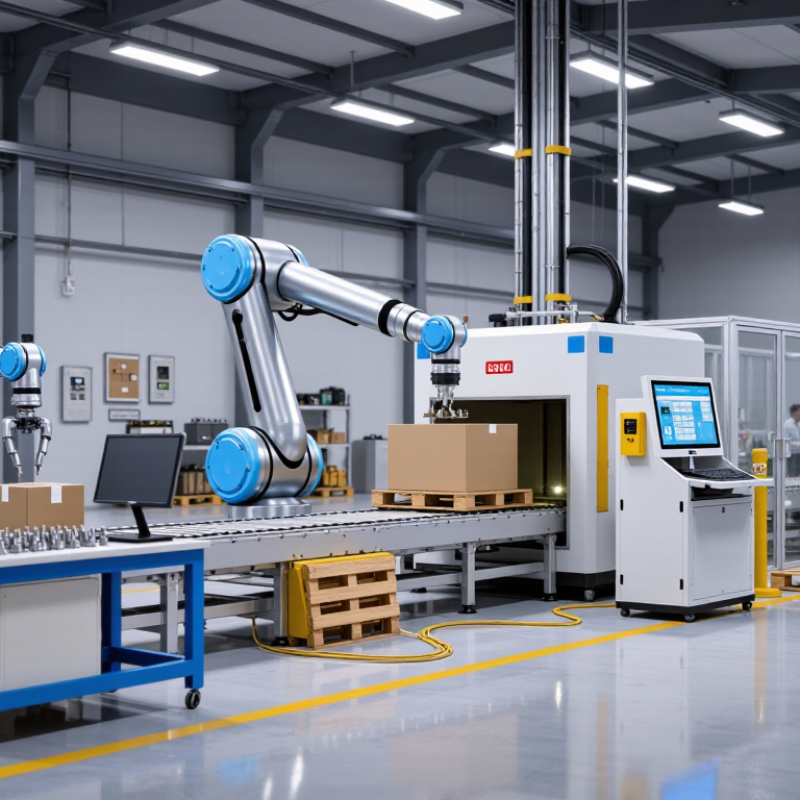
Before choosing robotic gear, describe the job in plain terms. Does the system need to lift cartons, inspect parts, or move components between workstations? Be specific. “Move boxes” is not enough; note each box’s weight, dimensions, grip points, and destination. A short video of the current process can reveal awkward reaches, pauses, and inconsistent handoffs that written notes may miss.
Then define the operating requirements. Record the required cycle time, working hours per shift, and expected number of movements. Include the robot’s reach, payload, and placement accuracy, along with the space available around the workcell. A unit that handles the load in a demonstration may struggle during a full shift. Watch for heat, dust, vibration, slippery surfaces, or changing part sizes. Small details matter.
Also map how people and equipment share the area. Note where operators load materials, clear jams, and perform maintenance. Ask who will adjust the system when a product changes. We often underestimate these interruptions; our first timing estimate is usually too optimistic. That is worth revisiting. Gather measurements from several normal shifts, not just one unusually smooth day. Clear requirements help suppliers propose suitable equipment and make later trials more useful.
Identify Suitable Robot and Gear Types
Start with the task, not the robot catalogue. Articulated arms suit multi-axis reach and welding or machine tending. SCARA robots fit fast, planar assembly, while Cartesian systems handle straight-line travel and large work envelopes. Delta robots can move small items quickly, but payload and workspace limit their use. Collaborative robots may suit shared workcells; safe operation still depends on a task-specific risk assessment. The International Federation of Robotics’ World Robotics 2024 report recorded 541,302 industrial robot installations worldwide in 2023. That figure shows broad adoption, not that every process needs a robot.
Match the gear reducer to the robot’s load, speed, accuracy, and operating hours. Compact strain-wave reducers offer high reduction ratios in limited space. Planetary reducers can balance stiffness, efficiency, and cost. Cycloidal reducers can handle shock loads, though they may add mass and noise. Check peak torque, backlash, torsional stiffness, lubrication, and service life against the robot’s duty cycle. Fit matters. Measure the payload at the tool, including grippers and cable forces; arm ratings alone can mislead. A calculation may miss impacts at hard stops. Test under load, then check positioning accuracy in the actual workcell before choosing a gear type.
Compare Capacity, Precision, Speed, and Compatibility
Capacity starts with the full moving load, not the robot’s advertised payload. Add the gripper, cables, workpiece, and acceleration forces. A heavier tool can reduce precision or require slower motion. That matters. Check repeatability under your actual load, not only an unloaded specification. Confirm the quoted accuracy uses a recognized test method, such as ISO 9283.
Speed means completed cycle time, including gripping, settling, and travel—not peak joint speed alone. IFR counted 4,281,585 industrial robots operating worldwide in 2023 and reported 541,302 new installations that year (World Robotics 2024). More installations make comparison harder, not easier. Compatibility deserves equal attention: verify mounting, electrical supply, controller, software interfaces, and workspace conditions. Test the proposed gear with your fixture and sample parts. I would still question a perfect simulation; real cables snag, and parts vary. A short production-line trial can reveal those awkward limits before purchase.
Assess Integration, Safety, and Lifecycle Costs
How to Choose the Right Robotic Gear for Your Business
Assess Integration, Safety, and Lifecycle Costs
A robotic gear unit must fit the machine around it, not just meet a torque target. Check its mounting points, shaft dimensions, operating speed, and available space. Then compare those details with the robot’s motion profile and control system. A small mismatch can mean custom brackets, extra commissioning time, or awkward maintenance access. Test the gear under realistic loads, including frequent starts and stops. A spreadsheet helps, but it cannot reveal every vibration or cable-routing problem.
Safety and lifecycle costs deserve equal attention. Review stopping behavior, guarding needs, heat, noise, and access for inspection. Ask how often lubricant changes or seal checks are expected, and whether technicians can perform them without dismantling nearby equipment. Compare purchase price with energy use, planned service, spare parts, and downtime. These estimates are imperfect; real production conditions can surprise you. Still, recording assumptions makes later decisions more reliable.
Tips: Map the full motion cycle before requesting quotes. Ask suppliers for maintenance intervals and load data. Check clearance around service points. Small gaps matter. Revisit the estimate after a pilot run, especially if the robot handles heavier parts than expected.
Validate the Selection Through Testing and Deployment
A robotic gear choice should earn its place on the actual production floor, not only in a spreadsheet. Test it with representative loads, speeds, duty cycles, and shift lengths. Record cycle time, positioning accuracy, temperature, noise, and unplanned stops. A unit that performs well for ten minutes may behave differently after several hours. Small details matter.
Use a pilot cell or limited production run before wider deployment. Include the real tooling, fixtures, control signals, and operators who will use the system. Track faults and recovery time, not just successful cycles. Ask maintenance staff to inspect lubrication points, fasteners, and access for repairs.
Then measure again. Our first trial may look better on paper than on the floor; that is useful evidence, not a reason to hide the gap. Compare results against clear acceptance limits, and investigate any change in accuracy or heat.
If the gear struggles, adjust the load, mounting, or operating profile and repeat the test. Keep a record of settings and observations so later shifts can reproduce the results.
Roll out in stages, with a defined fallback plan and a way to stop deployment if reliability drops. A careful test can reveal issues early.


