How to Choose the Right Mobile Excavator?
Choosing the right Mobile Excavator starts with the work it must do, not the biggest number on a specification sheet. A machine for roadside drainage may need different reach, stability, and travel speed than one used on a crowded construction site. Write down typical trench depths, material weights, ground conditions, and how often the excavator moves between jobs. Small details matter. A narrow access gate or soft shoulder can rule out a machine that otherwise looks ideal.
Compare operating weight, digging reach, lifting capacity, transport dimensions, and tail-swing clearance against real site requirements. Check the lift chart at the working radius you expect to use; maximum capacity figures alone can mislead. For wheeled models, consider tire choice, axle configuration, and stabilizer setup. Confirm that hydraulic flow and pressure suit planned attachments, such as a breaker or tiltrotator. These checks are more useful than choosing by brand reputation alone.
Ownership also involves service access, parts availability, fuel use, operator comfort, and resale value. Ask a dealer to demonstrate the machine with your intended attachment and on similar ground, if possible. Review maintenance records when buying used equipment, and inspect wear on the boom, pins, tires, and hydraulic lines. Even careful buyers can give too much weight to the purchase price. I have seen that trade-off deserve a second look. The best choice is the model that handles regular tasks safely and efficiently, while leaving enough capacity for occasional work—not one selected for rare, impressive jobs alone.
Understanding Mobile Excavators and Their Typical Applications
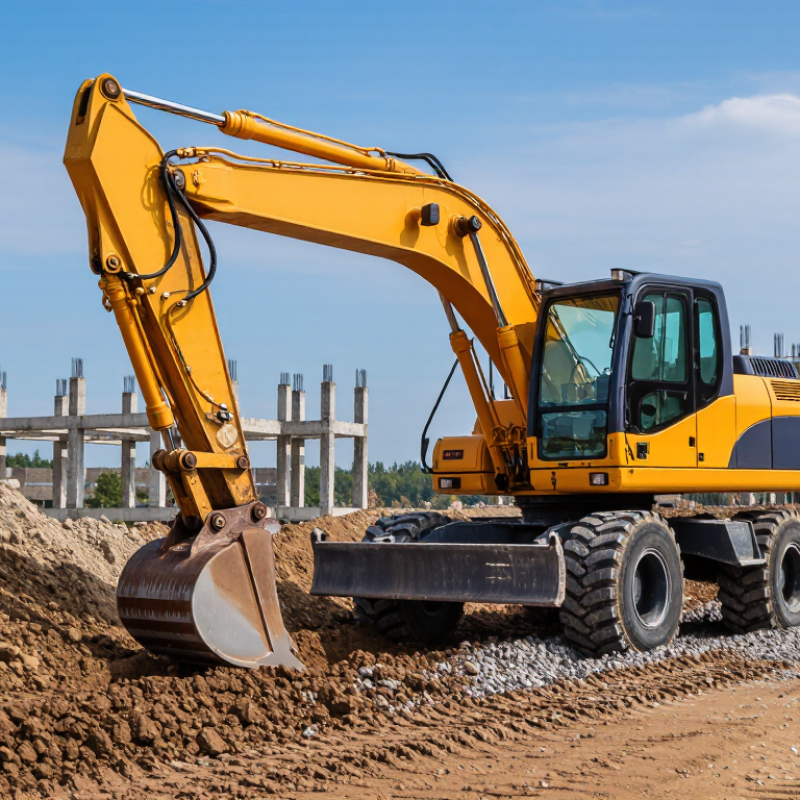
Mobile excavators pair a rotating upper structure with wheels, making them useful where machines must move between nearby work areas. Unlike tracked models, they can travel over paved streets without damaging surfaces as easily. They are often used for road repairs, utility trenching, landscaping, and work around busy buildings. Their mobility saves setup time. But wheels are not ideal everywhere.
On firm, level ground, a wheeled excavator can reposition quickly and handle tasks with buckets, breakers, or grapples. Outriggers or a dozer blade can improve stability during digging, depending on the machine’s design. Soft soil, steep slopes, and muddy sites may reduce traction and control. Check the expected ground conditions, lifting needs, working radius, and attachment compatibility before choosing a machine. A machine that looks nimble in a yard may feel less capable on loose ground.
Tip: Compare the machine’s transport width and operating weight with your access routes. Ask an experienced operator to test its turning space and stability on a representative work area. Small details matter. A narrow gate or uneven curb can change the plan, and it is easy to underestimate that.
Matching Machine Size, Reach, Digging Force, and Lifting Capacity
How to Choose the Right Mobile Excavator?
Choosing a mobile excavator starts with the worksite, not the largest machine you can move. Measure gate widths, overhead clearance, road access, and the space needed to turn. A compact model may fit a narrow urban site, but limited reach can mean frequent repositioning. Small margins matter.
Match digging reach and depth to the actual trench or foundation dimensions. Check these figures with the boom and arm configuration you plan to use; maximum reach at ground level does not guarantee the same reach at full digging depth. For a typical utility trench, allow room to place spoil without stretching the machine across unstable ground. That detail is easy to overlook.
Digging force matters in dense clay or compacted gravel, yet extra force cannot compensate for poor positioning or unsuitable attachments. For lifting, consult the machine’s load chart at the required radius and height. Capacity often drops as the load moves farther from the machine, and setup conditions can change the safe limit. Keep the load close, use level ground, and account for the attachment’s weight. I would leave a margin rather than plan around a chart’s maximum figure. Check the operator’s manual and confirm the configuration before committing.
Comparing Powertrains, Attachments, Safety Features, and Operating Costs
Choose the powertrain around the machine’s actual workday, not its brochure. Diesel suits long shifts and remote sites with limited charging; battery-electric models may fit indoor work or short, predictable cycles. The U.S. Department of Energy’s Alternative Fuels Data Center reports that electric cars convert about 77% of grid energy into motion, versus 12–30% for gasoline cars. That is useful context, not an excavator performance guarantee. Compare measured fuel or energy use on similar jobs. Small details matter.
Attachments can change a machine’s usefulness more than a small horsepower difference. A narrow bucket may suit trenching, while a tiltrotator can reduce repositioning on uneven ground. Check hydraulic flow, coupler compatibility, and attachment weight before buying. Then price the full operating hour: fuel or electricity, scheduled maintenance, tires, transport, and likely downtime. A low purchase price can still disappoint. Estimates also miss things; muddy access roads and frequent attachment changes can distort a tidy spreadsheet.
Safety deserves equal weight. The U.S. Bureau of Labor Statistics recorded 1,075 fatal work injuries in construction in 2023, in its Census of Fatal Occupational Injuries. The figure covers the whole sector, not excavators alone, but it underscores why visibility, stable travel, cameras, alarms, and clear control layouts matter. Ask operators to test visibility from the cab and inspect access steps. A feature list is not proof that a machine feels safe on your site.
Checking Transport Rules, Maintenance Needs, and Dealer Support
Before choosing a mobile excavator, measure its full transport envelope: machine, bucket, quick coupler, and any fitted attachments. In the United States, FHWA regulations set a general 102-inch maximum vehicle width on the National Network, but state rules, permits, and route restrictions can differ. Check the planned route, trailer capacity, axle loads, and loading height with the carrier before signing. A machine that fits the yard may not fit beneath a low bridge. Small details matter.
Maintenance needs should match the work cycle. Frequent road travel, dusty sites, and long shifts can shorten service intervals, so compare the maintenance schedule with your actual operating hours. The U.S. Department of Energy’s Operations & Maintenance Best Practices Guide cites preventive-maintenance savings of 12–18% over reactive maintenance; treat this as a general benchmark, not an excavator-specific guarantee. Ask the dealer for written service intervals, parts lead times, diagnostic support, and field-response coverage. Confirm who handles urgent repairs and whether common wear parts are stocked nearby. A polished service promise is not the same as a measured turnaround record. Request recent response-time examples, then check what the quote excludes. I would still leave room for doubt: job conditions can make a tidy maintenance forecast wrong.