
What Is an Outdoor Garden Solar Light?
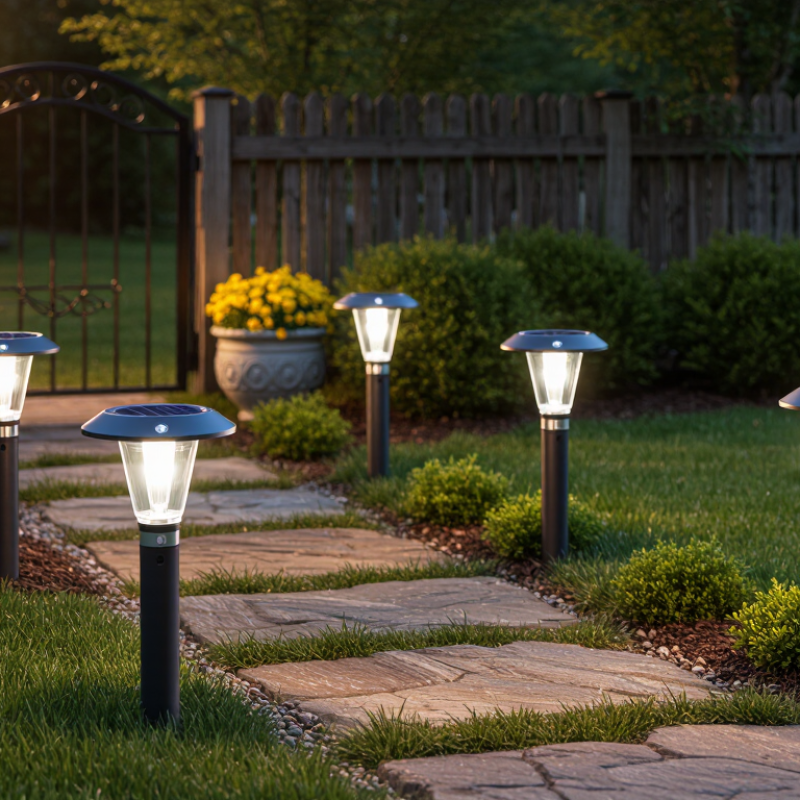
An Outdoor Garden Solar Light is a small lighting system that gathers sunlight by day and uses stored energy after dark. A typical unit has a solar panel, rechargeable battery, LED, and a light sensor. Some models also include a motion sensor or a switch for different brightness settings. The idea is simple. Sunlight charges the battery; the lamp provides a pool of light along a path, beside a planter, or near a gate.
Energy-efficiency expert Amory Lovins offers a useful principle: “The cheapest energy is the energy you don’t use.” For garden lighting, that points toward choosing a lamp suited to the job, rather than buying the brightest one available. A low path light can mark stepping stones without flooding a bedroom window. A motion-sensing fixture may save stored power when a corner is usually empty. Placement matters, too. A panel under dense leaves or beside a tall fence may receive too little direct sun to recharge reliably.
Performance varies. Cloudy days, winter sunlight, shade, and an aging battery can all shorten the evening glow. A product label may promise long runtimes, yet a real garden is less predictable. That’s worth remembering. This guide explains how these lights work, what their parts do, and how to judge their fit for your outdoor space. A little trial and adjustment may still be needed.
Definition and Purpose of an Outdoor Garden Solar Light
What Is an Outdoor Garden Solar Light?
Definition and Purpose of an Outdoor Garden Solar Light
An outdoor garden solar light is a small lighting system that collects sunlight through a photovoltaic panel, stores energy in a rechargeable battery, and powers an LED after dark. A light sensor often switches it on automatically at dusk. Its purpose is practical: to mark a garden path, brighten a doorway, or add gentle light around a seating area without a wired power connection. Think of a panel catching afternoon sun, then a pool of light falling across stepping stones that evening. Simple, but useful.
The LED component matters. The U.S. Department of Energy’s Energy Saver guidance reports that residential LEDs use at least 75% less energy and can last up to 25 times longer than incandescent lighting. That comparison concerns LEDs generally, not a guarantee for every solar fixture. Actual performance depends on panel exposure, battery condition, weather, and operating time. Shade matters. A light beneath dense branches may charge poorly, while short winter days can reduce its nightly runtime. Solar garden lights are therefore best treated as localized accent or wayfinding lights, rather than dependable substitutes for strong area lighting. I’ve found their convenience easy to appreciate, though judging brightness from product descriptions alone can be misleading. A real garden is less tidy than a specification sheet.
| Dimension | Description | Practical Purpose |
|---|---|---|
| Definition | An outdoor garden solar light is a lighting fixture that collects energy from sunlight with a photovoltaic panel, stores energy in a rechargeable battery, and uses that stored energy to power a light after dark. | Provides outdoor illumination without needing a wired connection to a household electrical supply. |
| Main components | Common parts include a solar panel, rechargeable battery, LED light source, control circuit, and housing. Some models also include a light sensor or motion sensor. | Each component helps collect, store, control, or emit light. |
| How it works | During daylight, the panel converts sunlight into electricity that charges the battery. When ambient light falls, a light sensor commonly switches the LED on using the stored energy. | Enables automatic dusk-to-dawn operation on many models; operating time depends on the product, sunlight, battery condition, and settings. |
| Typical uses | Garden beds, paths, steps, patios, driveways, and outdoor seating areas are common locations. | Helps define outdoor spaces, highlight landscape features, or provide convenient low-level lighting. |
| Common light styles | Products may be designed as path lights, spotlights, wall lights, decorative lanterns, or motion-activated security lights. | The fixture style and light distribution can be chosen to suit an area’s decorative, wayfinding, or task-lighting needs. |
| Installation | Many garden models are staked into soil or mounted on an outdoor surface. They generally do not require underground wiring, though some designs may need basic assembly or mounting. | Offers flexible placement, provided the solar panel can receive suitable daylight. |
| Placement considerations | For effective charging, position the panel where it receives direct sunlight for a substantial part of the day. Shade, dirt, and obstructions can reduce the energy collected. | Good placement can improve charging performance and help the light operate more reliably at night. |
| Weather resistance | Outdoor models are designed for exterior use, but their resistance to rain, dust, and other conditions varies. Check the product’s stated weather-resistance rating and care instructions. | Helps determine whether a particular light is suitable for its intended location and local conditions. |
| Advantages | Solar lights use daylight as their energy source, avoid the need for a nearby mains connection, and can be simple to position. | Can make it easier to add lighting in outdoor areas where running electrical wiring is inconvenient. |
| Limitations and upkeep | Light output and run time can be affected by limited sunshine, seasonal daylight, shade, battery age, and dirt on the panel. Batteries may eventually need replacement if the design allows it. | Occasional panel cleaning and following the manufacturer’s maintenance guidance can help keep the light working as intended. |


