
Best Retail Store Cash Register Suppliers in China?
Retail checkout has changed quietly, but the cash register remains a working tool, not a showroom accessory. A reliable Retail Store Cash Register must handle daily transactions, print clear receipts, connect with payment devices, and keep operating during busy periods. Small details matter. A jammed printer can slow a queue; an awkward interface can frustrate new staff.
Market data helps explain the growing range of equipment available. Grand View Research estimated the global point-of-sale terminal market at approximately US$103.9 billion in 2023 and projected an 8.9% compound annual growth rate from 2024 to 2030. China’s National Bureau of Statistics reported retail sales of consumer goods reached about RMB 48.8 trillion in 2024, up 3.5% from 2023. These figures describe broader markets, not cash-register sales alone. That distinction matters.
For retailers sourcing from China, supplier comparisons should go beyond price and product photos. Check hardware specifications, software compatibility, customization options, quality-control practices, warranty terms, and response times. Ask for a working sample when possible. Test the scanner, drawer, and receipt printer with the systems your store actually uses. A polished catalog can still leave important questions unanswered. Some suppliers excel at manufacturing, while others provide stronger integration support; neither claim should be accepted without evidence. This guide examines notable Chinese suppliers and the practical details buyers can verify before making a decision.
What Defines a Reliable Retail Cash Register Supplier?
A reliable retail cash register supplier does more than quote a low price. The supplier should explain the register’s processor, memory, screen size, printer type, and supported payment peripherals in clear terms. Ask for a written specification sheet, not just a product photo. Small details matter. For example, a receipt printer that is difficult to reload can slow a busy checkout, while poorly placed ports can clutter a counter. A capable supplier can describe factory testing and provide sample test records, including checks for printing, touch response, and connection stability.
Service after delivery is just as important. Confirm the warranty period, repair process, spare-parts availability, and expected response time before placing an order. Ask whether the supplier can provide setup instructions and remote troubleshooting in your working language. Clear answers are a good sign. Vague promises are not. If your store uses existing barcode scanners or cash drawers, request a compatibility check in writing. I would also ask how software updates are handled; this detail is easy to overlook, even by experienced buyers. No supplier can prevent every fault, and a polished brochure proves little. A small trial order can reveal packaging quality, documentation gaps, and how promptly the supplier handles ordinary questions.
Overview of China’s Retail Cash Register Supply Market
China’s retail cash register supply market is shaped by a large, changing retail base. The National Bureau of Statistics of China reported that retail sales of consumer goods reached RMB 48.8 trillion in 2024, up 3.5% year on year. Online retail sales rose 7.2% to RMB 15.5 trillion. These figures describe retail activity, not cash register shipments, but they show why stores need dependable checkout equipment across varied sales channels.
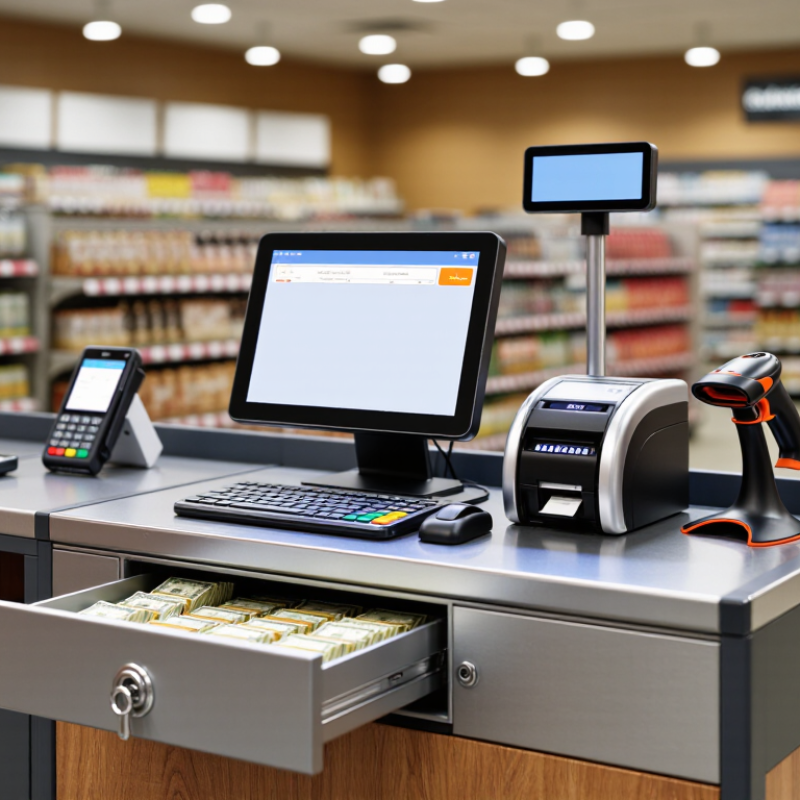
Suppliers typically offer more than a terminal: common configurations combine a touchscreen or desktop register with a receipt printer, barcode scanner, cash drawer, and payment peripherals. Demand varies by store size and workflow. A small shop may value a compact counter setup, while a busy supermarket needs durable devices and fast peripheral replacement. The picture is uneven. Public statistics do not neatly isolate China’s cash register output, so broad market estimates should be treated cautiously.
For buyers, factory capacity alone is a weak measure of fit. Ask for product specifications, sample testing, operating-system and peripheral compatibility, warranty terms, and spare-part availability. Check how suppliers handle firmware updates and technical support after installation. A demo should use real checkout tasks, including printing a receipt and reconnecting a scanner. That takes time. It can still reveal practical issues that a polished catalog misses. Industry research can help compare trends, but verify each supplier’s claims directly.
Main Types of Cash Register Suppliers in China
China’s cash-register suppliers generally fall into four groups: equipment manufacturers, OEM/ODM factories, trading distributors, and POS software integrators. Manufacturers build terminals, receipt printers, and cash drawers; OEM/ODM factories can adapt casing, interfaces, or packaging for a buyer’s specifications. Distributors often offer smaller order quantities and local support, while integrators connect hardware with inventory, payment, and reporting systems.
The choice matters as retail systems become more varied. Grand View Research valued the global POS terminal market at USD 110.22 billion in 2023 and forecast 8.3% annual growth from 2024 to 2030. This figure covers a broad global market, not Chinese suppliers alone. A factory may offer a lower unit price, yet software updates, spare parts, and communication during a fault can be less predictable. That is easy to underestimate. Ask each supplier for a live demonstration, a written warranty, and compatibility details for your store’s existing equipment.
Tips: Request a sample unit and test it at the counter. Check barcode scanning, receipt clarity, and drawer response during busy periods. Keep the test practical.
How to Compare Cash Register Suppliers
Compare suppliers on operating fit, not just unit price. Ask each supplier for a written specification covering receipt printing, cash-drawer compatibility, barcode scanning, language settings, warranty terms, and spare-part availability. Test the exact configuration you plan to buy. A polished demo may hide awkward daily workflows, so test voids, returns, and shift-end reports too. The 2023 NRF and Appriss Retail returns report estimated that U.S. retailers processed $743 billion in returns, equal to 14.5% of sales. That makes dependable receipt lookup and return handling practical comparison points, even for smaller shops.
Check how the supplier handles software updates, data protection, installation, and after-sales support across time zones. IBM’s 2024 Cost of a Data Breach Report put the average breach cost at $4.88 million across the organizations studied. This is not a retail-register-specific figure, but it shows why security questions should not be skipped. Ask for documentation on access controls, update procedures, and supported payment peripherals. Test it live.
Tips: Request a sample unit and a dated quotation that separates hardware, software, shipping, and support costs. Run a full shift simulation before approving a bulk order. Small details matter. A slow receipt cutter or unclear error message can frustrate staff every day.
Key Factors to Check Before Choosing a Supplier
Best Retail Store Cash Register Suppliers in China?
Key Factors to Check Before Choosing a Supplier
A low quote matters less than a register that works reliably through busy shifts. The Federal Reserve’s 2024 Diary of Consumer Payment Choice found that cash made up 16% of U.S. payments in 2023. That figure makes dependable cash drawers and receipt printers practical considerations, even as payment habits change. Ask suppliers for product specifications, quality-control records, warranty terms, and replacement-part availability. Small details matter. Check that the register supports your payment hardware and retail software, rather than relying on a vague promise of “compatibility.”
Request a sample unit and test it with your own workflow. Open the drawer repeatedly, print long receipts, and check whether the display stays readable under bright shop lighting. Ask how the supplier handles defects, firmware updates, and production delays. Confirm that any electrical or safety documentation suits your destination market. A polished factory tour is useful, but it cannot replace written service commitments and references from comparable retailers. I would also verify lead times against actual production capacity; catalog claims can look better than reality.
Tips: Put response times, spare-part supply, packaging standards, and inspection criteria in writing. Compare the same specification across quotations. Keep one sample for future checks. No checklist catches every mismatch, so document test results before placing a large order.


