China Top 10 PCB Board Manufacturers for Global Buyers
China remains a major production base for the global pcb board industry, serving electronics, automotive, telecommunications, medical, and industrial equipment companies. Prismark’s 2024 industry data placed global PCB output above US$70 billion, despite uneven demand across consumer electronics and computing. Its analysis also identified China as the largest regional manufacturing center. That scale matters. It supports broad material access, dense supplier networks, and faster production coordination.
Yet production scale does not automatically guarantee dependable quality. IPC’s industry standards, including IPC-6012 and IPC-A-600, remain important references for rigid board qualification and visual acceptance. Buyers should also examine ISO 9001 systems, IATF 16949 capability, UL recognition, traceability records, and independent test results. These details reveal more than a polished factory tour. A reliable supplier should explain copper thickness, layer registration, impedance control, surface finish, and first-article inspection clearly.
This guide reviews China’s top 10 PCB board manufacturers for global buyers through a practical sourcing lens. It considers technology range, certification evidence, production capacity, export experience, engineering support, and communication discipline. Numbers can mislead. A large factory may still be unsuitable for a small, complex prototype. A low quotation may conceal tooling limits, weak inspection, or unstable material sourcing. Buyers should verify current capabilities directly, because company rankings and factory conditions can change. That is an uncomfortable point, but it is necessary. Supplier selection is not a popularity contest; it is a risk assessment supported by evidence.
China’s PCB Industry: Over 50% of Global Production (Prismark)
China Top 10 PCB Board Manufacturers for Global Buyers
China’s PCB Industry: Over 50% of Global Production (Prismark)
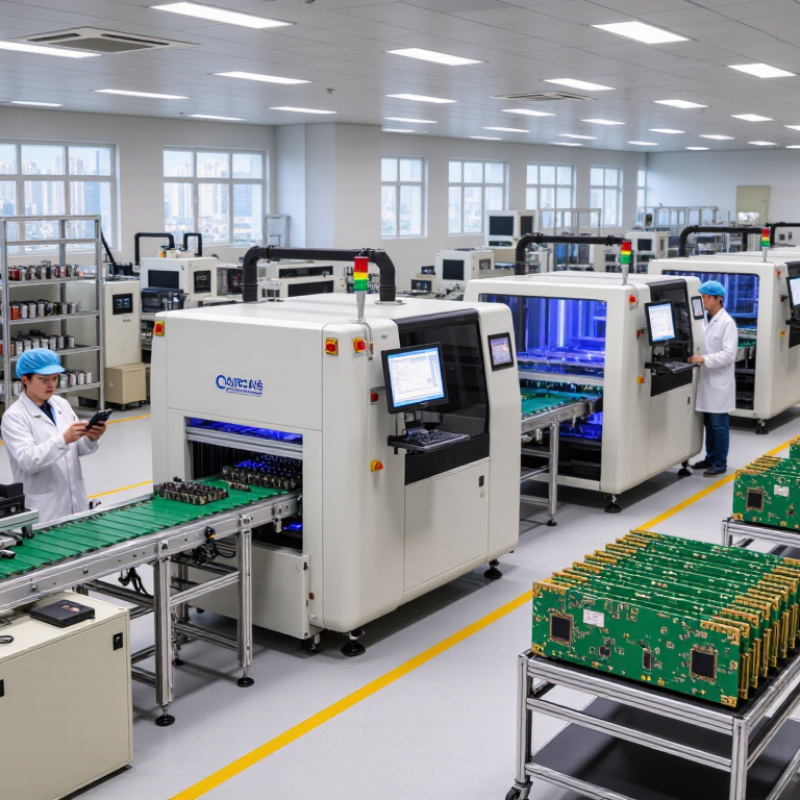
China has become a central manufacturing base for printed circuit boards. Prismark reports that China produces over 50% of global PCB output. This share reflects deep supply networks, large production capacity, and strong engineering experience. Factories support rigid boards, flexible circuits, multilayer designs, and high-density interconnect applications. Production floors often combine automated drilling, laser imaging, plating, and optical inspection. These details matter when buyers compare suppliers.
Scale alone is not enough. A capable manufacturer should provide clear material records, controlled process data, and stable electrical testing. Buyers should review stack-up control, impedance results, surface finish, and shipment consistency. A useful evaluation also includes prototype speed and communication during design changes. Small delays can become expensive when tooling, components, and assembly schedules are connected.
The industry still has weaknesses. A ranking can simplify differences between factories. Some suppliers may excel at high-volume boards but struggle with unusual tolerances or small batches. Buyers should ask for recent audit evidence, sample reports, and realistic production timelines. Visiting a facility, when practical, can reveal more than polished marketing language. Clean storage areas and labeled work-in-progress panels are encouraging signs. Not proof. Global buyers should also examine engineering support, traceability, environmental controls, and after-sales response before selecting a manufacturing partner.
China accounts for more than half of global PCB production, according to the Prismark-based industry figure referenced in the title. The chart uses 50.1% as a conservative lower-bound visualization; the remaining 49.9% is the mathematically implied share produced outside China.
Top 10 Chinese PCB Manufacturers: Scale, Markets, and Core Capabilities
China’s leading ten PCB manufacturers reflect the country’s broad industrial scale. Prismark estimated China produced about half of global PCB output by value in 2023. That concentration supports shorter component supply chains, large engineering teams, and faster capacity expansion. Scale matters.
Their markets extend beyond consumer electronics. Automotive control units, 5G infrastructure, industrial automation, medical devices, and aerospace systems demand different board structures. IPC research continues to identify automotive and high-reliability electronics as important growth areas. Multilayer, HDI, rigid-flex, and high-frequency boards therefore remain key capabilities. These products require controlled impedance, traceable materials, and stable lamination processes.
Capacity alone is not enough. Fortune Business Insights valued the global PCB market at more than 80 billion US dollars in 2023, with Asia-Pacific holding the largest regional share. Buyers should examine factory audits, defect data, certification scope, delivery records, and engineering response times. A supplier may offer impressive monthly output but lack experience with complex flex assemblies. That gap matters. The top ten are not identical, and ranking them precisely is difficult because public data mixes revenue, production value, and export performance. A better assessment compares market coverage, process depth, testing systems, and the ability to support design changes without disrupting volume production. For global buyers, those practical details often matter more than a polished capacity figure.
Global Buyer Checks: IPC-6012, IATF 16949, ISO 9001, UL, and RoHS
China Top 10 PCB Board Manufacturers for Global Buyers
Global buyers should treat certification as production evidence, not decoration. IPC-6012 defines qualification and performance requirements for rigid printed boards. Request the latest certificate, scope, revision, and test records. A factory may claim compliance, yet its certificate could exclude your board type. That detail matters.
For automotive projects, IATF 16949 shows stronger process control and traceability expectations. Ask for lot codes, corrective-action reports, and process capability data. ISO 9001 supports documented quality management, but it does not prove electrical performance alone. The ISO Survey 2023 reports more than one million ISO 9001 certificates worldwide, making certificate verification essential. Numbers can impress. Evidence is better.
UL recognition helps confirm safety-related construction and material controls. Check whether the file covers your exact laminate, thickness, and flammability class. RoHS verification should include supplier declarations and laboratory test reports for restricted substances. IPC market reports continue to show electronics supply chains facing capacity and delivery pressure, so buyers should also review lead-time records and inspection sampling. I have seen supplier lists look excellent on paper, but weak change control created costly rework. A second audit is rarely wasted.
Supplier Comparison: Capacity, Lead Time, MOQ, Yield, Logistics, and Cost
Choosing among China’s top PCB manufacturers requires more than comparing quoted prices. Capacity should match your forecast, not just today’s purchase order. A factory with automated lines and stable material access can handle volume changes better. Ask for current lead times, including engineering review, production, testing, and export preparation. Short promises can hide overloaded schedules. Yield data also matters. A high first-pass yield reduces rework, delays, and unexpected costs.
MOQ affects both cash flow and inventory risk. Low MOQ suits prototypes, but unit prices may rise. Larger orders can reduce cost, yet unused boards become expensive stock. Logistics should include packaging strength, customs documents, delivery terms, and route reliability. A cheaper quote may lose its advantage after air freight or repeated inspections. Request a complete cost breakdown, including tooling, testing, and special surface finishes.
Tips: Compare at least three written quotations. Ask for recent yield records and corrective-action reports. Confirm whether lead time starts after payment or file approval. Inspect sample packaging before mass production. My experience suggests that supplier claims are useful, but production records are stronger evidence. Still, yield percentages can vary by board complexity, so one figure should not decide everything. A simple four-layer board and a dense HDI design need different benchmarks. Leave schedule space for rework. It happens.