
China Top 10 Cold Rolled Coil Manufacturers
China’s cold rolled steel sector combines large-scale production with increasingly demanding quality requirements. This guide to China Top 10 Cold Rolled Coil Manufacturers examines companies that supply automotive panels, electrical enclosures, appliances, furniture, and precision components. Cold Rolled Coil is processed at room temperature, creating a smoother surface, tighter thickness control, and improved dimensional accuracy than conventional hot rolled material.
The comparison will consider more than production volume. It will review product grades, width and thickness ranges, surface finishes, coil weight, packaging, export experience, inspection systems, and delivery reliability. A bright appliance panel, a deep-drawing automotive sheet, and a galvanized-line input require different technical decisions. That detail matters.
John Ferriola, former chairman and chief executive of Nucor, has said, “Steel is the most recycled material in the world.” His observation highlights steel’s long-term value, but recycling alone does not prove supplier quality. Mill capability, chemical consistency, annealing control, and customer support still require careful verification.
This overview is designed for importers, service centers, engineers, and purchasing teams. It does not treat a ranking as permanent. Market conditions change. Product data can also vary between batches, websites, and inspection documents. Buyers should confirm current certifications, test reports, tolerances, payment terms, and production capacity directly with each manufacturer.
Some suppliers may look similar on paper. They are not always equal in practice. The final choice should match the application, not merely the lowest quotation.
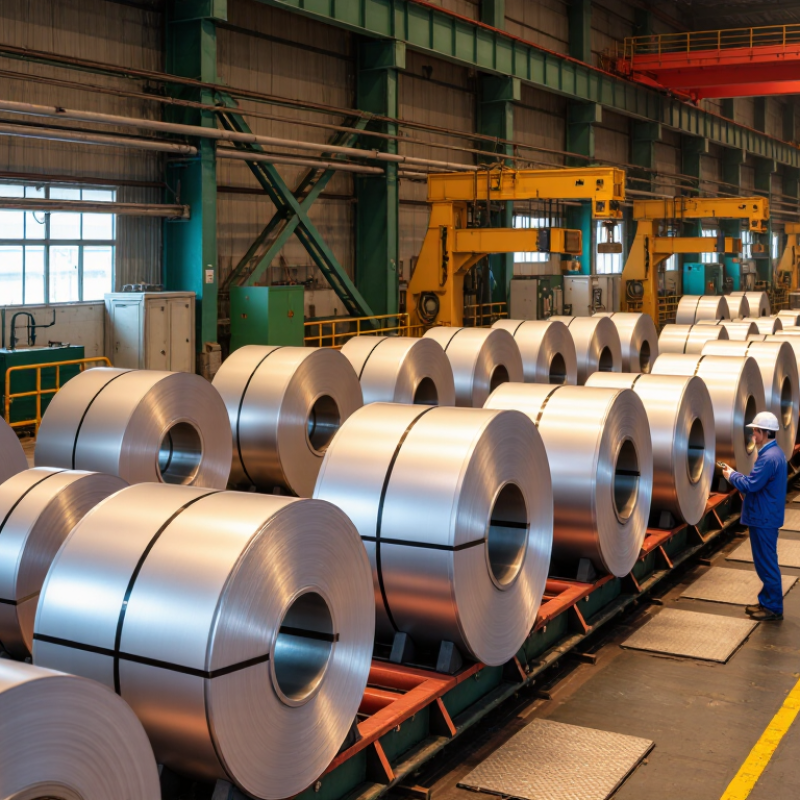
Cold Rolled Coil: Definition, Grades, and Main Applications
Cold rolled coil is steel reduced through rollers at room temperature. This process improves thickness accuracy, surface finish, and dimensional consistency. The coil is often annealed, then lightly skin-passed for a smoother surface. Common grades include commercial quality, drawing quality, and high-strength low-alloy steel. Each grade serves a different forming requirement. Drawing quality suits deep-formed panels, while high-strength grades support lighter structures.
Its main applications include automobile panels, appliance shells, furniture parts, electrical cabinets, and precision tubes. In daily sourcing, buyers should check thickness tolerance, width, yield strength, tensile strength, and elongation. Surface condition also matters. Small scratches can become visible after painting. Chinese manufacturers commonly supply various coil sizes, but availability and performance depend on production controls, not location alone. A bright surface is useful, yet it does not prove consistent internal quality. I have seen attractive samples fail during stamping. That is why independent testing remains worthwhile.
Tips: Request the mill test certificate and a retained sample. Compare the stated grade with the forming process. Confirm oiling, edge condition, coil weight, and packaging details. Ask for inspection photos before shipment. Do not judge quality from appearance only. Temperature, storage time, and handling can also affect rust protection. Some specifications look complete but omit tolerance limits. That omission deserves a question.
China’s Cold Rolled Coil Industry: Production and Market Structure
China’s cold rolled coil industry is built on large integrated steel complexes, specialized processors, and regional service centers. Production usually begins with hot rolled substrate, followed by pickling, tandem cold rolling, annealing, and skin passing. Each stage affects thickness tolerance, surface finish, and forming performance. Experienced buyers inspect coil edges, oiling consistency, and surface marks before approving deliveries.
The market has a layered structure. Large producers supply automotive, appliance, construction, and electrical steel customers through long-term contracts. Medium-sized mills often compete through flexible widths, smaller batches, and faster regional delivery. Service centers purchase master coils, then slit or cut them for fabricators. This network connects coastal ports with manufacturing clusters in eastern, northern, and southern China.
Domestic demand remains the main anchor, although export orders can influence monthly operating rates and prices. Automotive-grade material requires tighter chemistry control and stable annealing conditions than general commercial grades. Price comparisons can be misleading when coating, packaging, tolerance, and inspection terms differ. Some market reports also rely on limited sampling; that weakness deserves attention. A practical assessment should compare mill certificates with independent testing, actual yield performance, and delivery records. Even then, unexpected surface defects may appear after stamping. That is the uncomfortable part.
Criteria for Evaluating China’s Top 10 Manufacturers
China Top 10 Cold Rolled Coil Manufacturers
Criteria for Evaluating China’s Top 10 Manufacturers
China’s scale is impressive, but output alone cannot rank a cold rolled coil manufacturer. The World Steel Association reported 1.019 billion tonnes of Chinese crude steel production in 2023. This figure shows capacity, not coil quality. A serious evaluation checks thickness tolerance, width accuracy, surface finish, yield strength, and elongation. These details matter on an automotive panel or appliance door.
Audit the production line, not only the brochure. Review furnace control, rolling speed, annealing records, skin-pass settings, and inspection equipment. Ask for recent mill certificates and traceability from slab to coil. ISO 9001 supports process control, but independent test results provide stronger evidence. The OECD’s 2024 steel analysis also highlights continuing global excess capacity. Therefore, large capacity should not receive automatic credit. Delivery performance, inventory stability, export experience, and transparent complaint handling deserve equal attention.
Tips: Request three recent test certificates from different batches. Compare reported values with agreed specifications. Inspect coil edges for dents, telescoping, and rust marks. Check packaging before shipment. A small trial order can reveal more than a polished factory tour. Energy use and emissions data are also useful, although reporting quality remains uneven. That limitation deserves careful judgment. Price should be tested against total cost, including rejected coils, delays, and reprocessing.
China Top 10 Cold Rolled Coil Manufacturers - Criteria for Evaluating China’s Top 10 Manufacturers
| No. | Evaluation Criterion | Suggested Weight | Verifiable Benchmark | Recommended Evidence | Scoring Focus |
|---|---|---|---|---|---|
| 1 | Production Capacity and Stability | 15% | Assess annual cold rolling, annealing, skin-pass, and slitting capacity, together with the ability to maintain delivery schedules during peak demand. | Audited capacity statement, recent production records, lead-time history, and shipment performance data. | Capacity, utilization, and on-time delivery |
| 2 | Dimensional Range | 12% | Confirm the available thickness and width range for the required application. General commercial cold rolled products commonly cover approximately 0.30–3.00 mm thickness, subject to grade and mill capability. | Product catalogue, dimensional tolerance tables, sample inspection reports, and approved drawings. | Range, consistency, and customization |
| 3 | Compliance with International Standards | 14% | Capability to supply material according to EN 10130, ASTM A1008/A1008M, JIS G3141, or another contractually specified standard. | Mill test certificates, third-party inspection reports, standard editions cited in contracts, and traceability documents. | Standard accuracy and certificate validity |
| 4 | Steel Grades and Mechanical Properties | 12% | Evaluate availability of commercial, drawing, deep-drawing, and structural grades. For EN 10130 DC01, typical specified tensile strength is 270–410 MPa, while exact yield and elongation requirements depend on the grade and product thickness. | Heat-specific chemical analysis, tensile-test results, yield strength, elongation, and grade designation. | Grade accuracy and batch consistency |
| 5 | Surface Quality and Finish | 10% | Review surface finish options, including bright, matt, or specified roughness conditions, and confirm suitability for stamping, painting, plating, or exposed applications. | Surface inspection criteria, roughness measurements, defect limits, photographs, and customer approval samples. | Defect rate, roughness, and appearance |
| 6 | Flatness, Shape, and Tolerance Control | 10% | Verify thickness, width, camber, edge wave, center buckle, and flatness against the selected standard and purchase specification. Tolerances vary with thickness, width, grade, and delivery condition. | Calibrated gauge records, dimensional inspection reports, control plans, and nonconformance statistics. | Tolerance capability and process control |
| 7 | Coil Weight, Packaging, and Logistics | 8% | Check allowable coil inner diameter, outer diameter, maximum coil weight, eye orientation, moisture protection, and suitability for container or bulk shipment. | Packing specification, loading photographs, weighing records, export documentation, and damage-claim history. | Protection, handling, and freight compatibility |
| 8 | Quality Management and Traceability | 8% | A qualified supplier should maintain heat, coil, inspection, and shipment traceability from raw material through final delivery. | Quality-management certification, internal audit summaries, corrective-action records, and traceability demonstrations. | Traceability and corrective-action speed |
| 9 | Export Experience and Documentation | 6% | Assess experience with international shipment terms, customs documentation, certificates of origin, inspection requirements, and destination-market compliance. | Redacted export documents, shipping references, customs records, and documentation error rate. | Documentation accuracy and market coverage |
| 10 | Total Cost and Commercial Reliability | 5% | Compare material price, processing charges, packaging, inland transport, ocean freight, payment terms, and the cost of quality failures rather than evaluating the unit price alone. | Comparable quotations, payment terms, surcharge rules, warranty conditions, and historical claim resolution. | Total landed cost and transparency |
| Total Suggested Evaluation Weight | 100% | Use a 1–5 score for each criterion, multiply by the suggested weight, and rank suppliers only after document verification and sample approval. | |||
Profiles of China’s Top 10 Cold Rolled Coil Manufacturers
China’s top ten cold rolled coil manufacturers represent a broad industrial landscape, from integrated steel mills to specialized flat steel processors. Their profiles differ in production scale, coating capability, export experience, and quality control systems. Some operate continuous annealing lines, while others focus on precision slitting, automotive grades, or appliance materials.
A reliable comparison should examine more than annual output. Buyers should review thickness tolerance, surface finish, yield strength, packaging methods, and test documentation. Mill certificates matter. So do traceability records.
Several leading producers serve demanding automotive and electrical markets, where stable formability and clean surfaces are essential. Others compete through flexible minimum orders, regional delivery networks, or customized coil widths. Production experience often appears in small details, such as edge protection, coil weight consistency, and rust-prevention wrapping.
Independent inspection remains valuable when reviewing any ranking. Public information can be incomplete, and advertised capacity may not reflect current utilization. That weakness deserves attention. A manufacturer with modern equipment may still struggle with delivery consistency or communication. Buyers should compare recent samples, audit reports, applicable standards, and after-sales response before making a decision. These ten profiles are best viewed as a practical starting point, not a permanent judgment of every facility.
Quality Standards, Export Markets, and Buyer Considerations
China’s leading cold rolled coil manufacturers compete through stable quality, export experience, and flexible production. Buyers should examine more than surface brightness or a low quotation. A reliable supplier should provide mill test certificates, chemical composition, yield strength, tensile strength, and elongation data. Dimensional tolerance matters greatly. A difference of 0.03 millimeters can affect stamping performance.
Quality systems should align with recognized standards, such as ISO 9001, ASTM, EN, or JIS requirements. The correct standard depends on the destination and end use. Automotive panels, appliance shells, furniture parts, and electrical components require different grades. Request samples from the same production route as the proposed shipment. Paper samples can look perfect. Production reality is less forgiving.
Export markets also create practical risks. Confirm coil width, inner diameter, outer diameter, maximum unit weight, and packaging details before ordering. Galvanized protection, edge protection, and seaworthy wrapping help prevent rust during long ocean transport. Buyers should review loading photos and independent inspection reports when possible. Check whether the producer has shipped to your region under similar customs rules. A supplier may be technically capable but still weak in communication or documentation. That gap can delay clearance.
Price deserves careful questioning. A cheaper coil may involve wider tolerances, inconsistent oiling, or slower claim handling. Ask about lead time, replacement procedures, and payment safeguards. I would also compare three recent batches, not one attractive sample. No factory performs perfectly every time, and buyers should record defects honestly. That habit improves future purchasing decisions.


