Top 10 Energy Storage Systems for Global Buyers in 2026?
As the world continues to prioritize renewable energy, the demand for effective Energy Storage Systems is on the rise. By 2026, global buyers will likely seek innovative solutions to store energy efficiently. With advancements in technology, various systems are emerging, each with unique features and benefits.
Energy Storage Systems play a crucial role in stabilizing the grid and enabling a shift toward cleaner energy. Battery technology, including lithium-ion and solid-state options, is rapidly evolving. However, challenges remain. Costs, durability, and capacity need careful consideration. Ensuring reliability is essential for long-term investments.
Understanding the top Energy Storage Systems will empower buyers in making informed choices. Market dynamics change frequently, and selecting the right system requires expertise. Researching viable options is vital. Each system offers distinct advantages and may suit different needs. With energy demands increasing, the landscape is rapidly changing. Buyers must stay vigilant to adapt to market shifts.
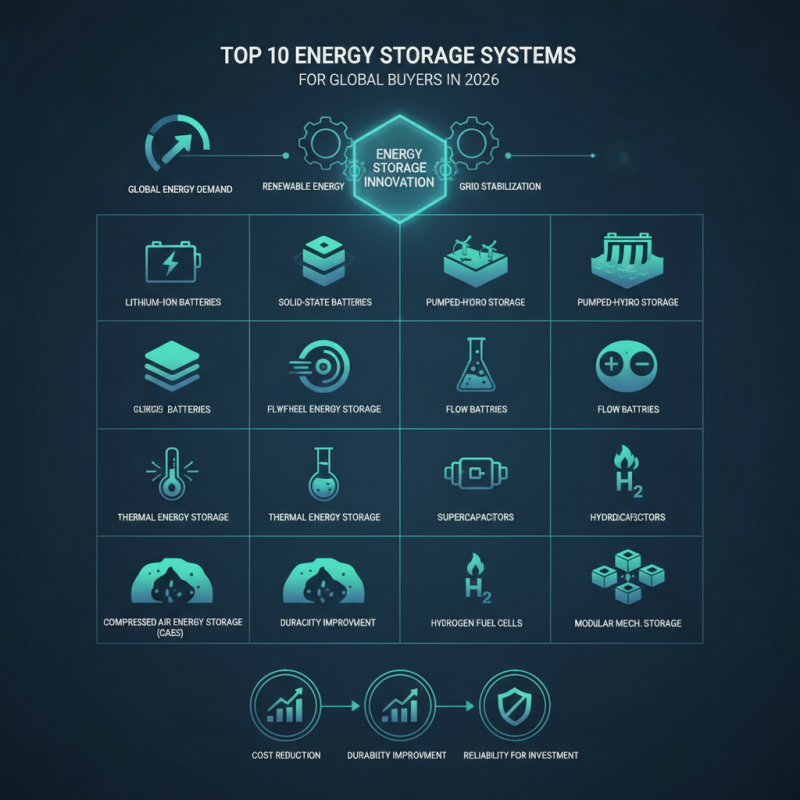
Top 10 Energy Storage Technologies Shaping the Market by 2026
Energy storage technologies are pivotal for the future of power systems. By 2026, various innovations will reshape the market landscape. Battery energy storage deserves attention. According to a recent report by Wood Mackenzie, the global commercial battery storage market is expected to surpass 300 GWh by 2026, driven by advancements in lithium-ion technology. This growth underscores the demand for efficient storage solutions, as renewable energy integration becomes crucial.
Additionally, pumped hydro storage will remain essential. It currently accounts for more than 90% of global energy storage capacity. However, challenges exist. Environmental concerns and geographical limitations hinder new projects. Alternatives like compressed air energy storage (CAES) are emerging. A study from BloombergNEF highlights CAES's cost-effectiveness and potential, with a forecast of 1.5 GW capacity by 2026.
Emerging technologies like solid-state batteries show promise. They offer higher energy densities and increased safety. However, commercialization timelines are uncertain, and challenges persist in production scalability. These factors could slow the rapid adoption of such technologies. The energy landscape is evolving, yet the ultimate trajectory remains complex and multi-faceted.
Top 10 Energy Storage Systems for Global Buyers in 2026
| Rank | Technology Type | Energy Density (Wh/kg) | Cycle Life (Cycles) | Efficiency (%) | Cost ($/kWh) |
| 1 | Lithium-ion Batteries | 150-250 | 500-3000 | 90-95 | 150-200 |
| 2 | Flow Batteries | 20-50 | 2000-10000 | 75-80 | 200-300 |
| 3 | Sodium-ion Batteries | 100-150 | 2500-4000 | 80-85 | 100-150 |
| 4 | Supercapacitors | 5-10 | 500000-1000000 | 85-95 | 10-20 |
| 5 | Lead-acid Batteries | 30-50 | 300-1000 | 70-80 | 100-150 |
| 6 | Compressed Air Energy Storage (CAES) | 20-40 | 3000-5000 | 60-75 | 150-250 |
| 7 | Pumped Hydro Storage | 10-30 | 5000-20000 | 70-85 | 100-200 |
| 8 | Thermal Storage | 30-150 | 500-2000 | 80-90 | 50-100 |
| 9 | Flywheel Energy Storage | 10-25 | 100000-1000000 | 90-95 | 300-500 |
| 10 | Carbon Nanotube Batteries | 150-200 | 5000-10000 | 85-90 | 200-350 |
Global Lithium-ion Battery Demand Projections and Market Dynamics
As we approach 2026, the demand for lithium-ion batteries is set to surge dramatically. According to a recent report by the International Energy Agency, global lithium-ion battery demand is projected to grow by over 65% from 2022 levels. This significant increase is driven by the rising adoption of electric vehicles, renewable energy integration, and energy storage solutions. Key markets like North America and Asia are at the forefront, contributing to nearly 75% of this growth.
However, challenges persist in the supply chain. The sourcing of raw materials such as lithium, cobalt, and nickel is becoming increasingly complex. Reports indicate that by 2025, lithium prices could increase by 20–30%, affecting battery production costs. These fluctuations make it vital for stakeholders in the energy sector to stay informed and agile.
Tip: Focus on diversification in sourcing materials to mitigate risks. Consider investing in advanced technologies that enhance recycling processes.
The dynamics of the lithium-ion battery market are shifting. Growing applications in grid storage solutions are now crucial. Industry experts note that integrating batteries with renewable sources can lead to a more resilient energy infrastructure. However, the
environmental impact of battery production raises questions about sustainability. A balanced approach is necessary to ensure long-term viability.
Tip: Engage with industry experts to explore innovative solutions for sustainable battery production. It’s crucial to stay ahead of regulatory changes and consumer demands.
Emerging Solid-state Batteries: Efficiency and Safety Advancements
The emergence of solid-state batteries marks a new chapter in energy storage technology. These batteries demonstrate significant improvements in both efficiency and safety. Solid-state batteries utilize solid electrolytes, which reduce the risk of leaks and flammability. This transition addresses major concerns surrounding traditional lithium-ion batteries.
According to a recent report by Allied Market Research, the solid-state battery market is projected to reach $16 billion by 2027, growing at a CAGR of 21% from 2020. This growth reflects the rising demand for safer and more efficient energy storage solutions. The higher energy density of solid-state batteries offers longer run times for electric vehicles and portable devices.
Challenges remain, however. The manufacturing cost of these batteries is still high. Scaling production is another hurdle. As manufacturers innovate, the focus must also include sustainable material sourcing. Battery recycling processes are crucial to mitigate environmental impact. Without addressing these issues, widespread adoption may lag despite potential benefits.
Capital Costs and Return on Investment for Energy Storage Systems
Energy storage systems are crucial for the transition to renewable energy. Understanding capital costs and return on investment (ROI) is vital for global buyers. In 2026, the market for energy storage will likely expand significantly. According to industry reports, battery energy storage systems could reduce overall costs by up to 20% compared to traditional systems.
Investors should analyze total lifecycle costs thoroughly. Initial capital costs might be high, but long-term savings are achievable. A hybrid storage model combining different technologies can enhance ROI. Projections show that the market could yield an ROI of over 15% annually for optimized systems. However, variability in local regulations may impact returns.
Tips: Evaluate project feasibility before investing. Compare options based on energy density and lifespan. Resilience in pricing is essential, especially given fluctuating material costs.
Moreover, it’s important to consider end-of-life processes for systems. Recycling and disposal may add costs. Look for solutions that provide sustainable end-of-life management. Balancing short-term and long-term benefits is challenging but necessary. The energy landscape continues to evolve, presenting both risks and opportunities for buyers.
Comparative Analysis of Pumped Hydro vs. Battery Storage Technologies
Pumped hydro storage (PHS) and battery storage technologies are essential for modern energy systems. PHS relies on gravitational potential energy. Water is pumped to higher elevations during low demand. It flows back down to generate electricity. This method has been used for decades and currently accounts for nearly 94% of global energy storage capacity, according to the International Energy Agency (IEA).
Battery storage, particularly lithium-ion technology, is growing rapidly. It offers flexibility and can be deployed in various sizes. The global battery storage market is projected to reach $100 billion by 2026, as noted by industry reports. However, battery systems typically have shorter lifespans compared to PHS. They also face challenges related to resource extraction and recycling processes.
Both systems have their pros and cons. PHS requires significant land and water resources. It also faces geographical limitations. Conversely, batteries can be installed almost anywhere but may suffer from high initial costs. There is ongoing debate about which technology is superior. Each comes with unique trade-offs and merits that energy planners must consider.