
Top 10 Oxygen Generator Suppliers for Global Buyers
Choosing an Oxygen Generator supplier is not merely a price comparison. It is a decision about dependable oxygen, service response, and long-term operating costs. The WHO’s Technical specifications for oxygen concentrators emphasizes measurable performance, including oxygen concentration, flow rate, and operation under local conditions. These details matter when equipment must run through a hot afternoon, voltage fluctuations, or a sudden rise in demand.
The scale of the need is clear. WHO and UNICEF’s 2023 report, Oxygen for all, documents persistent gaps in access to medical oxygen and calls for stronger systems, not equipment alone. WHO Director-General Dr. Tedros Adhanom Ghebreyesus has said, “Oxygen is essential for life, and for treating many diseases.” That principle makes supplier evaluation a practical healthcare priority. Still, a brochure is not proof. Buyers should request test records, installation references, maintenance plans, and clear guarantees for purity and output.
This “Top 10 Oxygen Generator Suppliers for Global Buyers” guide compares providers through those operational details. It considers production capacity, PSA technology, quality documentation, regional service, and spare-parts availability. A low purchase price can look attractive; a delayed replacement valve can change the calculation. Some comparisons remain imperfect because supplier data is not always reported in the same way. That uncertainty deserves attention, not concealment. The right shortlist should help buyers ask sharper questions before committing.
Understanding Oxygen Generators and Their Industrial Applications
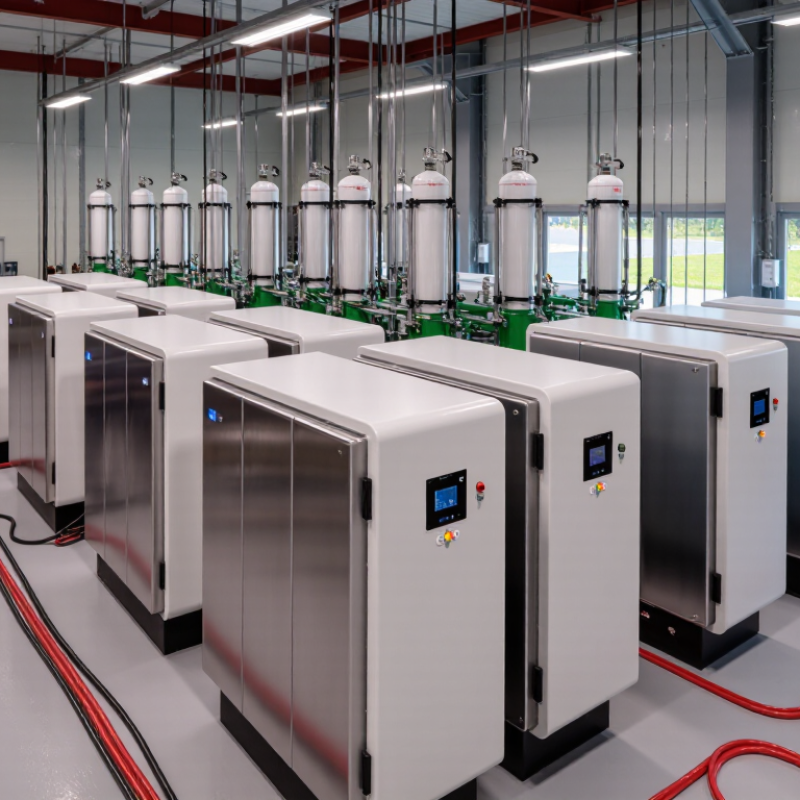
Oxygen generators separate oxygen from ambient air and supply it where continuous gas delivery is needed. Pressure swing adsorption and vacuum pressure swing adsorption systems commonly serve smaller or variable-demand sites. Cryogenic air separation is often selected for very large, steady requirements. The right choice depends on flow, purity, pressure, and energy costs. Not just purity.
Industrial uses include steelmaking, wastewater aeration, glass production, and metal cutting. World Steel Association’s World Steel in Figures 2024 reports global crude steel production of about 1.89 billion tonnes in 2023. Oxygen supports combustion and oxidation in steel processes, where reliable flow helps maintain furnace operation. At the plant, that can mean checking demand against production shifts, not just selecting a unit from its nameplate rating.
Oxygen also enriches aeration in wastewater treatment, helping biological processes break down organic matter. The U.S. EPA’s 2022 Clean Watersheds Needs Survey estimated $630.1 billion in U.S. wastewater and stormwater infrastructure needs over 20 years. That figure does not measure oxygen demand, but it reflects the scale of treatment systems requiring dependable operation. Flow matters, too. Generators need suitable filtration, backup arrangements, and routine maintenance. A practical limitation is easy to overlook: site conditions and changing demand can reduce real output below expected capacity.
Criteria for Evaluating Suppliers in the Global Market
Global buyers should compare suppliers by verified output, not nameplate capacity. Ask for oxygen purity, flow rate, pressure, power use, and performance at local temperature and altitude. For medical applications, WHO’s 2015 Technical Specifications for Oxygen Concentrators uses 82% oxygen concentration as a minimum benchmark under specified operating conditions. It is not a universal industrial specification; buyers should match the test criteria to the intended use.
Request independent test results, acceptance-test procedures, and references from installations with similar demand. Check whether the supplier can provide spare parts, remote diagnostics, and trained service staff near the delivery site. The World Bank’s Logistics Performance Index 2023 measures factors including shipment reliability and logistics competence. These matter when a replacement valve or filter must cross borders. Ask for realistic repair times, not just warranty length.
Energy costs can quietly outweigh a low purchase price. Compare measured electricity use per unit of oxygen, including compressor and dryer loads, and request data at partial capacity. Paper claims can look tidy. Site conditions rarely are. A supplier’s offer may omit commissioning, operator training, or routine consumables; buyers should price these separately and keep the assumptions on record.
Profiles of Ten Oxygen Generator Suppliers for Global Buyers
A modular PSA supplier suits factories that need steady oxygen without a large plant. Buyers should check rated flow, outlet pressure, and performance at local temperatures. A VPSA plant builder may serve larger sites with continuous demand. Its proposal should explain power use and planned maintenance. A medical-system integrator coordinates generators with storage, alarms, and distribution equipment. Request clear purity data and service procedures. An industrial process supplier may tailor controls to furnaces or wastewater treatment. Small details matter.
A containerized supplier can simplify installation at remote facilities, though transport access still needs checking. A laboratory-scale supplier offers compact units for testing and pilot work. Confirm whether its capacity matches real operating hours, not just peak output. A high-purity specialist can support applications with tighter gas specifications. Ask how purity is measured and recorded. Numbers need context. A retrofit supplier evaluates existing compressors, piping, and ventilation before recommending changes. Reusing equipment may save money, but not every old component is suitable.
A turnkey engineering supplier manages design, installation, and commissioning under one contract. Buyers should define handover documents and response times early. A regional service provider may offer faster parts access and routine inspections. Check technician coverage near the actual site. These ten supplier profiles reflect different strengths, not guaranteed rankings. Compare written performance data, reference installations, warranty terms, and lifecycle costs. Specifications can look tidy on paper; installation rarely does. One uncomfortable question is often useful: who responds when output falls on a busy production day?
Comparing Technologies, Production Capacity, and Service Networks
Choosing among the top ten oxygen generator suppliers requires more than comparing quoted flow rates. PSA systems suit sites needing on-site supply and moderate purity, while cryogenic separation better serves high-volume users requiring liquid oxygen or higher purity. The World Health Organization’s oxygen-source guidance gives PSA output as 93% ±3 percentage points. That range matters: a process needing tighter purity limits may require different equipment, testing, or backup supply.
Compare capacity under your actual operating conditions. Ask whether a supplier’s Nm³/h figure assumes standard temperature, feed pressure, and continuous operation. A nameplate rating can flatter real output at high altitude or during hot weather. Not always. Request performance curves, power use per unit of oxygen, and documented uptime. WHO’s technical specifications for oxygen concentrators report output concentrations of 82% to 96%; this is not a plant-capacity benchmark, but it shows why buyers should distinguish device specifications from bulk-system requirements.
Service networks shape lifecycle risk. Check local commissioning support, response times, spare sieve beds, compressor availability, and operator training. Ask for service coverage in writing, not just a map. A remote monitoring dashboard helps, but it cannot replace a technician with parts on site. The uncomfortable question is whether support remains available after installation, when demand spikes or a valve fails. Supplier comparisons should therefore weigh verified field performance alongside technology and production capacity.
| Profile | Typical Technology | Indicative Capacity Band | Typical Oxygen Purity | Common Applications | Common Service Model | Buyer Considerations |
|---|---|---|---|---|---|---|
| 1. Compact on-site system specialist | Pressure Swing Adsorption (PSA) | Approximately 1–50 Nm³/h | Typically 90–95% oxygen | Small medical facilities, laboratories, aquaculture, and localized industrial use | Remote troubleshooting, commissioning support, and service through local distributors where available | Confirm applicable medical-device requirements, backup arrangements, and the availability of replacement adsorbent and valves. |
| 2. Modular PSA system supplier | Multiple PSA modules operating in parallel | Approximately 10–500 Nm³/h, depending on configuration | Typically 90–95% oxygen | Hospitals, wastewater treatment, glass production, and general industrial processes | Modular commissioning, scheduled maintenance, and regional parts or technician support | Ask how output and purity respond to changing demand, and whether modules can be serviced without stopping the entire plant. |
| 3. Large-flow PSA plant integrator | Engineered PSA trains with feed-air treatment and controls | From tens to several hundred Nm³/h per installation; project-specific | Typically 90–95% oxygen | Metallurgy, chemical processing, glass furnaces, and industrial combustion | Project engineering, site commissioning, planned service, and contract-dependent field support | Compare guaranteed flow at the specified purity, feed-air conditions, energy use, and plant availability. |
| 4. VPSA high-flow plant supplier | Vacuum Pressure Swing Adsorption (VPSA) | Generally suited to larger continuous-flow duties, often from hundreds to several thousand Nm³/h | Commonly around 90–95% oxygen | Steelmaking, non-ferrous metals, pulp and paper, and large wastewater facilities | Typically project-based engineering and commissioning, with service coverage dependent on region and contract | Evaluate the full installed system, including vacuum equipment, cooling, electrical demand, and the cost of planned overhauls. |
| 5. Cryogenic air-separation plant supplier | Cryogenic distillation of air | Usually selected for large, continuous production; capacity is engineered for each project | Can produce high-purity oxygen; purity depends on plant design and product specification | Integrated steelworks, chemicals, refining, and large-volume industrial gas supply | Long-term plant service and specialist support are commonly arranged through project or supply agreements | Consider capital cost, construction time, minimum economical scale, operating flexibility, and whether other products such as nitrogen are required. |
| 6. Containerized and mobile plant provider | Packaged PSA, with selected projects using other process configurations | Often tens of Nm³/h; larger packaged capacities depend on transport and site design | Typically 90–95% for PSA configurations | Remote sites, temporary capacity, emergency response, and projects with limited building infrastructure | Factory testing, on-site startup, and remote or regional maintenance support, subject to location | Check shipping dimensions, ambient-temperature limits, power requirements, noise levels, and local access to service personnel. |
| 7. Medical oxygen system integrator | Medical-grade PSA system with filtration, monitoring, and distribution equipment | Designed around facility demand; commonly modular for hospitals and healthcare networks | Often designed for approximately 93% oxygen, subject to applicable standards and the system specification | Hospitals, clinics, and healthcare facilities | Installation, operator training, preventive maintenance, and compliance documentation may be provided as a package | Verify the relevant national standards, required backup supply, alarms, monitoring, validation, and responsibility for the distribution system. |
| 8. Industrial oxygen package supplier | PSA or VPSA packages selected for process demand | From small packages to multi-train installations; project-specific | Commonly 90–95% for adsorption systems | Ozone generation, aquaculture, wastewater treatment, and combustion enrichment | Equipment commissioning and maintenance support are typically defined by the purchase contract | Confirm that the process accepts the proposed purity and pressure, and request performance data at actual site conditions. |
| 9. Engineering-led custom plant builder | PSA, VPSA, or cryogenic process selected through project engineering | Project-specific; may range from packaged units to large plants | Depends on selected process and product specification | Complex industrial projects, multi-site programs, and facilities with unusual operating requirements | Engineering, integration, commissioning, and long-term service are negotiated for each project | Review design responsibility, performance guarantees, interface boundaries, spare-parts commitments, and service response times. |
| 10. Regional distributor and service partner | Usually represents packaged PSA equipment; portfolio varies by market | Commonly small and mid-sized systems, with larger projects referred to an equipment manufacturer or integrator | Typically 90–95% for PSA products | Local hospitals, workshops, farms, laboratories, and small industrial users | Local sales, installation coordination, and first-line support; technical depth and parts stock vary | Confirm who holds the warranty, which technicians are factory-trained, and whether critical parts are stocked in-country. |
Data note: Supplier profiles are anonymized procurement categories, not named or ranked companies. Capacity and purity figures are indicative ranges for common oxygen-generation technologies, not verified company-specific production figures or guarantees. Actual performance, service coverage, and applicable standards depend on the equipment design, site conditions, and contract.
Verifying Suppliers and Planning International Procurement
For global buyers, supplier verification should begin with operating evidence, not a polished brochure. Ask for test data showing oxygen purity, flow rate, and outlet pressure under stated conditions. Confirm whether the figures apply to your expected temperature, altitude, and duty cycle. A result without its test conditions is hard to compare. A neat document can still leave questions.
Check the supplier’s manufacturing records, quality procedures, warranty terms, and service coverage. Request references from customers using similar equipment, and ask how quickly spare parts can be shipped to your destination. For procurement planning, confirm electrical requirements, installation space, ventilation needs, packaging dimensions, and shipping weight before approving a quotation. These details affect site readiness and freight costs. It is easy to miss one.
Tips: Put requirements in a written checklist and ask each supplier to respond in the same format. Verify certificates with their issuing organizations where possible. Clarify who handles export documents, transit insurance, commissioning, and remote support. Leave time for document review and installation checks. Plans change; allow some room for that.
Oxygen purity specifications for procurement
Bars show the minimum stated oxygen concentration: Oxygen 93 is specified at 90% (with a specification range of 90–96%), while USP Oxygen requires at least 99.5%. These are product specifications, not supplier performance data. Verify the required grade and applicable standards for your intended use.
Source: USP–NF monographs for Oxygen and Oxygen 93.


