
Top 10 Spray Nozzle Manufacturers for Global Buyers
Choosing the right Spray Nozzle manufacturer can shape product quality, maintenance costs, and production stability. Global buyers face hundreds of options, from precision air-atomizing suppliers to heavy-duty hydraulic nozzle producers. Their catalogs may look similar. Their results rarely are.
This guide examines ten leading manufacturers through practical buying criteria. These include spray pattern accuracy, flow-rate consistency, material selection, pressure tolerance, technical support, and replacement availability. A nozzle that performs well in a laboratory may fail beside a hot conveyor, a dusty coating line, or a chemically aggressive tank. Real conditions matter.
As atomization specialist Arthur H. Lefebvre wrote, “The performance of an atomizer depends on the conditions under which it operates.” That principle remains useful. No single supplier fits every process. Not even close. Buyers should compare test data, application experience, certifications, and after-sales service instead of relying only on brand recognition. This ranking also considers manufacturing depth, global distribution, customization capability, and documented customer support. Some evaluations remain imperfect because regional pricing and private performance data are difficult to verify. That limitation deserves attention.
The selected manufacturers serve industries such as agriculture, food processing, automotive finishing, fire protection, mining, and industrial cleaning. Each company has different strengths. One may excel at ultra-fine droplets, while another handles abrasive slurry or high-impact washing better. The best choice is not always the largest name. It is the supplier that understands your process, proves performance under realistic conditions, and can deliver the same Spray Nozzle specification when production expands.
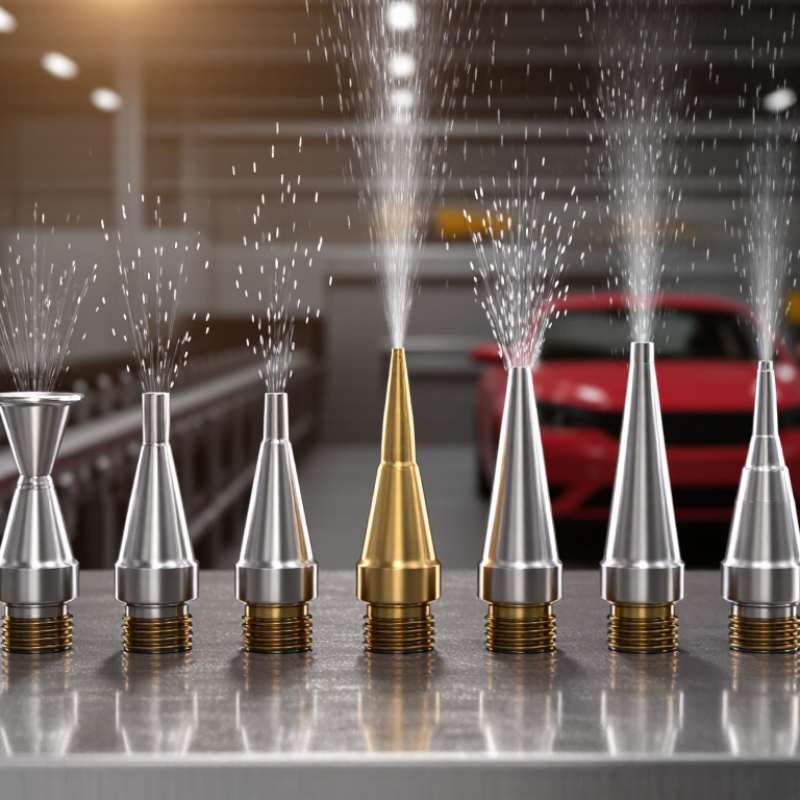
Spray Nozzle Basics: Types, Materials, and Industrial Applications
Spray nozzles control liquid flow, droplet size, coverage, and impact. Their design affects product quality and operating cost.
Flat-fan nozzles create even bands for coating, cleaning, and agricultural spraying.
Full-cone models handle tank washing and general process cooling.
Hollow-cone types produce fine droplets for gas conditioning and dust suppression.
Air-atomizing nozzles use compressed air for very small droplets. They demand cleaner air and tighter maintenance.
Material selection is equally important. Stainless steel resists corrosion in food, chemical, and water-treatment systems. Ceramic survives abrasive slurries and extended agricultural use. Brass suits moderate pressure and less aggressive fluids. Engineering plastics can reduce weight, but temperature limits are easy to overlook.
The Food and Agriculture Organization reports that agriculture accounts for about 70% of global freshwater withdrawals. Efficient nozzle patterns therefore matter beyond factory performance. Field testing should measure flow rate, spray angle, droplet distribution, and wear. A catalogue match is not enough. Small errors become expensive.
Industrial buyers should compare operating pressure, liquid viscosity, filtration, replacement intervals, and local standards.
The U.S. EPA identifies spray technology as a practical route for improving industrial cooling and cleaning efficiency. Still, published savings vary widely. I would question any supplier claiming universal results without test conditions.
Ten shortlisted manufacturers may offer similar drawings, yet their quality control and technical support can differ sharply. Requesting sample tests, material certificates, and performance data makes the decision more reliable.
How to Evaluate Global Spray Nozzle Manufacturers
Choosing among the top 10 spray nozzle manufacturers requires more than comparing catalog prices. Global buyers should examine real manufacturing experience, material knowledge, and quality records. Ask how each manufacturer controls spray angle, flow rate, pressure, and droplet size. A reliable supplier should provide technical drawings, test data, and clear tolerances. Request samples before approving a large order. A nozzle that looks identical may perform differently in a production line.
Check the manufacturer’s production process closely. Look for suitable machining equipment, inspection tools, batch tracking, and documented testing procedures. Stainless steel, brass, ceramic, and engineered plastics behave differently under heat and chemical exposure. Confirm that the supplier understands your operating conditions, including liquid viscosity, temperature, pressure, and cleaning methods. Communication matters too. Technical answers should be specific, not vague promises. Sometimes, a cheaper quotation hides inconsistent dimensions or limited support. I have seen buyers focus on unit cost and overlook replacement delays.
Tips: Compare at least three samples under identical conditions. Measure spray coverage, flow stability, and connection accuracy. Verify packaging for long-distance transport. Ask for references from similar industries, but review them critically. A polished website is not proof of factory capability. Also, leave room for doubt. Even a strong manufacturer may need testing when your liquid, equipment, or climate differs. Clear records build trust. Field performance decides the purchase.
Top 10 Spray Nozzle Manufacturers for Global Buyers
Global buyers often compare the top ten spray nozzle manufacturers by engineering depth, production consistency, and export experience. Strong manufacturers provide full technical drawings, flow-rate charts, and material certificates. These documents reduce costly misunderstandings across languages and time zones. Their product ranges may include flat-fan, full-cone, hollow-cone, air-atomizing, and rotary nozzles.
Real performance matters more than attractive catalogs. A reliable manufacturer tests spray angle, droplet distribution, pressure tolerance, and liquid compatibility. For example, a stainless-steel nozzle operating at 3 bar should match its stated flow within an acceptable tolerance. Manufacturers serving food, chemical, cleaning, and agricultural applications should explain sanitation, corrosion resistance, and maintenance requirements. Clear batch coding also supports traceability.
Look beyond price. Very low quotes can hide unstable machining or weak inspection systems. Ask about sample testing, tooling control, replacement parts, and delivery records. Certifications can help, but buyers should verify their scope and validity. Some suppliers communicate well before payment, then respond slowly after production begins. That risk deserves attention. I have found that a practical trial often reveals more than a polished presentation. Request several samples and inspect spray uniformity at different pressures. Check threads by hand. Measure actual flow. Small details matter.
Capabilities vary. Some manufacturers excel at custom carbide inserts, while others focus on fast standard production. The best choice depends on application, fluid, pressure, cleaning method, and local service expectations. Reliable communication remains essential.arsuarmi
Comparing Product Quality, Customization, and Technical Support
Top 10 Spray Nozzle Manufacturers for Global Buyers
Comparing Product Quality, Customization, and Technical Support
Product quality begins with repeatable performance, not polished photographs. Reliable manufacturers test flow rate, spray angle, droplet distribution, and pressure stability. Buyers should request test data from several production batches. A nozzle that performs well once may still fail during continuous operation. Material certificates, dimensional inspection records, and corrosion testing also deserve attention. Fit matters. Small thread errors can create leaks, vibration, or uneven coverage.
Customization involves more than changing an outlet size. Experienced manufacturers can adjust spray patterns, connection types, materials, and internal passages for specific fluids and pressures. They should provide drawings, sample parts, and prototype feedback before mass production. During one equipment review, I found that a wider spray angle improved coverage but increased overspray. That detail was easy to miss. Clear communication between engineers prevents expensive revisions later. CAD files and documented tolerances are valuable.
Technical support often separates a dependable supplier from a temporary source. Look for responsive engineers who can interpret operating data, not merely send a catalog. Useful support includes installation guidance, cleaning instructions, wear recommendations, and troubleshooting based on pressure and flow readings. Spare-part availability matters when production cannot wait. Support across time zones helps global buyers, but response speed is not everything. Accurate answers matter more. Some manufacturers provide excellent samples yet offer weak follow-up. That gap should remain part of the evaluation.
Top 10 Spray Nozzle Manufacturers: Global Buyer Benchmark
Average normalized scores across ten leading manufacturers, based on product quality, customization capability, and technical support. Scores use a 0–100 scale.
Product quality leads the benchmark, while customization and technical support show greater variation among global suppliers. Buyers should validate test data, material compatibility, lead times, and after-sales coverage before purchasing.
Global Purchasing Factors: Certifications, Pricing, and Delivery Times
Top 10 Spray Nozzle Manufacturers for Global Buyers
Global buyers should verify certifications before comparing spray nozzle prices. ISO 9001 indicates controlled quality processes, but it does not guarantee perfect nozzle performance. Ask for current certificates, material traceability, and inspection records for each production batch. For food, chemical, or high-temperature applications, confirm the relevant material and safety requirements. A polished certificate alone is not enough.
Pricing needs careful examination. Compare the complete landed cost, including tooling, minimum order quantities, packaging, freight, taxes, and replacement parts. Request a written quotation with nozzle material, spray angle, flow rate, pressure range, and tolerance clearly listed. The cheapest offer may use thinner metal or provide weaker testing. That difference appears later.
Delivery times often depend on inventory and customization. Standard nozzles may ship within one or two weeks, while engineered designs can require six to ten weeks. Ask for sample timing, production capacity, quality-release procedures, and a realistic shipping window. Confirm whether the quoted date means factory dispatch or arrival at your warehouse. This detail is easy to miss. In practical sourcing reviews, buyers sometimes focus too heavily on unit price. I have found that assumption unreliable. A supplier with clear drawings, responsive technical staff, and traceable inspection data usually reduces costly rework, although no purchasing process is flawless.
Top 10 Spray Nozzle Manufacturers for Global Buyers - Global Purchasing Factors: Certifications, Pricing, and Delivery Times
| Rank | Supplier Profile | Primary Manufacturing Region | Main Nozzle Categories | Common Materials | Typical Pressure Range | Common Certifications / Compliance | Indicative Unit Price* | Standard Lead Time* | Typical MOQ | Best Fit for Global Buyers |
|---|---|---|---|---|---|---|---|---|---|---|
| 1 | Supplier Profile A | North America | Hydraulic, air atomizing, tank-cleaning | Stainless steel, brass, engineered polymers | Up to 300 bar | ISO 9001; selected food-contact and RoHS options | US$8–65 | 2–6 weeks | 10–50 pieces | Engineered systems and critical industrial applications |
| 2 | Supplier Profile B | Western Europe | Full-cone, hollow-cone, flat-fan | Stainless steel, nickel alloys, ceramics | Up to 250 bar | ISO 9001; CE-related documentation; REACH and RoHS support | US$12–90 | 3–8 weeks | 25–100 pieces | Chemical processing, power, and precision spray control |
| 3 | Supplier Profile C | East Asia | Spiral, full-cone, descaling | 316 stainless steel, alloy steel, carbide | Up to 400 bar | ISO 9001; material certificates available; RoHS options | US$3–38 | 3–7 weeks | 50–200 pieces | High-volume industrial purchasing and OEM programs |
| 4 | Supplier Profile D | Central Europe | Air-assisted, two-fluid, fine-spray | Stainless steel, tungsten carbide, ceramic inserts | Liquid side up to 100 bar | ISO 9001; ATEX-compatible configurations on request | US$25–180 | 4–10 weeks | 5–25 pieces | Coating, drying, humidification, and combustion processes |
| 5 | Supplier Profile E | South Asia | Agricultural hollow-cone, flat-fan, misting | Acetal, polypropylene, brass, stainless steel | Up to 40 bar | ISO 9001; selected agricultural and RoHS documentation | US$0.20–8 | 3–6 weeks | 500–5,000 pieces | Agriculture, irrigation, and cost-sensitive distribution channels |
| 6 | Supplier Profile F | North America | Washdown, tank-cleaning, rotating spray heads | 316L stainless steel, PTFE, PEEK | Up to 150 bar | ISO 9001; hygienic-design and food-contact options | US$35–220 | 2–8 weeks | 5–50 pieces | Food, beverage, pharmaceutical, and sanitary equipment |
| 7 | Supplier Profile G | Northern Europe | Hydraulic atomizing, misting, humidification | Stainless steel, brass, nickel-plated components | Up to 200 bar | ISO 9001; CE documentation; selected EMC and RoHS support | US$10–75 | 3–9 weeks | 10–100 pieces | HVAC, environmental control, and process humidification |
| 8 | Supplier Profile H | East Asia | Plastic flat-fan, air-inclusion, agricultural spray tips | Polyacetal, polypropylene, nylon, ceramic | Up to 25 bar | ISO 9001; RoHS and REACH declarations commonly available | US$0.15–6 | 2–5 weeks | 1,000–10,000 pieces | Large-volume agricultural and OEM replacement programs |
| 9 | Supplier Profile I | Southern Europe | Airless spray, coating, paint-finishing nozzles | Hardened steel, carbide, stainless steel | Up to 500 bar | ISO 9001; CE and material traceability support | US$6–70 | 3–8 weeks | 25–250 pieces | Metal finishing, protective coatings, and industrial painting |
| 10 | Supplier Profile J | Southeast Asia | Misting, cooling, firefighting, general-purpose spray | Brass, stainless steel, nylon, polypropylene | Up to 100 bar | ISO 9001; selected CE, RoHS, and application-specific documentation | US$0.50–25 | 3–7 weeks | 100–1,000 pieces | Regional distributors, replacement parts, and private-label sourcing |


