
China Top Vibratory Dryer Manufacturers for Global Buyers

Choosing a reliable Vibratory Dryer manufacturer in China requires more than comparing prices. Global buyers must examine drying performance, material quality, engineering support, and documented testing. A polished brochure is not enough.

A Vibratory Dryer uses controlled vibration and heated airflow to move wet materials through a drying chamber. This design can support gentle handling, steady residence time, and efficient moisture removal. It is often considered for food ingredients, chemicals, minerals, pharmaceuticals, and other bulk solids. However, results depend on feed moisture, particle size, temperature, and product sensitivity. Small changes can matter.

Dr. Arun S. Mujumdar, a respected drying technology expert, has stated, “Drying is one of the oldest and most energy-intensive operations in the process industries.” His observation remains practical for today’s equipment buyers. Energy use should be reviewed beside capacity, final moisture, and maintenance requirements.

China has many Vibratory Dryer manufacturers, but their capabilities are not identical. Some provide complete testing, while others mainly assemble standard units. Ask for material certificates, vibration parameters, airflow data, surface finish details, and factory acceptance records. Request a sample trial when the product is sensitive or expensive. That step may reveal problems early.

No supplier is perfect. Even a strong machine may need better insulation, clearer documentation, or local service planning. Global buyers should compare evidence, not promises. The best manufacturer is not always the cheapest. It is the one that explains limitations, verifies performance, and supports the equipment after delivery.
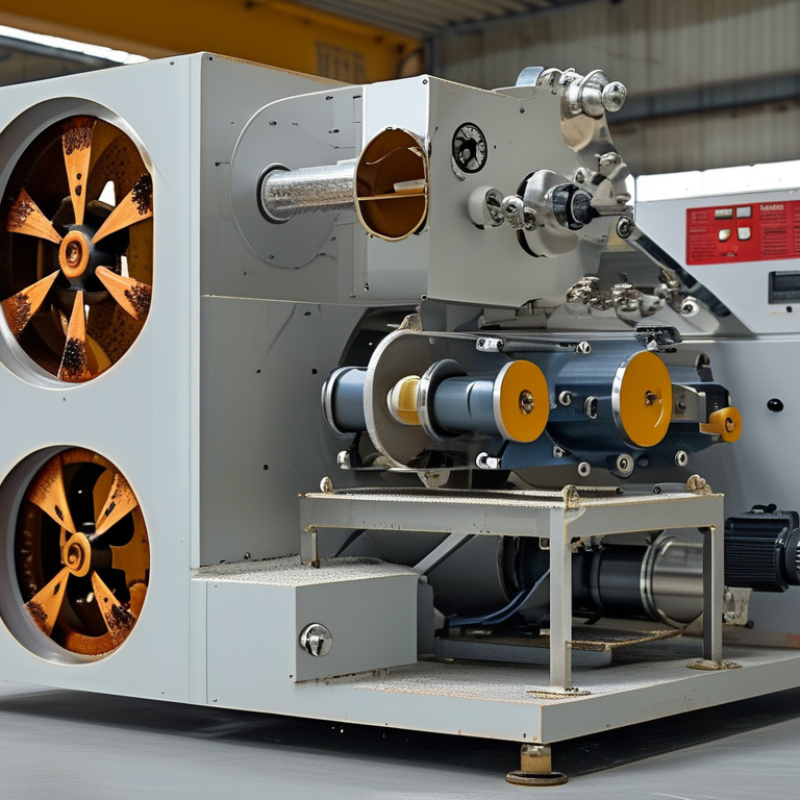
China Top Vibratory Dryer Manufacturers for Global Buyers

Vibratory Dryers: Definition, Operating Principles, and Industrial Uses

Vibratory dryers remove moisture through controlled heat, airflow, and mechanical vibration. Their perforated decks or trays move wet material in a shallow, continuous layer. Vibration improves contact with heated air and reduces stagnant zones. The U.S. Department of Energy notes that industrial drying can consume 10–15% of manufacturing energy. That figure makes dryer selection more than a routine equipment decision.

During operation, an eccentric motor creates repeated horizontal or elliptical movement. Material advances gradually while moisture evaporates from its surface. Air temperature, residence time, feed depth, and vibration amplitude require careful adjustment. Excessive heat may damage color, texture, or active ingredients. Insufficient airflow leaves wet pockets. The calculation is useful, but never perfect. Real feed behavior can defeat a neat laboratory result.

Vibratory dryers suit food ingredients, minerals, chemicals, biomass, and wastewater-derived solids where gentle handling matters. They can separate drying zones, improving control for heat-sensitive materials. IEA’s Energy Efficiency 2023 report states that industry consumed about 37% of global final energy in 2022. Buyers should therefore compare thermal efficiency, dust control, cleanability, and maintenance access, not only purchase price. For global procurement, Chinese manufacturers can offer different chamber sizes, heating systems, and automation levels. Independent trials remain essential. Ask for moisture uniformity data, energy consumption per kilogram of evaporated water, and documented material compatibility.

China’s Vibratory Dryer Manufacturing Landscape and Key Advantages

China’s vibratory dryer manufacturing landscape benefits from a deep industrial supply chain. The National Bureau of Statistics reported 5.0% growth in China’s manufacturing value added during 2023. This scale supports faster access to motors, stainless steel, controls, insulation, and custom fabrication.

Vibratory dryers use controlled movement to spread wet material across a heated surface. That improves contact and can shorten residence time. Design quality still matters more than production volume. The IEA reported that industry consumed about 37% of global final energy in 2022, making thermal efficiency a serious purchasing issue. Chinese manufacturers increasingly offer variable-frequency drives, heat recovery, closed-loop air systems, and insulated chambers. These features may reduce energy waste, although savings depend heavily on feed moisture, particle size, and operating discipline.

The market is not perfectly transparent. Some suppliers publish impressive capacity figures without showing test conditions. That deserves careful review. UNIDO’s 2024 industrial statistics confirm China’s strong manufacturing position, but national scale does not guarantee every dryer performs equally.

Tips: Request a material trial, not only a brochure. Check final moisture, throughput, air temperature, vibration amplitude, and power consumption. Ask for factory acceptance records and maintenance intervals. A small pilot test often reveals more than a polished quotation.

How to Evaluate China’s Top Vibratory Dryer Manufacturers

Evaluating China’s Top Vibratory Dryer Manufacturers

A reliable evaluation starts with the dryer’s working conditions. Check material type, moisture level, feeding rate, and required final dryness. A manufacturer should explain how vibration frequency, air temperature, and residence time affect performance. Vague promises are warning signs. Ask for test records using a sample close to your own material.

Factory experience also matters. Review the production area, welding quality, surface finishing, and component traceability. Inspect the screen, heating system, insulation, and discharge outlet carefully. Small details matter. Request drawings, material specifications, and documented quality checks before ordering. A capable engineering team should identify limits instead of claiming that one design fits every process.

After-sales support deserves equal attention. Confirm installation guidance, spare-part availability, response times, and operator training. Speak with previous buyers when possible, but verify every reference independently. A professional supplier can provide inspection reports and realistic delivery schedules. Still, no manufacturer is perfect. I would treat unclear technical documents as a reason to slow down, not negotiate faster. One overlooked detail, such as difficult cleaning access, may create daily maintenance problems. A pilot test, clear acceptance criteria, and written responsibilities reduce that risk for global buyers.

Essential Technical Specifications for Global Equipment Buyers

China Top Vibratory Dryer Manufacturers for Global Buyers

Global buyers evaluating China’s vibratory dryer manufacturers should begin with measurable operating data, not brochure language. Ask for feed rate in kilograms per hour, inlet moisture, target final moisture, and residence time. Capacity changes sharply when wet solids become sticky. That detail matters. A reliable supplier should provide drying curves from comparable materials. Request test records showing temperature stability within a stated tolerance, such as ±2°C. Airflow, heating power, and vibration frequency should be listed separately.

A vibratory dryer typically needs a sanitary or corrosion-resistant contact surface, depending on the product. Stainless steel grade, plate thickness, weld finish, and insulation should appear in the quotation. Check the vibration motor’s rated power, adjustable amplitude, and operating frequency. Lower noise and sealed bearings may improve plant reliability, but they can increase maintenance costs. Ask how the machine handles dust, fines, and uneven feeding. I would not accept claimed output without seeing the test material and ambient conditions. This is often overlooked.

Control specifications deserve equal attention. Confirm sensor type, temperature range, alarm functions, emergency stopping, and data-recording options. A well-designed panel should support manual adjustment and repeatable recipes. Electrical requirements must match the destination country’s voltage, frequency, enclosure rating, and wiring practices. Request drawings, spare-parts lists, commissioning guidance, and documented acceptance criteria before purchase. Independent inspection can verify dimensions, insulation, vibration, and safety protections before shipment. Even experienced buyers can misjudge maintenance access from two-dimensional drawings. Leave room around the machine for cleaning and motor replacement.

China Top Vibratory Dryer Manufacturers for Global Buyers - Essential Technical Specifications for Global Equipment Buyers

Technical Dimension Typical Commercial Range Common Configuration or Option Importance for Global Buyers
Dryer Type Vibratory fluid-bed, vibrating conveyor dryer, or vibrating screening dryer Batch or continuous operation; single-deck or multi-deck construction Select the design according to feed consistency, required residence time, and production continuity.
Typical Throughput Approximately 50–10,000 kg/h, depending on material and moisture load Custom feed width, bed depth, deck length, and number of drying zones Throughput should be confirmed using actual bulk density, particle size, inlet moisture, and target outlet moisture.
Working Temperature Ambient to approximately 200°C for many industrial applications Independent temperature control by zone; insulated drying chamber Temperature limits must match the product’s thermal stability, oxidation sensitivity, and food or chemical process requirements.
Vibration Frequency Commonly about 10–30 Hz, subject to machine design and material characteristics Variable-frequency drive with adjustable operating parameters Adjustability helps balance conveying speed, fluidization, heat transfer, and particle protection.
Vibration Amplitude Typically about 2–8 mm, depending on the mechanical arrangement Adjustable eccentric weights or controlled vibration motor settings Correct amplitude reduces segregation, breakage, excessive dust, and unstable material flow.
Drying Airflow Often approximately 0.5–3.0 m/s across or through the product bed Recirculating or once-through air system with air-volume control Air volume must be sized for evaporation duty, particle density, and acceptable pressure drop.
Residence Time Approximately 1–30 minutes in continuous systems Adjustable deck length, vibration settings, feed rate, and air temperature Residence time determines moisture removal and must be validated through product testing.
Moisture Reduction Commonly suitable for reducing free or surface moisture by several percentage points Optional pre-dewatering, hot-air, cooling, or final-conditioning section The supplier should provide test data based on inlet moisture, final moisture, feed temperature, and evaporation rate.
Product Particle Size Often used for granules, crystals, pellets, flakes, powders, and coated particles from fine sizes to several centimeters Perforated deck, mesh deck, solid deck, or screening surface selected for the feed Particle size distribution affects airflow, conveying behavior, drying uniformity, and screen selection.
Contact Materials Carbon steel, stainless steel 304, or stainless steel 316/316L Polished internal surfaces; hygienic welds; abrasion-resistant liners where required Material selection should consider corrosion, abrasion, cleanability, and product-contact regulations.
Heating Method Electric, steam, thermal oil, natural gas, LPG, or indirect hot-air heating Modular heater and fan package with automatic temperature regulation Utilities, local energy prices, emissions rules, and available plant infrastructure influence the best option.
Installed Motor Power Approximately 1.5–45 kW for vibration, conveying, and air-handling equipment, excluding large external heaters Separate drives for vibration, exhaust fan, feed conveyor, and discharge conveyor Confirm total connected load, starting current, voltage, frequency, and electrical enclosure requirements.
Machine Dimensions Typical drying chamber lengths of approximately 2–12 m; width commonly 0.5–2.5 m Modular sections for transport, installation, and future capacity expansion Review plant layout, access doors, lifting points, maintenance clearance, and container or oversize shipping limits.
Dust and Exhaust Control Cyclone, bag filter, cartridge filter, wet scrubber, or combinations of these systems Negative-pressure operation with inspection ports and differential-pressure monitoring Dust collection protects workers, improves housekeeping, and supports compliance with local environmental requirements.
Control System PLC-based control with touchscreen HMI and variable-frequency drives Automatic temperature, airflow, vibration, feed-rate, alarm, and emergency-stop control Specify control voltage, language, remote access, data logging, recipe management, and integration with the plant automation system.
Noise Level Often approximately 75–90 dB(A), depending on fans, vibration intensity, and enclosure design Acoustic enclosure, flexible connections, vibration isolation, and balanced rotating components Request a measured noise value at a defined distance and operating condition for workplace planning.
Inspection and Maintenance Access panels, cleanout doors, removable screens, lubrication points, and replaceable wear parts Tool-accessible service areas and condition-monitoring points for bearings and vibration components Confirm spare-parts availability, maintenance intervals, bearing life, screen replacement time, and service support.
Safety Features Emergency stops, guards, interlocks, over-temperature protection, and overload protection Safety switches on access doors; thermal insulation; alarm and shutdown logic Equipment should be assessed against the buyer’s destination-country machinery, electrical, and workplace-safety requirements.
Factory Acceptance Testing No-load inspection plus optional wet-material performance testing Inspection records, electrical testing, vibration checks, temperature mapping, and performance report Define acceptance criteria for capacity, outlet moisture, temperature uniformity, power consumption, and safety functions before purchase.
Documentation Package Operating manual, maintenance manual, parts list, electrical drawings, foundation plan, and inspection certificates English-language documentation with certificates and recommended spare-parts list Complete documentation simplifies customs clearance, installation, operator training, maintenance, and regulatory review.
Note: The values shown are typical engineering ranges for industrial vibratory drying systems. Final specifications depend on material properties, moisture load, required capacity, heat source, local electrical standards, and confirmed performance testing.

Export, Certification, Installation, and After-Sales Considerations

When global buyers evaluate China’s top vibratory dryer manufacturers, export readiness deserves close attention.

A competitive quotation means little if shipping documents are incomplete. Experienced suppliers should provide commercial invoices, packing lists, installation drawings, and accurate product classifications. Buyers should also confirm moisture limits, throughput data, power requirements, and delivery terms before signing. Small details can delay customs clearance or disrupt production.

Certification must match the destination market.

Request material certificates, electrical safety documents, pressure-related records, and test reports where applicable. Verify whether components meet the buyer’s local standards. A certificate without traceable test data offers limited protection. Factory acceptance testing can confirm vibration amplitude, drying performance, noise levels, and emergency-stop functions before shipment. Video records help, but an independent inspection may provide stronger evidence.

Installation planning should include foundation dimensions, lifting points, ventilation, drainage, and operator training.

Remote commissioning is useful, but it cannot replace every on-site check. After-sales support should cover spare-part availability, response times, troubleshooting procedures, and warranty boundaries. Keep critical parts identified by clear codes. One practical warning: some projects focus heavily on purchase price and underestimate installation labor. That mistake can create avoidable costs. Buyers should also ask how performance problems are investigated, not merely how quickly parts are replaced.