
Top 10 Digital Signage Solutions for Hotels?

Hotels Digital Signage has moved beyond lobby decoration. A well-placed screen can show check-in directions, breakfast hours, meeting-room changes, and local transport details. It can also create confusion when updates lag behind reality. That small failure matters.

The opportunity is growing. Grand View Research valued the global digital-signage market at US$28.83 billion in 2023 and forecast an 8.1% compound annual growth rate through 2030. The figure covers many sectors, not hotels alone. Oracle Hospitality’s 2022 guest-technology study found that 73% of surveyed travelers wanted hotels to offer technology that reduces contact with staff. That finding supports convenient self-service, but it does not prove that every guest prefers screens. Some still want a person at the desk.

Technology entrepreneur Bill Gates offered a useful caution in Business @ the Speed of Thought: “The first rule of any technology used in a business is that automation applied to an efficient operation will magnify the efficiency.” His point applies to hotel displays: screens can clarify a good process, but they cannot repair a bad one. This guide compares ten digital signage solutions for hotels, focusing on practical factors such as content updates, integration, accessibility, support, and total cost. Look closely at the details. A bright display is easy to notice; reliable information is what guests remember.
Top 10 Digital Signage Solutions for Hotels?

Understanding Digital Signage in the Hotel Industry

Top 10 Digital Signage Solutions for Hotels?

Understanding Digital Signage in the Hotel Industry

Hotel digital signage is a shared information layer, not just a row of bright screens. It can show guests where breakfast is served, display meeting-room changes, or guide them from the lobby to an elevator. In practice, its value depends on timely, readable information. A screen showing yesterday’s event schedule creates confusion instead of reducing it. Small details matter.

Grand View Research valued the global digital signage market at $26.76 billion in 2023 and projected an 8.1% compound annual growth rate from 2024 to 2030. That figure covers many industries, not hotels alone. The American Hotel & Lodging Association’s 2024 State of the American Hotel Industry report forecast U.S. hotel occupancy of 63.6% for 2024. In busy shared spaces, clear wayfinding and current notices can help staff answer fewer routine questions. They cannot replace a welcoming conversation. I would not put every message on a screen; too many displays can make a lobby feel noisy.

Key Features of Hotel Digital Signage Solutions

Hotel digital signage should do more than decorate a lobby. Useful systems let staff update screens from one content platform, schedule messages by location, and display real-time changes to meeting rooms or dining hours. Multilingual templates help international guests find elevators, check-in desks, and event spaces without searching for staff. Clear type, strong contrast, and uncluttered layouts matter, especially on a bright screen beside a busy reception desk.

The business case sits within a wider shift toward digital guest services. A 2022 hospitality technology report surveyed 5,266 consumers and 633 hotel executives. It found that 73% of consumers were more likely to stay at hotels offering self-service technology that reduced contact with staff. This is not a signage-specific result, but it signals guests’ interest in convenient, independent experiences. Grand View Research estimated the global digital signage market at $28.83 billion in 2024, with projected annual growth of 8.1% through 2030.

For hotel teams, practical features include permission controls, reliable offline playback, and integrations with room or event schedules. Analytics can show which screens attract attention, though dwell-time figures do not explain why guests stopped. That distinction matters. A screen showing a changed breakfast location should update quickly and consistently across the property. Staff still need a simple fallback when networks fail. No display can make confusing directions clear by itself; sometimes the message, not the hardware, needs work.

Types of Digital Signage Used Across Hotel Spaces

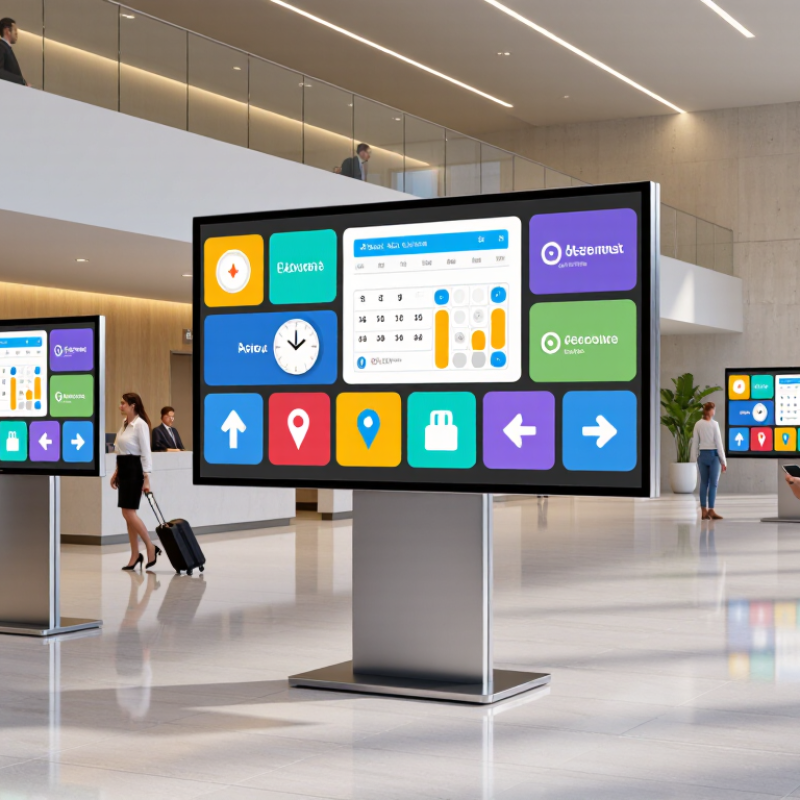
A hotel’s digital signage works best when each screen answers a local need. In the lobby, a large display can show check-in guidance, daily events, and a simple map with clear elevator directions. Near lifts, smaller screens can share room-floor information or meeting changes. Keep text brief; tired guests rarely stop to read a crowded screen. Helpful, not flashy.

Meeting areas need room schedules and directional displays that staff can update quickly. In restaurants, menu screens can show opening hours, allergen details, and daily dishes, but printed alternatives still matter. Guest-room screens may offer service information, though they should not make basic controls harder to find. Grand View Research estimated the global digital signage market at USD 27.8 billion in 2023, with an 8.1% projected annual growth rate through 2030. MarketsandMarkets separately forecast growth from USD 25.2 billion in 2023 to USD 35.9 billion in 2028; estimates vary with market scope. Growth is not proof that every hotel needs more screens. Glare, stale event listings, and tiny type can quickly make signage feel like clutter. Walk the guest route at different times of day, then check what people actually notice.

How to Evaluate Solutions for Different Hotel Needs

Hotel signage should solve a specific guest or staff problem, not just fill a blank wall. A wayfinding display near the lifts has a different job from a meeting-room schedule or breakfast-hours screen. Start by mapping guest questions, peak traffic points, and the people who update content. Keep the map practical.

Grand View Research valued the global digital signage market at US$27.8 billion in 2024. That signals a large, changing market, not proof that a hotel installation will pay off. Compare systems by total cost, including screens, mounting, network needs, support, and staff training. Ask how quickly a front-desk employee can correct a wrong event time. Small test.

For hotels facing staffing pressure, clear signage may reduce repeated questions, but it cannot replace attentive service. The American Hotel & Lodging Association’s 2024 staffing survey found that 76% of surveyed hotels reported staffing shortages. Test a pilot in one busy area and track guest questions, update time, and screen outages. Check readability from a seated position and whether messages remain useful when the network drops. I would question any vendor promise based only on impressions or screen counts. A busy lobby can make a weak measure look impressive.

Top 10 Digital Signage Solutions for Hotels

Top 10 Digital Signage Solutions for Hotels

Hotel signage works best when it answers a real question at the moment guests have it. A lobby welcome screen can display check-in guidance and local weather; wayfinding screens can point visitors toward elevators, restaurants, and meeting rooms. Meeting-room displays show schedules and room availability, while event screens keep agendas current. Restaurant menu boards can update dishes or opening hours. Elevator displays offer brief updates during an otherwise idle wait. In-room screens can present room-service options and property information, and spa displays can show treatment schedules. Operational screens can share staff notices, while emergency messaging systems can deliver clear instructions when needed. Keep the text readable from several steps away.

There is a practical case for investing carefully. Grand View Research estimated the global digital signage market at about $27.8 billion in 2023 and projected an 8.1% compound annual growth rate from 2024 to 2030. That figure covers many industries, not hotels alone, so it should not be treated as proof that every property needs more screens. A useful deployment starts with guest questions, screen placement, and a plan for keeping information accurate. A stale restaurant menu damages trust. So does a meeting display that points guests to the wrong room. Even a modest system needs regular human review; software cannot notice every confusing instruction.