
10 Best PCB Assembly Services for Global Buyers
Choosing a reliable pcb assembly partner is rarely just a price comparison. A polished website cannot reveal every production weakness. Real confidence comes from evidence: controlled processes, responsive communication, stable sourcing, and measurable quality results.
Michael Ford, a recognized electronics manufacturing specialist at Aegis Software, offers a practical warning: “Traceability is not paperwork; it is the memory of the manufacturing process.” That principle guides this review of the 10 Best PCB Assembly Services for Global Buyers. Each provider is considered through an operational lens, including engineering support, design for manufacturability, prototype handling, component sourcing, automated optical inspection, X-ray inspection, and final testing. Certifications matter. So does the ability to explain a failure clearly.
Global buyers also face practical details. A factory may assemble boards well but struggle with export documentation. Another may offer fast prototypes yet lack dependable volume capacity. Some suppliers provide excellent dashboards, while others communicate mainly through delayed emails. These differences become visible when a shipment contains thousands of boards, mixed components, and a demanding launch schedule.
This guide aims to separate marketing claims from useful evidence. It does not pretend that one supplier suits every project. A medical device, industrial controller, and consumer gadget need different safeguards. That is the uncomfortable part. Even a qualified manufacturer can make a costly mistake. Buyers should still request samples, audit records, process data, and clear escalation contacts before committing. Reliable pcb assembly begins with careful questions, not attractive promises.
What PCB Assembly Services Include
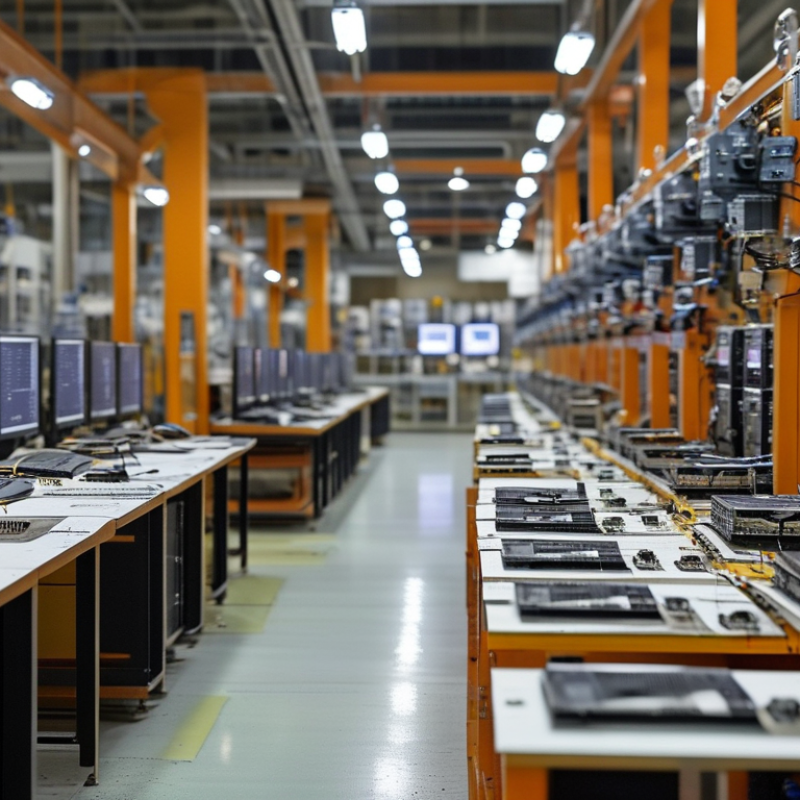
PCB assembly services cover more than placing components on a board. A capable provider reviews Gerber files, bills of materials, and pick-and-place data before production. This design-for-manufacturing review can identify narrow clearances, unsuitable footprints, or parts with long lead times. It also supports component sourcing, alternative approval, stencil preparation, and controlled material storage.
Surface-mount technology handles compact components, while through-hole assembly adds mechanical strength for connectors and switches. Automated optical inspection checks solder joints, and X-ray inspection examines hidden connections. Functional testing can confirm whether the assembled board performs its intended task. IPC standards, including IPC-A-610, provide widely recognized acceptance criteria for workmanship. Traceability records should connect each board to operators, batches, inspection results, and test data.
The market is demanding tighter control. Grand View Research estimated the global printed circuit board market at approximately 89.7 billion dollars in 2023, with continued growth expected through 2030. IPC’s electronics manufacturing research also identifies supply-chain resilience and workforce capability as persistent industry concerns. For global buyers, useful services may include firmware loading, conformal coating, cable assembly, box build, export packaging, and shipment documentation. In practice, these extras can reduce handling errors. However, “one-stop” does not always mean better. Buyers should question unclear test coverage, vague component policies, and promises without measurable yield data.
10 Best PCB Assembly Services for Global Buyers – What PCB Assembly Services Include
| Service Profile | Best Suited For | Assembly Type | Typical Order Volume | Component Support | Inspection and Testing | Typical Lead Time | Common Compliance Support | Global Buyer Services |
|---|---|---|---|---|---|---|---|---|
| Rapid Prototype Assembly | Early-stage designs, engineering validation and proof-of-concept builds | SMT, through-hole and mixed technology | 1–50 assembled boards | Standard and common fine-pitch components; customer-supplied or sourced parts | AOI, visual inspection and basic electrical testing | Approximately 3–10 business days after material approval | RoHS, REACH and IPC workmanship requirements when requested | DFM feedback, digital quotations, component sourcing and international shipping options |
| Low-Volume Production | Startups, pilot programs and limited-market products | SMT, through-hole, mixed technology and manual assembly | 50–1,000 boards | Passives, ICs, connectors, modules and electromechanical parts | AOI, X-ray for hidden joints, functional testing and first-article inspection | Approximately 1–3 weeks, depending on component availability | IPC-A-610 and J-STD-001 process options; RoHS/REACH documentation | Consolidated logistics, export documentation, packaging instructions and order tracking |
| High-Volume SMT Assembly | Consumer electronics, industrial controls and repeat production | Automated surface-mount assembly with optional through-hole processing | 1,000+ boards per production batch | High-speed placement for standard packages, QFP, QFN, BGA and fine-pitch parts | AOI, solder-paste inspection, X-ray sampling, in-circuit or functional testing | Approximately 3–8 weeks after production release | IPC-A-610, J-STD-001, RoHS/REACH and quality-system controls | Production scheduling, lot traceability, forecast planning and international freight coordination |
| Turnkey PCB Assembly | Buyers seeking one supplier for sourcing, assembly and delivery | Full-service SMT, through-hole and box-build options | Prototype through mass production | BOM review, approved alternates, component procurement and shortage management | AOI, X-ray, electrical testing and documented quality inspection plans | Approximately 2–8 weeks, based on BOM complexity and supply availability | RoHS, REACH, IPC standards and customer-specific quality requirements | Single-point project management, customs paperwork, delivery scheduling and packaging control |
| Through-Hole Assembly | Power supplies, industrial equipment, connectors and mechanically stressed products | Manual insertion, selective soldering and wave soldering | 20–10,000+ boards | Axial, radial, connector, transformer, terminal and large mechanical components | Visual inspection, solder-joint inspection, continuity and functional testing | Approximately 1–4 weeks | IPC-A-610, J-STD-001 and RoHS-compatible soldering options | Part kitting, assembly drawings, cable or harness integration and export packing |
| Fine-Pitch and BGA Assembly | Compact computing, communications, medical and high-density electronics | High-density SMT with QFN, CSP, BGA and fine-pitch placement | Prototype through medium and high volume | Fine-pitch ICs, micro-BGA, QFN, CSP and lead-free component packages | 3D solder-paste inspection, AOI, X-ray inspection and functional testing | Approximately 2–6 weeks | IPC-A-610, J-STD-001, RoHS/REACH and controlled rework procedures | Stack-up and DFM review, moisture-sensitive-device handling and traceability reports |
| Flexible and Rigid-Flex Assembly | Wearable devices, compact instruments, cameras and space-constrained products | SMT and through-hole assembly on flexible or rigid-flex circuits | Prototype through medium volume | Fine-pitch components, stiffeners, flex connectors and low-profile parts | AOI, visual inspection, continuity testing, bend-area inspection and functional testing | Approximately 3–8 weeks | IPC-A-610, IPC-2223 design guidance and RoHS/REACH options | Flex handling guidance, protective packaging, design review and global shipment coordination |
| Automotive-Ready Assembly | Vehicle electronics, mobility systems and products requiring enhanced traceability | SMT, through-hole, selective soldering and protective coating options | Pilot production through high volume | Automotive-grade components when specified in the approved BOM | AOI, X-ray, electrical testing, process audits and batch traceability | Approximately 4–10 weeks | IATF 16949 availability varies; IPC standards, RoHS/REACH and customer audits | Revision control, lot tracking, supplier documentation and controlled logistics |
| Medical and Reliability-Focused Assembly | Diagnostic equipment, monitoring devices and safety-critical electronics | Controlled SMT, through-hole, cable assembly and optional conformal coating | Prototype, pilot and regulated production | Traceable components, approved substitutes and moisture-sensitive devices | AOI, X-ray, functional testing, inspection records and process validation support | Approximately 3–10 weeks | ISO 13485 availability varies; IPC-A-610, J-STD-001, RoHS/REACH support | Document control, material certificates, change notification and secure logistics |
| Box-Build and System Integration | Finished electronic products requiring assembly beyond the bare PCB | PCB assembly, cable harnesses, enclosure integration and final assembly | Prototype through medium and high volume | PCBs, displays, batteries, cables, connectors, enclosures and mechanical parts | Subassembly inspection, functional testing, safety checks and final visual inspection | Approximately 3–12 weeks, depending on system complexity | IPC workmanship standards, RoHS/REACH and product-specific requirements | Packaging design, labeling, kitting, fulfillment, export documents and final delivery |
Related Posts
-
Unveiling PCB and Assembly Innovations at the 138th China Import and Export Fair 2025
-
Addressing Common Challenges in Sourcing the Best PCB Circuits for Global Buyers
-
Exploring Unique Features and Applications of the Best Electronic Board Alternatives for Global Buyers
-

Benefits of Enhanced Durability in Circuit Board Manufacturing for Electronics
-

10 Smart Tips for Mastering PCB Circuit Design in the Digital Era
-

Exploring the Future of Printed Circuit Boards: Trends and Innovations in PCB Technology


