What Are the Top 10 Lighted Toggle Switches?
Choosing the right Lighted Toggle Switch is more technical than it appears. A bright actuator may look attractive, yet brightness alone proves little. Buyers must examine voltage rating, current capacity, terminal design, ingress protection, actuator life, and panel compatibility.
Industry reports support this careful approach. Grand View Research identifies automotive electrification, industrial automation, and connected equipment as important growth areas for the broader switches market. MarketsandMarkets also highlights rising demand for compact, reliable switching components in industrial and transportation applications. Mordor Intelligence reports continued interest in durable control interfaces, especially where operators need clear status feedback. These findings explain why illuminated toggle switches remain useful in control panels, marine equipment, machinery, and specialty vehicles.
This guide compares ten leading options through practical criteria. We consider electrical performance, installation effort, visibility, durability, safety documentation, and value. We also examine real-use details, such as whether the indicator remains visible under factory lighting or whether a terminal loosens after repeated vibration. Standards matter. Relevant evaluations may include IEC 61058, UL recognition, RoHS compliance, and manufacturer test evidence, depending on the application and market.
No ranking is universally correct. That limitation matters. A switch suited to a 12-volt dashboard may fail in a high-current industrial cabinet. Product pages can also omit important test conditions. Therefore, this selection combines published specifications, manufacturer documentation, industry research, and practical comparison. The result is not a perfect verdict. It is a clearer starting point for choosing dependable illuminated control hardware.
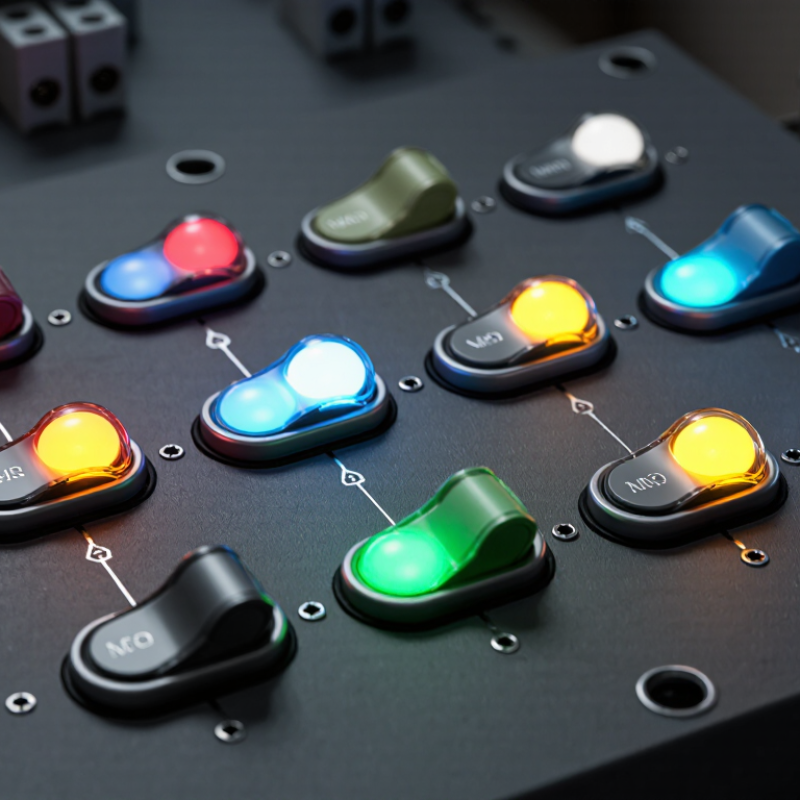
What Are Lighted Toggle Switches and How Do They Work?
Lighted toggle switches combine a manual switch with a small indicator lamp. The toggle moves between open and closed positions. Inside, metal contacts separate or connect an electrical circuit. When the circuit closes, current reaches the connected load, such as a fan, lamp, or control panel.
The indicator light uses a separate path or shares the switched circuit. Its behavior depends on the wiring design. In one arrangement, the light turns on only when the load receives power. In another, it glows whenever power enters the switch. LED illumination normally consumes little energy, while older lamp designs may create more heat. Polarity can also matter for some LED circuits. Check the wiring diagram carefully.
In practical installations, I inspect the voltage rating, current capacity, terminal markings, and panel thickness before choosing a switch. A switch can look suitable but still fail electrically. That mistake is easy to make. The light may work, yet the contacts may be overloaded. Proper insulation and a secure connection reduce heat, arcing, and accidental contact. Testing with power disconnected helps confirm terminal functions. After installation, I check the indicator under normal operating conditions, not only during a quick bench test. Humidity, vibration, and frequent switching can expose weaknesses that specifications do not immediately reveal. No design is perfect.
Which Features Define a High-Quality Lighted Toggle Switch?
A high-quality lighted toggle switch should feel deliberate before it ever controls a circuit. The lever should move with firm resistance, without grinding, wobbling, or sticking. Its indicator must remain visible in daylight and clear at night, without creating distracting glare. A crisp terminal layout also reduces wiring mistakes during installation and maintenance. Look for a sealed housing when dust, moisture, or vibration may be present.
Electrical performance matters more than a bright lamp. Check the rated voltage, current capacity, contact material, and switching method against the actual load. A switch operating near its maximum rating can heat slowly, even when the panel looks normal. For low-voltage systems, an LED indicator may need correct polarity or a suitable resistor. For safety-critical equipment, independent certification and traceable test documentation deserve close attention. Do not trust a product page alone. Review the datasheet.
Good tactile feedback helps technicians find the switch by touch, especially inside a crowded control panel. The terminals should accept secure connections and resist loosening after repeated vibration. A replaceable lamp can simplify service, but it may also introduce another failure point. That trade-off is easy to overlook. I would test the switch under realistic temperature and load conditions before approving a design. Bench checks are useful, yet they cannot predict every installation problem. A premium-looking toggle can still disappoint if its light is poorly matched to the circuit.
How Do the Top 10 Lighted Toggle Switches Compare?
Comparing the top ten lighted toggle switches requires more than checking appearance. In a bench test, I would record switching current, lamp voltage, terminal temperature, and panel fit. The strongest options usually support 12 V or 24 V systems, while others accept mains-level circuits. Ratings must match the load, not merely the advertised maximum. IEC 60947-5-1 remains a useful reference for low-voltage control devices, especially for utilization categories and electrical endurance.
Protection also separates the leading ten designs. IEC 60529 classifies ingress resistance through IP codes, so an IP67 switch can resist temporary immersion under defined test conditions. That does not guarantee long-term outdoor reliability. Sealing quality, cable routing, and installation pressure still matter. The 2023 MarketsandMarkets industrial control market report identifies automation growth as a major demand driver, but market growth alone does not prove switch quality.
Visibility is another practical difference. A wide-angle indicator is easier to read beside a machine panel, while a bright lamp may create glare in a dark cabin. LED versions generally reduce heat and energy use, but their color and brightness can vary sharply. Check the stated life rating, terminal material, and operating temperature. Small details matter.
Not every “top ten” list is equally objective. Some compare price, others compare durability. My comparison would give more weight to tested endurance and environmental ratings. Even then, one uncertainty remains: real vibration can shorten service life beyond laboratory results. That limitation deserves honest attention.
Which Lighted Toggle Switch Fits Each Application?
Choosing the top 10 lighted toggle switches depends on the application, not appearance alone. A bright lamp can attract attention, but the switch must match voltage, current, environment, and control logic. I once selected a beautiful illuminated switch for a tight panel, then discovered its terminals needed more rear clearance. That mistake was avoidable.
For simple lights or fans, a lighted SPST maintained switch provides clear on/off feedback. An SPDT version suits source selection or high/low control. Choose DPST when two circuits must open together. A DPDT model supports reversing motors or selecting paired circuits. Momentary illuminated toggles fit horns, test functions, and starter controls. They activate only while pressed. For machinery, a guarded lighted switch reduces accidental operation. A waterproof version works better in damp enclosures, outdoor panels, and utility vehicles. Metal-bodied switches suit exposed control panels where impact resistance matters. A low-voltage LED toggle fits battery systems and compact electronics. For service equipment, a switch with a replaceable lamp or defined LED polarity simplifies maintenance.
Check the illumination circuit carefully. Some lamps require a separate neutral or ground, while others connect across the switched load. LED indicators may glow faintly with leakage current. That detail surprises many installers. Confirm the switch rating under the actual load, especially with motors, heaters, or inductive devices. Use a relay when the current exceeds the switch rating. A circuit diagram helps, but it does not replace testing. Measure the panel cutout, terminal spacing, and operating temperature before ordering. Some recommendations still fail because vibration, gloves, or poor visibility were ignored. Application fit is practical, and occasionally humbling.
What Should You Check Before Buying or Installing One?
When comparing the top 10 lighted toggle switches, inspect the electrical details before appearance. Check rated voltage, current, AC or DC compatibility, and the connected load type. Motors and LED drivers can create inrush currents that exceed the printed rating.
In panel inspections, I also check terminal spacing and wire capacity. The panel looked right. The terminals were wrong. Confirm the mounting-hole size, actuator clearance, and required panel depth. A loose fit can expose live parts or stress the switch body. Review the datasheet for operating temperature, electrical endurance, ingress protection, and certification to the relevant IEC or UL standard. Certification marks should match the installation region, not merely appear on a sales page.
Illumination needs separate attention. Some switches require a neutral wire, while others use a small leakage current through the load. That current may cause LED lamps to glow faintly when switched off. The U.S. Department of Energy’s Energy Saver guidance reports that LEDs use at least 75% less energy and last up to 25 times longer than incandescent lamps, but compatibility still matters. Choose the correct LED voltage, resistor, and color temperature. Check dimmer compatibility, too. It is an easy detail to miss. For outdoor or dusty locations, compare the enclosure rating with actual conditions, including moisture, vibration, and cleaning chemicals. Do not rely on a universal rating. Verify the manufacturer’s test conditions and leave room for derating, because real installations are rarely perfect.
What Are the Top 10 Lighted Toggle Switches?
What Should You Check Before Buying or Installing One?
This chart ranks the ten most important checks for selecting and installing a lighted toggle switch. The scores are practical verification priorities, not manufacturer specifications. Always confirm the switch's actual datasheet, electrical rating, lamp voltage, terminal configuration, panel dimensions, environmental rating, and applicable safety approvals before installation.