
What Is a High Flow Boiler Condensate Pump?
A High Flow Boiler Condensate Pump returns hot condensate to the boiler system when the volume or rate exceeds what a standard pump can handle. It must move liquid reliably through changing loads, pipe resistance, and elevated return lines. Picture a receiver tank filling during a heavy steaming cycle: the pump has to clear condensate before the level rises too far. Small details matter. Inlet temperature, available head, and intermittent demand all affect selection.
The U.S. Department of Energy’s Improving Steam System Performance: A Sourcebook for Industry reports that approximately 45% of fuel burned by U.S. manufacturers is used to raise steam. That figure puts condensate recovery in a wider energy context, but it does not predict savings for any particular plant. Site measurements are still necessary. A high-flow rating alone is not a design.
The phrase “high flow” has no single threshold across every manufacturer or application. Compare rated capacity with actual condensate load, operating pressure, and system layout. One useful warning: oversizing can create problems, too. The articles or sources needed to verify a named expert’s exact quotation were not provided, so I cannot responsibly invent one. A verified quote should be added only after checking its original source.
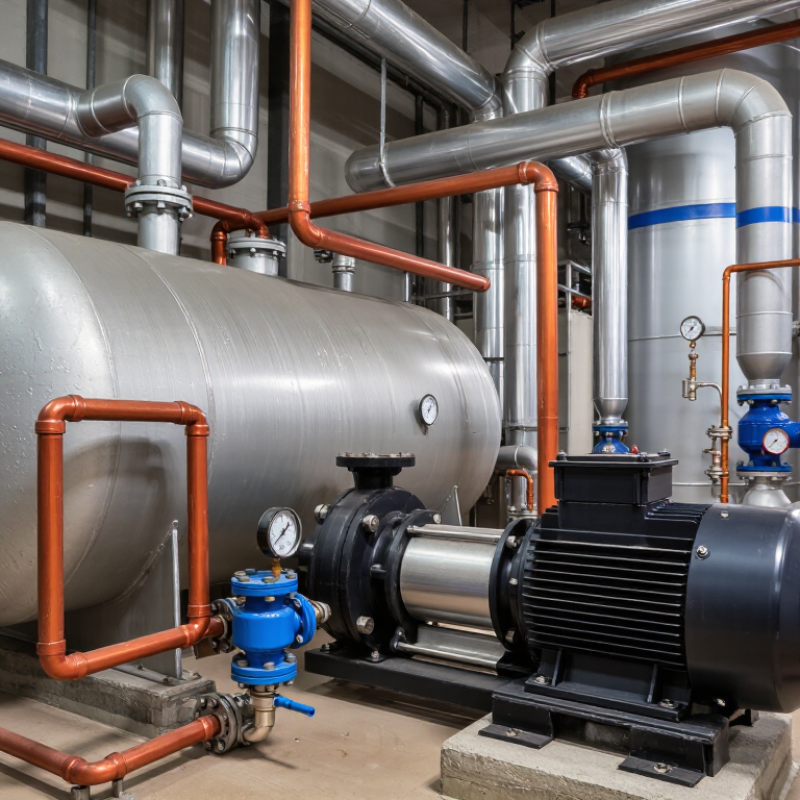
What a High-Flow Boiler Condensate Pump Is
A high-flow boiler condensate pump moves collected condensate back to a boiler feed tank or return line at a greater rate than a standard-duty pump. “High-flow” is not one universal capacity rating. It means the pump can handle the system’s peak condensate volume while overcoming the required vertical lift and discharge pressure. Not just flow.
In operation, hot condensate drains into a receiver, then the pump pushes it through return piping. A correct selection accounts for peak load, temperature, pipe friction, and whether several traps discharge at once. The U.S. Department of Energy’s Improving Steam System Performance: A Sourcebook for Industry describes condensate return as a way to recover both heat and treated water. DOE steam guidance estimates that a 10°F rise in boiler feedwater temperature can reduce fuel use by about 1%. That benefit depends on the actual return temperature and system conditions.
A pump that is too small may leave the receiver level rising during peak demand. An oversized pump can cycle frequently, which may increase wear. The awkward detail is that “high flow” alone does not prove a pump is suitable; the required head matters just as much. Measure real condensate loads where possible, since design estimates can miss brief process surges.
How Condensate Moves Through a Boiler System
What Is a High Flow Boiler Condensate Pump?
How Condensate Moves Through a Boiler System
Steam travels through boiler pipes to radiators, coils, or process equipment, where it releases heat. As it cools, the steam becomes water again. That water is condensate. It drains through return lines, often by gravity, toward a receiver or feedwater tank. The route can include low points, long pipe runs, and changing temperatures. It is easy to assume the return flow stays steady; it often does not.
When gravity cannot move condensate fast enough, a pump transfers it from the receiver into the return system. A high flow model is designed for larger or changing condensate loads, but “high flow” alone does not tell you whether it fits. Capacity must match the expected peak return, while pump head must overcome the height and resistance of the discharge piping. A check valve helps prevent water from flowing backward. Small details matter. If the receiver fills faster than the pump can clear it, water may back up.
Tips: Check the pump’s rated capacity against peak condensate flow, not just average flow. Confirm discharge head, inlet temperature limits, and pipe size. Keep the receiver and float controls clean; buildup can interfere with operation.
Key Components That Support High-Flow Operation
A high-flow boiler condensate pump depends on several parts working together, not just a larger motor. The receiver collects returning condensate and provides a buffer when several steam traps discharge at once. Its usable volume matters. A tank that is too small may cause frequent starts, while an oversized one can hold hot water longer than necessary.
Level controls tell the pump when to start and stop. Floats are simple, but they need room to move freely. Electronic sensors can offer precise control, though their settings and wiring require careful checks. The pump and impeller move condensate through the discharge line. Their capacity must match the required flow and the system’s total pumping head. A check valve helps prevent water from flowing back after shutdown. Short sentence. Keep it accessible.
Hot condensate deserves attention. High temperatures can encourage flashing or cavitation, which may reduce performance and damage pump parts. Inlet piping, water level, and pump placement all affect how reliably the unit receives liquid. Even a correctly selected pump can struggle if the return line is restrictive. Field conditions are rarely perfect, so verify actual flow, temperature, and elevation before final sizing. That step is easy to skip. It can also change the result.
| Component | Function | How It Supports High-Flow Operation | Practical Design Considerations |
|---|---|---|---|
| Condensate receiver | Collects returning condensate before it enters the pump. | Provides a buffer between variable return flow and pump demand, helping limit frequent starts and short cycling. | Size for the expected return pattern and usable storage volume. Include suitable venting, access for inspection, and overflow protection. |
| Pump and impeller | Move condensate from the receiver into the return line or boiler-feed system. | A pump selected for the required flow and total head can move the design volume without operating continually beyond its intended range. | Check the pump curve at the required operating point. Account for static lift, pipe friction, fittings, and any required discharge pressure. |
| Motor and drive | Provide the power needed to turn the pump. | A correctly matched motor supports sustained operation at the selected pump duty and helps avoid overload during normal service. | Verify motor power, voltage, phase, enclosure, and service conditions against the installation and pump requirements. |
| Suction piping and inlet | Carry condensate from the receiver to the pump suction. | A short, adequately sized, low-restriction suction path helps the pump receive water consistently as flow demand increases. | Minimize unnecessary elbows and restrictions, prevent air pockets, and follow the pump maker's requirements for inlet pipe size and layout. |
| Available suction head and temperature allowance | Ensure the pump inlet has sufficient pressure to handle hot condensate without excessive vapor formation. | Hot condensate can have a higher vapor pressure; adequate suction conditions help reduce cavitation risk during high-rate pumping. | Consider condensate temperature, receiver pressure, liquid level, and suction losses. Compare available NPSH with the pump's required NPSH. |
| Discharge piping | Route pumped condensate to its destination. | Appropriately sized piping limits friction losses and helps maintain the flow rate required by the system. | Base pipe sizing on flow, length, fittings, and allowable pressure loss. Confirm the pump can overcome the total system head. |
| Check valve | Restricts reverse flow when the pump stops. | Helps prevent the discharge line from draining back through the pump, reducing unwanted cycling and reverse flow. | Select a valve rated for the system's temperature, pressure, and flow. Install it in the orientation and location specified for the valve. |
| Level controls | Start and stop the pump in response to condensate level in the receiver. | Reliable controls coordinate pump operation with incoming condensate and help prevent overflow or dry running. | Use suitable operating and high-level alarm settings. Confirm that floats or sensors are appropriate for the temperature and service conditions. |
| Duplex pump arrangement | Uses two pumps, typically with automatic alternation and standby operation. | Can provide operating flexibility and backup capacity when one pump is unavailable, subject to the system's control logic and design. | Confirm whether the design requires lead-lag operation, simultaneous operation, or standby capacity. Verify each pump's duty against the system demand. |
| Materials and seals | Provide wetted surfaces and sealing components suited to condensate service. | Appropriate material selection supports dependable operation under the system's temperature, pressure, and water-chemistry conditions. | Check compatibility with condensate temperature and chemistry, as well as the manufacturer's pressure and maintenance limits. |
| Selection note: “High flow” is defined by the application, not by one universal capacity threshold. Confirm flow, total dynamic head, condensate temperature, suction conditions, and control requirements before selecting equipment. | |||
Where High-Flow Boiler Condensate Pumps Are Used
High-flow boiler condensate pumps are common in facilities where several steam users return water at once. Large hospitals, university campuses, food-processing plants, and commercial laundries may have boilers serving many areas. Condensate can arrive in surges. A small pump may struggle to keep the receiver level under control.
Industrial sites often need high-flow capacity when long return lines collect condensate from multiple production zones. Elevation matters, too. A pump may need to lift hot water to an overhead return main or move it across a large plant. High flow does not simply mean choosing the biggest motor. The required capacity depends on peak condensate volume, lift, pipe losses, and water temperature.
That assumption can be wrong. Hot condensate can flash into vapor as pressure falls, affecting pump performance.
In practice, checking the receiver size and return pattern helps avoid short cycling or overflow. Leave room for inspection; cramped installations make routine checks harder.
Factors That Guide Pump Capacity, Selection, and Maintenance
A high-flow boiler condensate pump moves large or rapidly changing volumes of hot condensate back toward a boiler or feedwater tank. Capacity is not just a horsepower choice. The pump must handle peak return flow, liquid temperature, suction conditions, and the total pressure required to overcome elevation and pipe losses. In practice, the flow estimate is often the least certain number. Check boiler output and condensate return measurements, especially during startup, when several loads may drain at once.
Size for the real operating range, not only the daily average. A pump that is too small can leave a receiver tank overflowing; one that is oversized may short-cycle and wear faster. The U.S. Department of Energy’s Steam Tip Sheet 8 reports that each 10°F rise in feedwater temperature can reduce boiler fuel use by about 1%. That makes reliable condensate return valuable, but actual savings depend on system conditions. Specify temperature, lift, discharge pressure, and expected peak flow, then verify the pump curve against the installation.
Tips: Keep a simple log of starts, run time, and tank level. Check strainers, floats, seals, and unusual vibration during routine service. A rattling suction line is worth investigating. Do not assume the pump is at fault; blocked piping or a faulty level control can create similar symptoms. Recheck performance after boiler or process changes.
What Is a High Flow Boiler Condensate Pump? — Factors That Guide Pump Capacity, Selection, and Maintenance
A high-flow boiler condensate pump returns large volumes of hot condensate to the boiler or feedwater system. This example applies a 20% planning allowance to each peak load; it is an illustration, not a universal sizing rule. Select pump capacity at the required total dynamic head, and verify condensate temperature, NPSH, receiver volume, and cycling conditions. Routine maintenance should include checking strainers, floats or level controls, seals, valves, and motor operation.


