Why Choose a Frame Hydraulic Press for Your Business?
A production decision often starts with a simple question: can the machine deliver repeatable force without slowing the line? For many manufacturers, a frame hydraulic press is worth considering when work involves controlled pressing, forming, straightening, or assembly. Its frame supports the working load, while hydraulic power allows pressure and motion to be adjusted for different tasks. In practice, that could mean pressing a bearing into a housing, forming a bracket, or seating a component evenly. Details matter. A rigid frame alone does not guarantee accurate results; tooling condition, operator setup, and maintenance all play a part.
The right press depends on the work, not just the rated tonnage. Buyers should compare capacity, stroke, daylight, bed size, cycle requirements, floor space, and available controls. A machine that fits one production cell may be awkward in another. Safety features, service access, and the supplier’s technical support deserve close attention too. Ask how the press will handle actual parts and tooling, and request clear specifications before making a decision. Not always. A higher-capacity model can bring extra cost and take up valuable space without improving the process. This guide explores where a frame hydraulic press can add value, what to check before purchase, and which trade-offs deserve a second look. Some details are easy to overlook during a sales demonstration. That takes time. Careful evaluation can help businesses choose equipment that suits their workload and supports dependable production over the long term.
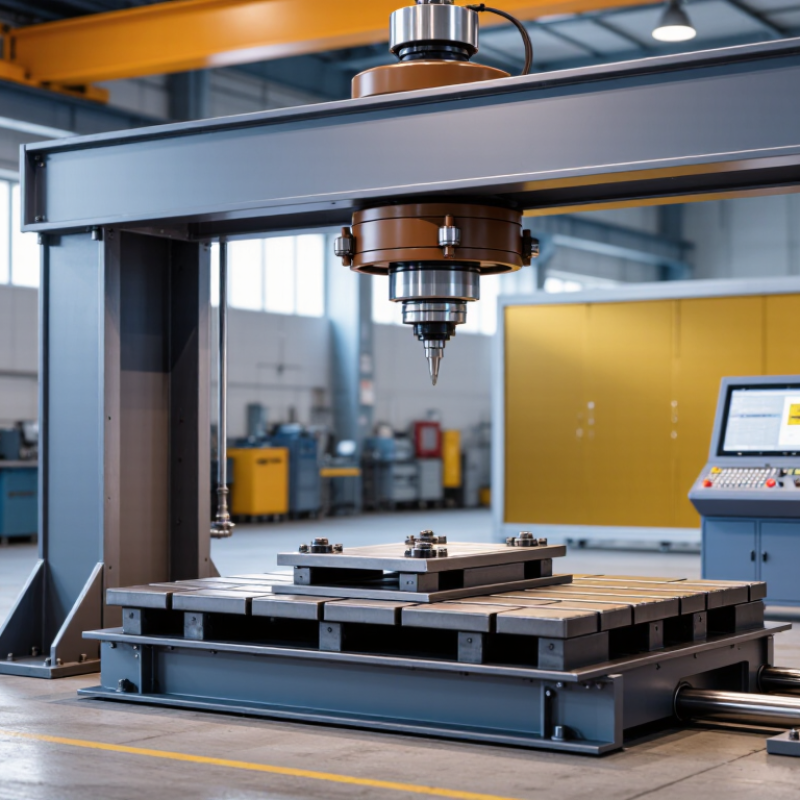
What Defines a Frame Hydraulic Press in Industrial Forming?
A frame hydraulic press uses a hydraulic cylinder to drive a ram within a load-bearing frame. The frame closes the force path between the ram and bed, helping resist deflection during forming. Its shape matters. C-frame designs offer open access for loading parts, while H-frame and four-post designs support work across a wider area. In each case, the pump, cylinder, guides, and frame must work together; rated tonnage alone does not describe press performance.
The National Association of Manufacturers’ 2024 Facts About Manufacturing report estimates U.S. manufacturing value added at $2.89 trillion in 2023, equal to 10.3% of GDP. The U.S. Census Bureau’s 2022 Annual Survey of Manufactures reports roughly $6.5 trillion in manufacturing shipments. These figures describe the sector, not press demand, but they show the scale of production where forming equipment operates. On a shop floor, a frame press may draw a shallow panel, compress a component, or straighten a bent plate. Check the part dimensions, die opening, stroke, daylight, and expected off-center loading before choosing a frame style. Measure actual parts. A mismatch can waste floor space or invite uneven loading. Even a rigid frame has limits, and those limits deserve a second look.
How the Frame, Bed, Ram, and Cylinder Carry Pressing Loads
A frame hydraulic press carries force through a closed structural loop. The ram pushes the workpiece against the bed; the cylinder transfers reaction force into the upper frame, while the side columns or frame plates return it toward the bed. That loop must stay stiff. Even slight deflection can tilt the ram, create uneven contact, and wear guides faster. The details matter.
ISO 16092-3:2017 addresses safety requirements for hydraulic presses, including control and protective measures; it is a useful design reference, not a substitute for calculating frame strength. For a practical example, a 100-ton press applies roughly 890 kN at rated capacity. The frame, bed, ram, and cylinder mounts must all carry that load, including realistic allowances for off-center work and repeated cycles. A thick bed alone does not make a press robust. Alignment matters too.
The cylinder creates force through fluid pressure and piston area, so pressure ratings, seals, and mounting points deserve equal attention. ISO 4413:2010 sets general safety requirements for hydraulic systems and components. In service, inspect for leaks, cracked welds, loose fasteners, and uneven ram travel. Small warning signs count. One limitation is easy to overlook: a press can meet its nominal tonnage yet perform poorly when a job concentrates force near one edge. That deserves careful review before purchase.
How Pascal’s Law Converts 25 MPa into 250 kN at 100 cm²
A frame hydraulic press converts fluid pressure into force through a simple relationship: force equals pressure multiplied by piston area. At 25 MPa, pressure is 25 million newtons per square metre. A 100 cm² piston face equals 0.01 m². Multiply them, and the theoretical output is 250,000 N, or 250 kN. The arithmetic is direct.
Not quite in practice. That figure describes ideal cylinder output, not guaranteed force at every workpiece. Seal friction, pressure losses, and frame deflection can reduce usable force. A pressure gauge helps verify operating pressure, while a calibrated load cell can confirm force when precision matters. Keep the cylinder’s pressure rating and the press frame’s capacity within their specified limits.
In a frame press, the structure supports the load and helps keep the ram aligned over the die. A crooked setup can concentrate stress on one edge, even when the gauge reads correctly. Check the platen, tooling, and workpiece seating before applying pressure. It is tempting to trust a clean calculation alone. I would not; real machines need inspection and careful setup.
Which Tonnage, Stroke, Daylight, and Cycle Rate Fit Your Production?
Choosing a frame hydraulic press begins with the workpiece, tooling, and production rhythm—not a tonnage number alone. Estimate force from the material, forming method, and contact area, then verify the calculation with a qualified press engineer. A press rated for 100 tons may not suit every 100-ton task; load position and tooling can affect performance. Leave a sensible operating margin. More capacity is not always better.
Stroke determines how far the ram travels. Match it to the tool height, part depth, and loading method, including any future tooling changes. Daylight is the open space between the bed and ram at full retraction. Measure the tallest tool setup, then allow room to load parts and make adjustments safely. Measure twice. These clearances are easy to underestimate, especially when a prototype becomes a regular production job.
Cycle rate should reflect the complete operation, not just ram travel. Include loading, pressing, return, and part removal when estimating output per shift. Ask whether the press can repeat that pace without excessive heat or rushed handling. Track a real batch before finalizing your target; actual cycle times often differ from early estimates. A frame press can be a strong fit when its capacity and access match the process, but the numbers deserve a second look.
How ISO 4413 Safety Requirements Guide Press Selection and Maintenance
A frame hydraulic press can suit businesses that need a stable, accessible work area for forming, straightening, or assembly. But tonnage and bed size are only part of the decision. ISO 4413:2010 sets general safety requirements for hydraulic fluid-power systems, including design, installation, adjustment, and maintenance. When comparing presses, ask how the system limits pressure, controls stored energy, and prevents unexpected movement. Look for clearly marked gauges, accessible emergency stops, and documented procedures for isolating the hydraulic supply before servicing. Small details matter. A tidy hose route is easier to inspect than one hidden behind the frame.
ISO 4413 also makes maintenance part of safe system operation, not an afterthought. Check for leaks, damaged hoses, loose fittings, unusual pump noise, and drifting rams at scheduled intervals. Record findings and repair actions; a handwritten log is useful, though easy to neglect during busy shifts. The U.S. Bureau of Labor Statistics reported 2.6 million nonfatal workplace injuries and illnesses in private industry in its 2023 Survey of Occupational Injuries and Illnesses. That figure is not specific to hydraulic presses, but it underlines why documented controls and training matter. Ask suppliers for the press’s hydraulic schematics, pressure settings, and maintenance instructions, then verify they match your actual tooling and work cycle. A checklist helps, but it cannot replace a competent on-site risk review.
Why Choose a Frame Hydraulic Press?
Theoretical pressing force at a constant hydraulic pressure of 20 MPa, calculated from cylinder bore area. These examples illustrate how cylinder size affects force; they are not press ratings or design recommendations.
Selection and safety: A rigid frame supports the pressing load, while the required cylinder size depends on the force needed for the application. ISO 4413 provides safety requirements for hydraulic systems, including system design and measures to reduce risks. Check the applicable press-machine requirements and have the complete system assessed; force calculations alone do not demonstrate safety or compliance.