
Why Choose an Interactive Game Wall for Your Venue?
An Interactive Game Wall can turn unused wall space into a shared activity that draws guests into a venue. In a family entertainment center, children might tap glowing targets while parents watch from nearby seating. In a hotel lobby, short rounds can give waiting guests something engaging to do. Small moments matter.
Unlike a passive screen, a well-designed wall invites movement, quick choices, and friendly competition. It may support solo play, team challenges, or rotating games for different ages. The best fit depends on available floor space, lighting, audience, and staff capacity. A bright display can lose impact under strong sunlight, while complicated controls may frustrate first-time players. These details deserve attention before purchase.
Venue operators should ask practical questions: Can the system withstand frequent use? Are instructions easy to understand? Can staff reset games without specialist help? Reliable vendors should explain installation needs, maintenance, warranty terms, and how performance is measured. Engagement can be tracked through play counts or repeat visits, but numbers alone do not prove a better guest experience. Observe real play. Then adjust.
An Interactive Game Wall is not a guaranteed crowd-builder. It works best when it complements the venue’s purpose and has a clear place in the guest journey. Even a popular game can feel misplaced. Thoughtful placement, accessible controls, and regular content updates can help the feature stay useful rather than becoming another screen people pass by.
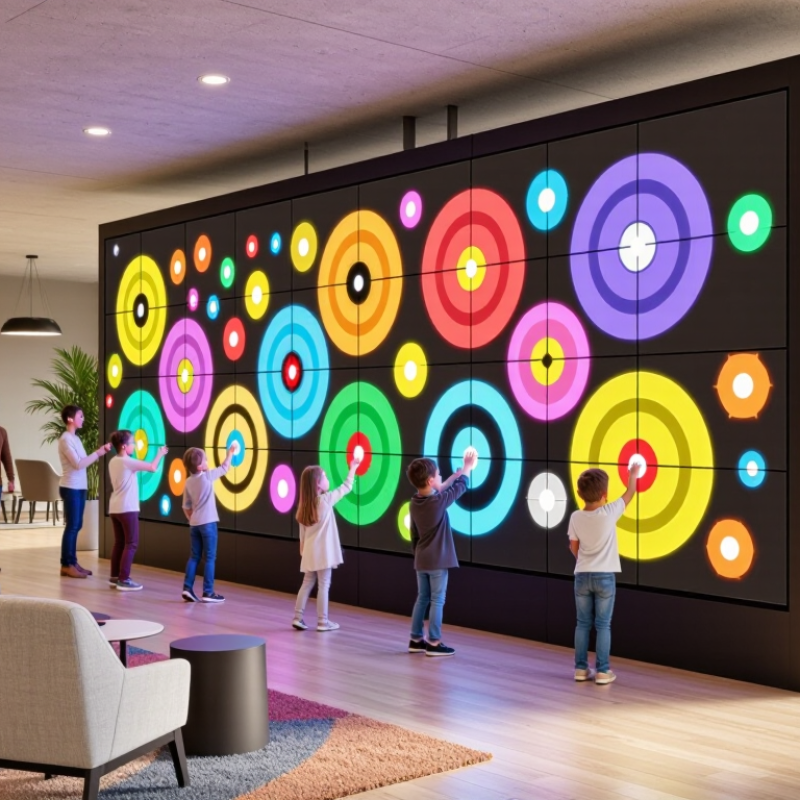
What Is an Interactive Game Wall?
An interactive game wall is a large digital display that turns a venue’s wall into a shared play surface. Cameras or motion sensors track gestures, steps, or touches, then respond with moving graphics and simple game rules. Guests might tap a glowing target, dodge virtual obstacles, or work together to guide an animated object across the screen. The wall combines software, a display, sensors, and a clear play area. It is not just a screen showing a game.
The format draws on an audience already familiar with games. The Entertainment Software Association’s 2024 Essential Facts report says:
These figures show broad familiarity, not guaranteed interest in every venue. That distinction matters.
In practice, the best setup makes the first action obvious. A bright target near eye level, a short instruction, and responsive feedback can help a passerby join without a staff explanation. The play zone also needs room for people to watch without blocking others.
It is not magic. Lighting, crowd flow, accessibility, and reset time can all affect the experience. A game may look impressive in a demo, yet feel confusing in a busy lobby. That possibility deserves attention during planning.
How Does an Interactive Game Wall Work?
An interactive game wall turns a blank surface into a responsive play area. A projector displays moving targets, characters, or simple puzzles. A camera or motion sensor watches the play zone and detects where a visitor moves. The system then matches that movement to the game, so a hand tap or a step can trigger an on-screen response.
Not magic. Software does the work. It reads sensor input, checks it against the game’s rules, and updates the display within moments. For example, when a child reaches toward a bouncing shape, the system estimates the contact point and makes the shape react. Good calibration matters: the sensor needs a clear view, and the projected image must line up with the playable area. Staff may need to adjust it after moving equipment or changing the room layout.
Lighting, wall texture, and visitor height can affect how reliably the system responds. A bright window may wash out projected colors, while objects near the wall can create confusing shadows. During setup, test the game from different distances and with different users. It is worth checking what data the system collects, too; settings vary, and venues should understand them before opening. Even a well-tuned wall can miss a gesture now and then, so clear instructions and a simple restart option help keep play comfortable.
Which Venues Can Benefit from an Interactive Game Wall?
Interactive game walls can work well in family entertainment centers, where children need an active option between longer activities. A projected target game can turn an empty wall into a play area without placing equipment across the floor. That can help staff keep walkways clear. Some venues need quieter play, though, so sound levels and session length deserve attention.
Museums and science centers can use wall games to invite visitors to move, notice patterns, or respond to simple prompts. In schools and community centers, short group challenges may encourage cooperation during breaks or supervised programs. Hotels, shopping centers, and event spaces may also use them to give families something engaging while they wait. A practical setup needs enough clear floor space, a suitable wall, and a plan for supervision. It should also offer options for different ages and mobility needs. Not every room is a good fit. Bright sunlight, crowded circulation, or competing noise can make interaction harder. I would test the experience during a busy period before committing; a quiet demonstration can hide real problems.
Why Choose an Interactive Game Wall for Your Venue?
Which venues can benefit from an interactive game wall?
Family entertainment centers, indoor play centers, schools, gyms, and hospitality venues can use interactive game walls to encourage active play and shared participation. Ratings are illustrative planning scores, not results from a survey or measured performance data.
What Features Should Venues Consider?
When choosing an interactive game wall, start with the room, not the screen. Measure ceiling height, viewing distance, and clear floor space where players will move. A bright display can look impressive in a rendering and still feel cramped beside tables or a busy entrance. Test sightlines from seated and standing positions. Small details matter. Controls should be reachable by children and adults, with simple instructions visible from a few steps away. If sound is part of the experience, check whether it carries into quieter areas.
Consider durability, cleaning, and maintenance before comparing visual effects. Surfaces near hands and shoes need to withstand regular use and wipe down easily. Ask how quickly staff can restart the system if a game freezes, and whether common parts can be serviced without closing the whole area. Content variety also matters: short games suit visitors who are passing through, while adjustable difficulty can welcome mixed ages. We sometimes overvalue flashy features; they may lose appeal if play feels repetitive. Request a live demonstration during a realistic level of background noise, and let staff try the setup themselves. Their feedback can reveal awkward steps that a product sheet misses.
| Feature to Consider | Why It Matters | What to Check | Venue Suitability |
|---|---|---|---|
| Interactive play options | A range of activities can make the installation more engaging for different ages, group sizes, and visit lengths. | Review the available game types, number of players, difficulty settings, and whether instructions are easy to follow. | Useful in family entertainment venues, leisure centres, museums, and other spaces serving varied audiences. |
| Age and accessibility settings | Players may differ in age, height, mobility, vision, hearing, and familiarity with interactive technology. | Check for adjustable difficulty, clear visual instructions, reachable controls, and options that do not rely solely on sound or colour. | Especially relevant for public venues with mixed-age groups and inclusive visitor-service goals. |
| Space and installation requirements | The wall, projection or display area, and player zone must fit safely within the venue layout. | Confirm the required wall dimensions, viewing distance, ceiling height, power supply, mounting method, and any installation work. | Important for venues working with fixed floor plans, narrow walkways, or shared activity areas. |
| Lighting and visibility | Ambient light and reflections can affect how clearly projected or displayed content can be seen. | Assess the intended location under normal operating conditions and ask whether the system has suitable brightness and screen options. | Worth checking in bright atriums, windowside spaces, and areas with changing daylight. |
| Durability and cleaning | Frequent public use can expose equipment and surfaces to bumps, fingerprints, and regular cleaning. | Ask about protective surfaces, cleaning guidance, replaceable components, and the expected maintenance routine. | A key consideration for high-traffic venues and installations used throughout the day. |
| Safety and crowd flow | Players need enough room to participate without obstructing entrances, exits, or nearby activities. | Plan clear standing space, cable management, suitable flooring, and a layout that keeps walkways and emergency routes unobstructed. | Relevant wherever visitors gather, queue, or move between attractions. |
| Content updates and variety | Fresh or rotating content can help maintain interest for repeat visitors and regular users. | Find out how content is added or changed, whether updates require a technician, and what ongoing content support is available. | Helpful for venues with repeat visitors, seasonal programming, or changing events. |
| Reliability and support | Downtime can interrupt the visitor experience and create extra work for venue staff. | Clarify troubleshooting steps, warranty coverage, support availability, replacement arrangements, and staff training. | Important when the game wall is a prominent activity or operates during extended opening hours. |
| Operating costs | The purchase price is only one part of the overall cost of owning and operating an installation. | Include installation, power use, maintenance, software or content fees, repairs, and any required network connection in the budget. | Useful for comparing proposals and planning long-term operating budgets. |
| Measurement and visitor feedback | Usage information and direct feedback can help a venue assess whether the installation meets its goals. | Ask what usage data is collected, how it is reported, and whether the system can operate with appropriate privacy safeguards. | Consider for venues evaluating engagement, programming, or the use of floor space. |
How Can a Game Wall Be Integrated and Maintained?
Why Choose an Interactive Game Wall for Your Venue?
How Can a Game Wall Be Integrated and Maintained?
Plan the game wall around real visitor movement, not an empty patch of wall. Check sightlines from entrances, queue areas, and seating before choosing its position. Leave clear space for players to move safely, and confirm that power and network connections can be reached without crossing busy walkways. Ask a qualified installer to assess the wall surface and mounting method. A quick on-site test can reveal glare, awkward reach, or sound that carries too far.
Tips: Keep cables secured and out of foot traffic. Set a simple opening checklist. Small checks matter.
For reliable daily use, clean the display or projection area with materials approved for its surface. Inspect mounts, connections, and controls regularly, and keep a brief fault log with dates and symptoms. Test the game after updates, especially touch response and sound. I would not assume every issue is software-related; dust, loose connections, or room lighting can also affect play. Set a maintenance schedule that fits visitor volume, then adjust it when staff spot recurring problems. A little trial and error is normal.


