
What Is the Best PCB Assembly Service in China?
Choosing the best PCB assembly service in China requires more than comparing hourly rates. It requires evidence from the factory floor. China remains a major electronics manufacturing hub, supported by dense supplier networks, experienced engineers, and established export infrastructure. Prismark’s 2024 PCB Industry Results and 2025 Outlook reported continued pressure on global PCB demand, especially from inventory correction and weaker consumer electronics sales. This environment makes supplier quality and financial stability especially important.
IPC’s electronics industry research repeatedly highlights rising customer expectations for traceability, delivery reliability, and process control. A capable pcb assembly partner should therefore demonstrate controlled material purchasing, automated optical inspection, X-ray inspection, and documented corrective actions. Look for certifications such as ISO 9001, ISO 13485, or IATF 16949 when your product requires them. Ask for sample inspection records. Request a production-line video or an onsite audit.
The best provider is not always the cheapest. A low quotation can hide tooling fees, substitution risks, or weak testing coverage. The uncomfortable truth is that many supplier comparisons rely too heavily on polished websites. That is not enough. A serious evaluation should examine component sourcing, moisture control, solder-paste storage, defect rates, and average response time. Reports from IPC and the International Trade Centre can provide useful market context, but they cannot replace direct verification. Your final decision should balance engineering capability, communication, compliance, lead time, and total landed cost. Some conclusions may remain uncertain until the first pilot batch. That is acceptable. A measurable trial is better than an attractive promise.
What Is a PCB Assembly Service?
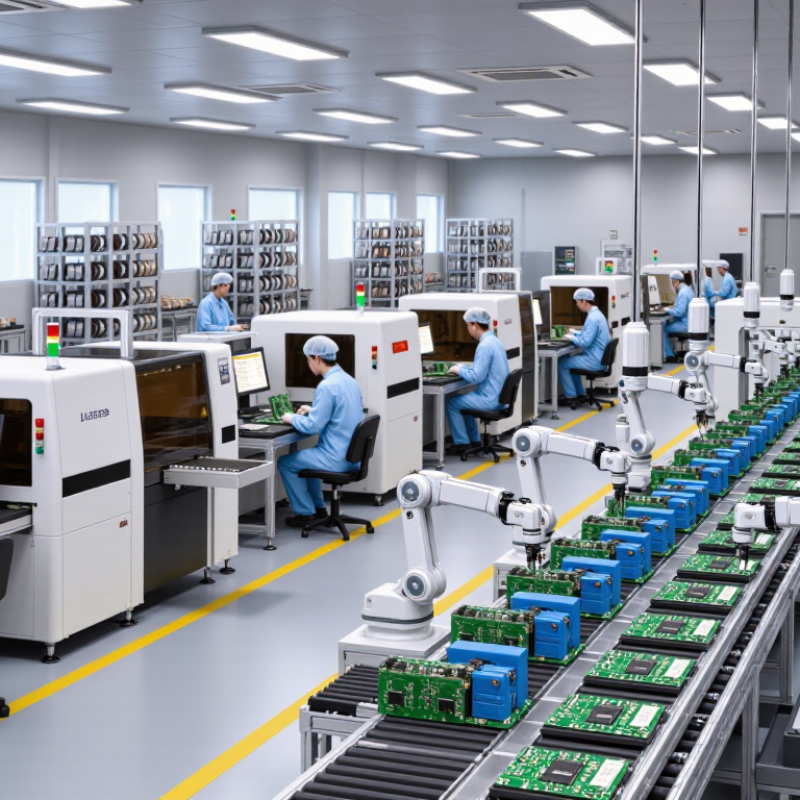
A PCB assembly service turns a bare printed circuit board into a working electronic assembly. It places components, solders them, inspects connections, and tests performance. The process may include surface-mount technology, through-hole assembly, component sourcing, stencil printing, reflow soldering, and automated optical inspection. In practical terms, it changes a design file into a board that can be installed in real equipment.
The market is substantial. Mordor Intelligence estimates the global PCB assembly market at about USD 77.99 billion in 2024, with continued annual growth expected. Grand View Research also places the global PCB market near USD 89.7 billion in 2023. These figures show strong demand, but market size does not prove assembly quality. A capable service should provide traceable materials, controlled solder profiles, first-article inspection, and clear test records. IPC standards are widely used to define workmanship and acceptance criteria.
Cost alone is a weak selection method. A lower quotation may exclude testing, tooling, or engineering support. I have seen schedules fail because a substitute component was accepted too casually. That mistake is easy to underestimate. Ask for sample inspection reports, process certifications, defect rates, and communication procedures. Verify whether the service can manage your package sizes, board layers, production volume, and required compliance documents. I would not treat any ranking as absolute. Your product’s risk level should determine the right assembly partner.
What Is the Best PCB Assembly Service in China?
What Is a PCB Assembly Service? A practical comparison of key selection criteria
| Evaluation Dimension | What the Service Includes | Typical Industry Data | Why It Matters | What to Check Before Selection |
|---|---|---|---|---|
| Assembly Technology | Placement and soldering of surface-mount and through-hole components. | SMT + THT Mixed-technology assembly is suitable for most commercial and industrial circuit boards. |
Different products require different component packages and soldering processes. | Confirm support for fine-pitch components, connectors, large components, and through-hole parts. |
| Prototype and Low-Volume Production | Assembly of engineering samples, prototypes, pilot runs, and small batches. | Prototype quantities commonly range from a few boards to several hundred boards, depending on project requirements. | Useful for design verification before mass production. | Check minimum order quantity, setup charges, component handling fees, and sample scheduling. |
| High-Volume Production | Repeatable assembly using automated placement, soldering, inspection, and production controls. | Suitable for stable, recurring orders with standardized bills of materials and assembly drawings. | Automation can improve consistency and reduce labor-related variation. | Review monthly production capacity, line utilization, backup equipment, and capacity reservation procedures. |
| Typical Lead Time | Time required for engineering review, material preparation, assembly, inspection, and shipment. | Prototype assembly often takes about 5–15 working days after materials and production files are ready. Volume orders may require longer planning. | Lead time affects product launches, inventory levels, and repair schedules. | Ask for separate timelines for component sourcing, PCB fabrication, assembly, testing, and shipping. |
| Component Sourcing | Procurement of components according to the bill of materials, approved part list, and availability requirements. | Common sourcing options include customer-supplied parts, full turnkey sourcing, or a combination of both. | Reliable sourcing helps reduce shortages, substitutions, and production delays. | Confirm traceability, counterfeit-prevention controls, approved substitutions, and handling of obsolete parts. |
| PCB Fabrication Integration | Coordination between bare PCB manufacturing and final assembly. | Integrated sourcing can combine PCB fabrication, component procurement, assembly, and testing into one production workflow. | A single workflow can simplify communication and reduce coordination between suppliers. | Verify control of PCB material, layer count, surface finish, impedance requirements, and fabrication tolerances. |
| Inspection and Quality Control | Automated optical inspection, X-ray inspection, solder-joint inspection, and visual examination. | AOI is commonly used for visible solder and placement defects. X-ray inspection is used for hidden joints such as bottom-terminated or array packages. | Inspection helps detect assembly defects before products reach final testing or customers. | Ask for inspection coverage, defect classification, inspection records, and corrective-action procedures. |
| Soldering Process | Lead-free or leaded soldering using reflow, wave, selective, or hand-soldering processes. | Lead-free assembly commonly uses SAC-family solder alloys and must follow the applicable product and regulatory requirements. | The correct thermal profile and soldering method influence reliability and component performance. | Confirm solder alloy, reflow profile control, moisture-sensitive component handling, and process documentation. |
| Testing Services | Electrical and functional verification after assembly. | Common options include flying-probe testing, in-circuit testing, functional testing, programming, and burn-in testing. | Testing verifies that the assembled board performs according to the design requirements. | Provide test specifications, test fixtures, firmware, test points, acceptance limits, and test reports. |
| Quality Standards | Manufacturing and inspection practices based on recognized industry standards. | IPC-A-610 is widely used for electronic assembly acceptability. ISO 9001 is commonly used for quality management systems. | Documented standards create consistent acceptance criteria and production procedures. | Check the required IPC class, certificate validity, audit records, process documents, and nonconformance controls. |
| Regulatory Compliance | Control of restricted substances and product-specific compliance requirements. | RoHS and REACH requirements may apply to products placed on relevant markets. Additional requirements depend on the product category. | Compliance reduces regulatory, customs, and market-access risks. | Request material declarations, compliance reports, and documentation for special product sectors. |
| Engineering Support | Design-for-manufacturing review, design-for-assembly feedback, and production file verification. | Typical review items include Gerber or ODB++ files, pick-and-place data, bill of materials, drawings, polarity, footprints, and tolerances. | Early engineering feedback can prevent assembly errors and redesign costs. | Confirm review procedures, response time, revision control, and responsibility for engineering changes. |
| Traceability | Recording of materials, operators, machines, inspection results, and production batches. | Traceability may be maintained by lot number, barcode, serial number, or manufacturing date. | Traceable records support quality investigations, warranty analysis, and controlled recalls. | Ask how long records are retained and whether component lots can be linked to finished boards. |
| Packaging and Logistics | Electrostatic-discharge protection, moisture control, labeling, export documentation, and shipment coordination. | Electronic assemblies are commonly packed with ESD-safe materials and moisture protection appropriate to the product. | Proper packaging helps prevent damage during storage and international transportation. | Confirm packaging specifications, delivery terms, shipping options, customs documents, and insurance arrangements. |
| Cost Structure | PCB fabrication, components, setup, assembly, inspection, testing, packaging, and shipping. | Total cost depends on board complexity, component count, package types, order quantity, material availability, testing, and delivery requirements. | A transparent quotation makes supplier comparisons more accurate than comparing assembly labor alone. | Request an itemized quotation with tooling, setup, programming, testing, sourcing, and shipping costs shown separately. |
Note: Lead times, capacities, pricing, and inspection coverage vary by project complexity, material availability, order quantity, and required testing. Final specifications should be confirmed through a formal quotation and production review.
Related Posts
-
How to Optimize Printed Circuit Board Assembly for Better Performance?
-

Top 10 PCB Electronics Trends You Need to Know About?
-

2026 Top Trends in PCB Electronics What to Expect?
-
10 Best PCB Assembly Services for Global Buyers
-
Solutions for Streamlined Best Circuit Board Assembly: Achieving Excellence in Production
-

Exploring Innovative Alternatives in PCB Electronics for Modern Applications


