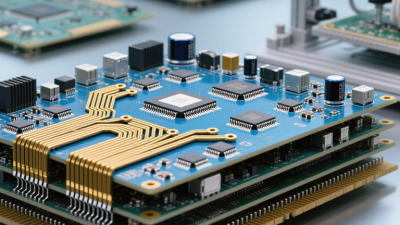
Top PCB Circuit Board Manufacturers for Global Buyers
Choosing a PCB manufacturer is more than comparing quoted prices. A board that looks simple on screen may require controlled impedance, fine-pitch assembly, or a tightly managed layer stack. For global buyers, the right partner must also communicate clearly across time zones and explain production limits before they become costly surprises.
This guide introduces leading PCB circuit board manufacturers and the factors that help buyers assess them. Look beyond polished websites. Compare prototype support, production capacity, material options, inspection processes, and delivery estimates. Ask how a supplier handles stack-up reviews, solder-mask registration, and changes between sample and production runs. Request current documentation, then confirm that the listed capabilities match your actual design and order volume. Small details matter.
A short lead time is useful, but only when quality checks and shipping plans are realistic. Certifications can help with supplier screening, yet they do not replace clear specifications or ongoing communication. Neither does a low quote. Some comparisons will remain imperfect: public information varies, and a manufacturer’s best fit depends on the project. Use the profiles ahead as a starting point, not a guarantee. The final choice should reflect your board requirements, risk tolerance, and need for dependable support.
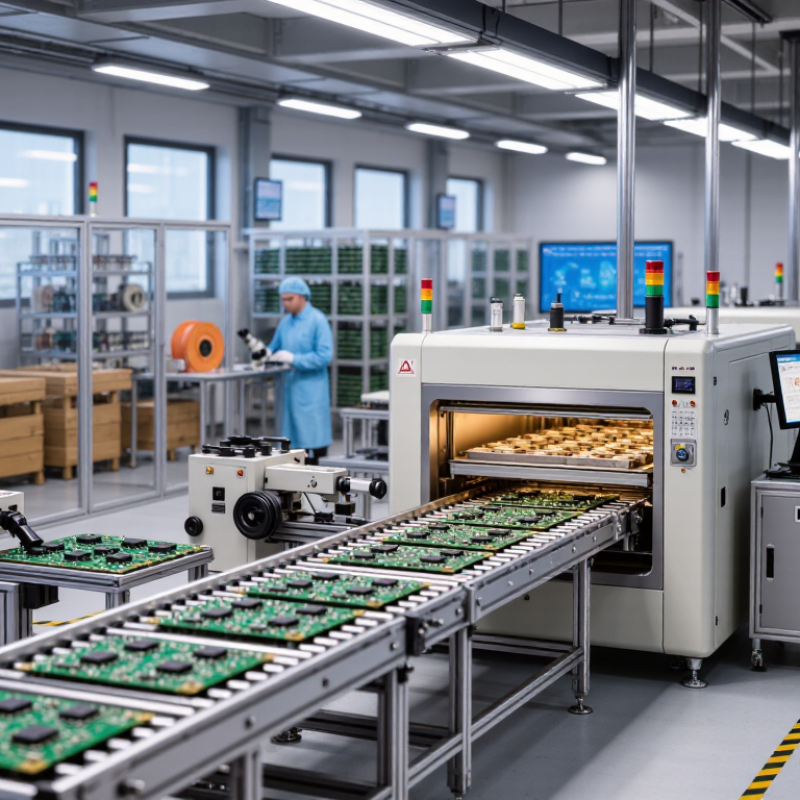
Define PCB Types, Layer Counts, and IPC-6012 Class 2/3 Requirements
Before requesting quotes, define the board type: rigid, flexible, or rigid-flex. These constructions use different materials, fabrication steps, and inspection criteria. IPC-6012 covers rigid printed boards, so flexible designs may require a different governing specification. Be precise about the intended application. A small sensor board and a control board exposed to vibration may need different design and acceptance decisions.
Layer count should follow routing density, component placement, impedance needs, and thermal demands—not a guess. A four-layer stackup may suit a compact controller, while dense routing could require six or more layers. Specify copper weights, finished thickness, material requirements, and controlled-impedance targets on the drawing. Then state the required IPC-6012 revision and Class 2 or Class 3 acceptance level. Class 2 suits products requiring reliable, extended service; Class 3 is intended for high-reliability applications where uninterrupted performance matters. Confirm details with the fabricator. Small ambiguities can cause costly rework.
Tips: Match the class to real operating risks, not habit. Share sample drawings and inspection expectations before production. Check that the selected standard applies to your board type, and record any agreed exceptions. A tidy specification helps, but it cannot fix a weak layout.
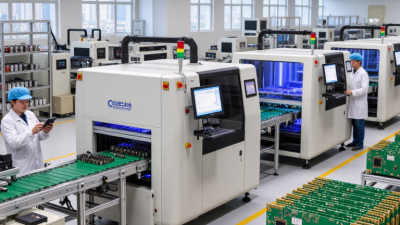
Compare Global Manufacturers: Unimicron, Zhen Ding, TTM, AT&S, and Nippon Mektron
Global buyers should compare these five suppliers by process fit, not headline capacity. A Taiwanese producer is associated with HDI boards and IC substrates; another large Asian manufacturer offers broad rigid, flexible, and HDI production. A US-based supplier is a candidate for complex, high-reliability programs. An Austrian manufacturer brings substrate and automotive experience, while a Japanese specialist focuses on flexible circuits for compact devices. Not a simple ranking.
Prismark’s 2024 Global PCB Industry Report estimated 2023 production value at about US$69.5 billion, down roughly 15% year over year. That contraction makes capacity, delivery resilience, and engineering support worth checking alongside price. Ask for stack-up examples, trace-width controls, and test data tied to your actual design. One limitation: public reports rarely show yield by product class, so supplier claims still need qualification samples.
Tips: Send every candidate the same board files and forecast. Compare quoted lead times, material alternatives, and documented change-control practices. A polished capability sheet is useful, but it cannot replace a build review.
Top PCB Circuit Board Manufacturers for Global Buyers — A Global Manufacturing Capability Comparison
| Capability Area | What It Includes | Typical Applications | What Buyers Should Verify |
|---|---|---|---|
| Rigid multilayer PCBs | Multiple conductive copper layers laminated with insulating materials; layer count and board construction depend on the design and supplier process. | Networking equipment, computers, industrial controls, and other electronic products. | Stack-up proposal, controlled-impedance capability, material availability, and the applicable revision of IPC-6012. |
| HDI boards | High-density interconnect construction commonly uses fine lines and spaces, microvias, and sequential lamination to support dense routing. | Compact mobile devices, wearable electronics, and other space-constrained designs. | Minimum feature rules for the specific design, microvia reliability data, registration capability, and design-for-manufacture feedback. |
| Flexible and rigid-flex PCBs | Flexible circuits use bendable insulating films; rigid-flex constructions combine rigid sections with flexible interconnect regions. | Foldable assemblies, cameras, medical devices, and products with limited interconnect space. | Bend radius and cycle requirements, coverlay construction, material system, and compliance with the applicable revision of IPC-6013. |
| High-frequency and high-speed boards | PCB designs using suitable dielectric materials and controlled geometries to manage signal integrity at high frequencies or data rates. | RF equipment, antennas, radar systems, and high-speed communications hardware. | Supported laminate options, dielectric data, impedance tolerances, and measurement methods for the finished board. |
| Heavy-copper and power boards | Board constructions designed for higher current or thermal demands; achievable copper thickness depends on the design and manufacturing process. | Power supplies, motor drives, energy systems, and automotive electronics. | Copper-weight options, finished trace geometry, thermal design support, and electrical test coverage. |
| Quality and compliance systems | Quality controls, material traceability, inspection, and product-specific testing; requirements vary by market and end use. | Products supplied to regulated, automotive, industrial, and consumer-electronics markets. | Current certificates for the actual manufacturing site, audit scope, test reports, traceability records, and applicable environmental declarations. |
| Production and supply-chain support | Engineering review, prototype production, volume manufacturing, and logistics planning may be offered at different sites and under different processes. | Programs moving from initial prototypes to repeat production across regional markets. | Quote assumptions, production location, sample and mass-production schedules, change-control process, and delivery terms. |
Capabilities and process limits vary by facility, product design, and order volume. Confirm all specifications, certifications, and lead times directly with the selected manufacturing site.
Assess HDI Capability Using 3/3-mil Line-and-Space Benchmarks
Global buyers comparing PCB circuit board manufacturers should treat 3/3-mil line-and-space as a capability test, not a marketing badge. Three mils equals about 76 micrometres. At this scale, copper thickness, etch compensation, and imaging stability affect whether a trace remains usable. IPC-2226 describes HDI design and construction approaches, but it does not certify a supplier’s repeatable yield at a specific geometry. Ask for production evidence. A 3/3 claim can still hide a narrow process window.
The market context is growing more demanding. Grand View Research estimated the global printed circuit board market at USD 73.4 billion in 2023 and forecast a 5.6% compound annual growth rate from 2024 to 2030. This figure covers the broader PCB market, not HDI alone. For supplier comparisons, request data from multiple production lots, including finished trace measurements, copper weight, and electrical test results. One successful prototype is not enough.
Tips: Ask whether 3/3 mil refers to artwork, etched features, or finished copper. Request coupon results and yield trends from comparable panels. Check how the supplier controls registration and etch variation. Small details matter. If the evidence is incomplete, treat the quoted capability as provisional.
Verify Quality Systems with IPC-A-600, ISO 9001, and IATF 16949
Top PCB Circuit Board Manufacturers for Global Buyers
Global buyers should check how a PCB supplier applies quality requirements, not just collect certificates. IPC-A-600 describes acceptability criteria for printed boards, including visible features such as conductor spacing, surface marks, and plating. It is a standard, not a factory management-system certificate. Ask how inspectors use its criteria and how questionable boards are recorded. Paperwork is not proof.
Tips: Check that an ISO 9001 or IATF 16949 certificate is current and covers the actual production site and relevant processes. Then compare its scope with your board specifications. A certificate for another location offers little reassurance.
ISO 9001 sets requirements for a quality management system, while IATF 16949 adds automotive-sector requirements for organizations in the automotive supply chain. Neither standard alone confirms that every delivered board meets your design or reliability needs. Request recent inspection records, defect trends, and examples of corrective actions. If a supplier can explain a failed plating check, show the investigation, and describe how the process changed, that is useful evidence. Still, a polished audit file can miss a recurring production issue; buyers should review samples and performance over time, too.
Compare Lead Times, Minimum Orders, Certifications, and Landed Costs
Top PCB Circuit Board Manufacturers for Global Buyers
Lead time is more than the number of days quoted for fabrication. Ask whether the schedule includes engineering review, material sourcing, assembly, and inspection. A board needing controlled impedance or unusual laminate may take longer than a standard prototype. Minimum order quantities also vary: some suppliers accept a few bare boards, while assembly lines may price better at higher volumes. Compare like with like, including panelization and test requirements.
Tips: Request a dated quote with separate fabrication, assembly, tooling, and shipping costs. Check certificate scope and expiry, not just logos on a webpage. Ask for the inspection report format. Small detail, big difference.
Landed cost includes more than the unit price. Add freight, insurance, brokerage, duties, and destination taxes where applicable. Compare shipping terms and confirm who handles import clearance. A low quote can lose its appeal when cartons arrive by express courier or require extra paperwork. Keep a buffer for exchange-rate changes and shipment delays. A spreadsheet helps, but it can still miss rework costs; leave room for uncertainty. Verify sample quality and communication before committing to a large production run.
PCB Sourcing Benchmarks for Global Buyers
Indicative planning ranges for common order types. Actual lead times and minimums vary by board specifications, supplier capacity, and shipping destination.
| Order profile | Typical minimum-order basis | Certifications and standards to verify | Landed-cost items to compare |
|---|---|---|---|
| Quick-turn prototype | Small panel or engineering batch; quantity depends on panelization | ISO 9001, IPC workmanship requirements, and UL 796 where applicable | Setup charges, expedited freight, customs duties, and brokerage |
| Standard production | Quoted by panel, batch, or production lot | ISO 9001; confirm applicable IPC class and UL requirements | Unit price, tooling, freight, insurance, duties, and payment fees |
| High-volume production | Forecast or scheduled lots; minimums are quote-specific | ISO 9001; IATF 16949 for qualifying automotive supply chains; applicable UL requirements | Volume pricing, yield assumptions, freight mode, duties, and inventory costs |
Lead-time ranges are indicative business-day planning estimates, not supplier guarantees. Request a quote against the same stack-up, material, copper weight, finish, quantity, delivery terms, and destination. Landed cost is the quoted product and logistics cost plus applicable duties, taxes, brokerage, and other import charges.