China Top PCB Assembly Manufacturers for Global Buyers
Choosing a China-based supplier for global electronics production requires more than comparing unit prices. Buyers must examine engineering support, process control, component sourcing, inspection methods, and communication across time zones. A polished capability page is useful, but it cannot replace clear answers about factory capacity, traceability, and corrective action. Details matter: a placement line’s stated speed means little if inspection, rework, or material handling becomes a bottleneck.
As EMC engineer and author Henry W. Ott observed, “The best way to solve EMC problems is to prevent them from occurring in the first place.” That principle reaches beyond circuit design. Early collaboration between the buyer and pcb assembly team can expose footprint, panelization, and test-access problems before they become costly production issues. Ask how suppliers review files, document process changes, and manage first-article feedback. Then verify the answers with records and sample builds.
This guide introduces China’s pcb assembly landscape for international buyers, focusing on practical evaluation rather than unsupported rankings. It considers manufacturing capability, quality systems, engineering communication, lead times, and the evidence buyers can request before placing an order. No supplier is perfect. Nor is every weakness visible during a factory tour. A missed question can matter. Use the comparisons as a starting point, confirm claims directly, and weigh each manufacturer against your product’s complexity, volume, and risk tolerance.
China’s PCB Assembly Industry in Prismark’s US$73.9 Billion 2023 Global Market
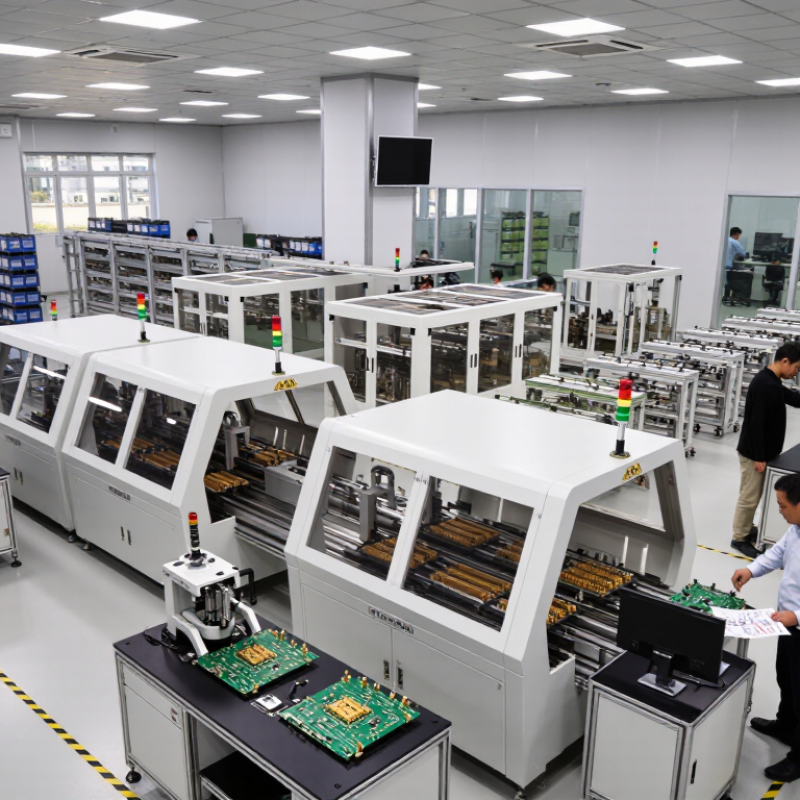
Prismark valued global PCB production at US$73.9 billion in 2023, following a sharp industry correction. That figure covers bare printed circuit boards, not the full value of assembled electronics. This distinction matters. For global buyers, China’s role is best understood through its connected supply base: board fabrication, component sourcing, assembly, and testing often sit within practical reach. A compact production line may move a panel from solder-paste printing to inspection in hours. Yet fast production does not guarantee reliable delivery. Forecast changes and component shortages can still disrupt schedules.
Prismark’s market data also gives buyers useful context: the 2023 total reflects a difficult year, not a simple measure of long-term demand. When comparing Chinese assembly manufacturers, ask how quotations handle material price changes, substitutions, and low-volume orders. Request evidence of inspection methods, traceability, and process controls, then check whether those controls match the product’s risk. IPC guidance on electronics assembly workmanship can help establish a shared quality baseline. Still, a checklist cannot replace a review of actual production records. The market figure is useful, but it does not reveal each factory’s capacity, yield, or communication quality. That gap deserves attention.
How to Compare EMS Providers by SMT Capacity, Yield, and Lead Time
China’s PCB assembly market offers many EMS options, but headline capacity figures can be misleading. Ask how many SMT lines support your product and what package sizes they handle. A line rated for high placement speed may slow down with frequent feeder changes or fine-pitch components. Request a recent production example using a similar board, not just the maximum machine rate. Numbers need context.
Tips: Compare first-pass yield over a stated period, and ask how defects are recorded. Check whether reports separate solder issues, placement errors, and inspection rejects. A strong yield figure is useful only when the measurement method is clear. Ask for pilot-build data if available.
Lead time should include more than the quoted assembly window. Confirm component readiness, tooling needs, engineering review, and the time required to resolve first-article issues. Ask how schedules change when a key part arrives late, and whether capacity is reserved for repeat orders. Get the assumptions in writing. Some estimates will still be imperfect; that is normal, but unexplained gaps deserve a closer look. A short site or process review can help verify whether stated capacity, inspection steps, and delivery plans match the factory’s actual workflow.
Leading Chinese PCB Assemblers: Foxconn, BYD Electronics, USI, and Kaifa
China’s leading PCB assemblers serve different production needs. Large contract manufacturers are built for high-volume orders, stable processes, and coordinated sourcing. Their lines may handle many board types, but buyers should confirm that the specific factory has experience with their product. Scale alone is not proof of a good fit.
Some manufacturers focus on automotive and industrial electronics, where traceability, controlled processes, and consistent inspection matter. Others combine board assembly with product integration, testing, and supply-chain support. This can simplify complex projects. It can also make changes slower when responsibilities are spread across teams. Ask who owns engineering updates and how quickly production feedback reaches your design staff.
Tips: Request a sample build and inspect solder joints, labeling, and packaging. Share forecasts, target volumes, and acceptance criteria early. Ask for process records and clear defect-reporting steps. A polished audit is useful, but a real production trial often reveals more. No supplier is perfect; watch how openly the team discusses problems and corrective actions.
Quality Benchmarks: IPC-A-610’s Three Product Classes and ISO Certifications
For global buyers, IPC-A-610 helps make assembly quality observable. It defines three product classes: Class 1 for general electronics, Class 2 for products requiring reliable service, and Class 3 for high-performance equipment where continued operation matters. The standard gives inspectors criteria for solder joints, component placement, and other visible workmanship. It is an acceptance standard, not a guarantee of a product’s design or field life.
Class selection should match the end use, not simply the lowest quoted price. A board used in a household device may suit Class 1 or 2; equipment that must keep operating under demanding conditions may call for Class 3. Ask the supplier to identify the agreed class on inspection plans and sample reports. Small details matter. A clipped lead or uneven solder fillet should have a documented disposition, not a casual verbal pass.
ISO certification adds a separate process check. ISO 9001 addresses quality management, while ISO 14001 covers environmental management; neither replaces IPC-A-610 inspection. ISO’s 2022 Survey reported more than 1.2 million valid ISO 9001 certificates worldwide, showing how widely the framework is used. Still, paperwork can look cleaner than a production line. Buyers should verify certificate scope and validity, then review real inspection records, corrective-action evidence, and traceability for the specific assembly site.
Global Sourcing Checklist: Traceability, RoHS Compliance, and Supplier Audits
For global buyers comparing China PCB assembly manufacturers, traceability should reach beyond a finished-board label. Ask how each build links to its approved BOM revision, component reel labels, production date, and inspection records. A useful sample is a single lot: can the supplier connect a board’s serial number to its component batches and test results? Keep the records. If that chain depends on one operator’s memory or a manually edited spreadsheet, request a clearer control method before approving production.
RoHS compliance also needs evidence, not just a checkbox on a quotation. Request current material declarations and supporting records for components and finishes, then confirm they match the exact parts used in your build. During a supplier audit, review incoming inspection, storage conditions, solder-paste handling, and nonconformance logs. Ask to see a real corrective-action example, including how the fix was verified. A polished presentation is easy to prepare. Shop-floor habits are harder to fake.
Audits work best when they follow the product’s actual route through the facility. Compare documented procedures with a live production record, and note gaps without treating every gap as proof of failure. I have seen checklists become too tidy; they can miss rushed handoffs between shifts. Agree on owners and dates for open actions, then verify closure with evidence. A short follow-up call can reveal more than another impressive slide deck.
PCB Assembly Supplier Checklist: EU RoHS Substance Limits
EU RoHS maximum concentration limits are measured by weight in homogeneous materials: 100 ppm for cadmium and 1,000 ppm for each of the other nine restricted substances. For supplier due diligence, request material declarations and test records, confirm that lot-level traceability links components to production records, and review audit evidence covering document control and corrective actions.